
Getting Around Kanazawa, Ishikawa, by Bus: A New Practical Guide for International Visitors
Source: PR Newswire
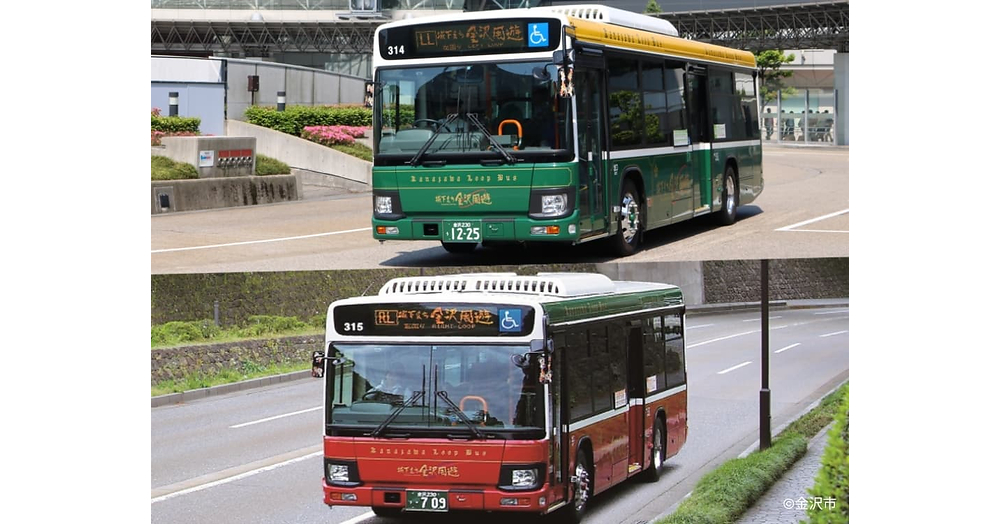
This is a travel-information article on using Kanazawa’s bus network for international visitors, including Loop Bus fares of ¥220 (adults) and ¥110 (children) per ride and a Kanazawa City One-Day Pass priced at ¥800 (adults) and ¥400 (children). It outlines payment-method differences between the two main operators (Hokutetsu vs West Japan JR Bus) and notes that the Loop Bus accepts both contactless cards and nationwide IC transport cards. No financial market or corporate/earnings information is provided, so impact on markets is effectively none.
Analysis
This is not a revenue catalyst for MA, V, or AXP in any meaningful sense; the payment mix here is too small and too local to move the needle. The only real mechanism is convenience friction: when a tourist can tap a card without setup, transaction conversion rises modestly, but the spend per rider is de minimis and mostly displaces cash or domestic transit cards rather than creating new card economics.
The more interesting second-order effect is on local transit monetization, not network economics. If Kanazawa’s operators keep fragmented acceptance rails, they preserve some cash handling and customer-service costs; if they eventually converge on a unified acceptance standard, that could improve throughput and reduce boarding friction, but that is a multi-year operational story, not a near-term earnings event.
Contrarian view: the market may over-attribute any Japan transit/contactless story to global card networks. In reality, the structural constraint is interoperability, not consumer willingness. Until there is broader regional adoption across buses, rail, and tourist passes, the incremental card volume is incidental and easily drowned out by FX, travel demand, and cross-border spend trends.
Catalyst risk is mostly nonexistent over days to months. The only falsifier for a long-term payment-network adoption thesis would be evidence of broader municipal or national transit migration to contactless acceptance; absent that, this is better viewed as a monitoring item than a tradable event.
AllMind Terminal
AI-powered research, real-time alerts, and portfolio analytics for institutional investors.
Request TrialMarket Sentiment
Overall Sentiment
neutral
Sentiment Score
0.00
Key Decisions for Investors
- No immediate trade in MA/V/AXP on this article; treat as immaterial to quarterly TPV and take-rate estimates.
- Set a watch item for broader Japanese regional transit interoperability announcements; only consider a MA/V long if adoption expands beyond a single tourist corridor and into multi-city rail/bus networks.
- Do not short cash-reliant transit operators on this headline; the operational savings from payment modernization are too small to underwrite a position.
- If looking for a related proxy, use Japan travel demand or inbound tourism names rather than payment networks; this article is about friction reduction, not incremental trip volume.
More News
- Berkshire Hathaway and Mastercard Don't Need AI to Keep Growing. Both Look Worth Owning Through 2030.
- Banco Bradesco Chief Risk Officer Purchases 60,492 Shares for $1.1 Million. Is BBD a Buy?
- If a Bear Market Is Coming in 2027, I'm Making This 1 Move Right Now
- US forces disable ship ‘attempting to run’ Iran blockade in Gulf of Oman
- After France, is Italy next? Goldman Sachs flags bond risks as Rome's deficit widens
- Middle East war, high debt levels to dominate IMF-World Bank meetings in Bangkok
From AllMind Research
- Anthropic IPO Preview: Valuation, Timing, and What to Watch
- Shein After the IPO: Venue, Valuation, and What Must Be Proved
- What AI Research Tools Should a Small Hedge Fund Buy First?
- How to Track Guidance Changes Across a Coverage List With AI
- Stop Treating AI Like a Chatbot: What Are Agents, SubAgents, MCP, and Skills, and How Do They Actually Work?