
PANDAG G1 hará su primera aparición oficial en GaLaBau 2026
Source: PR Newswire
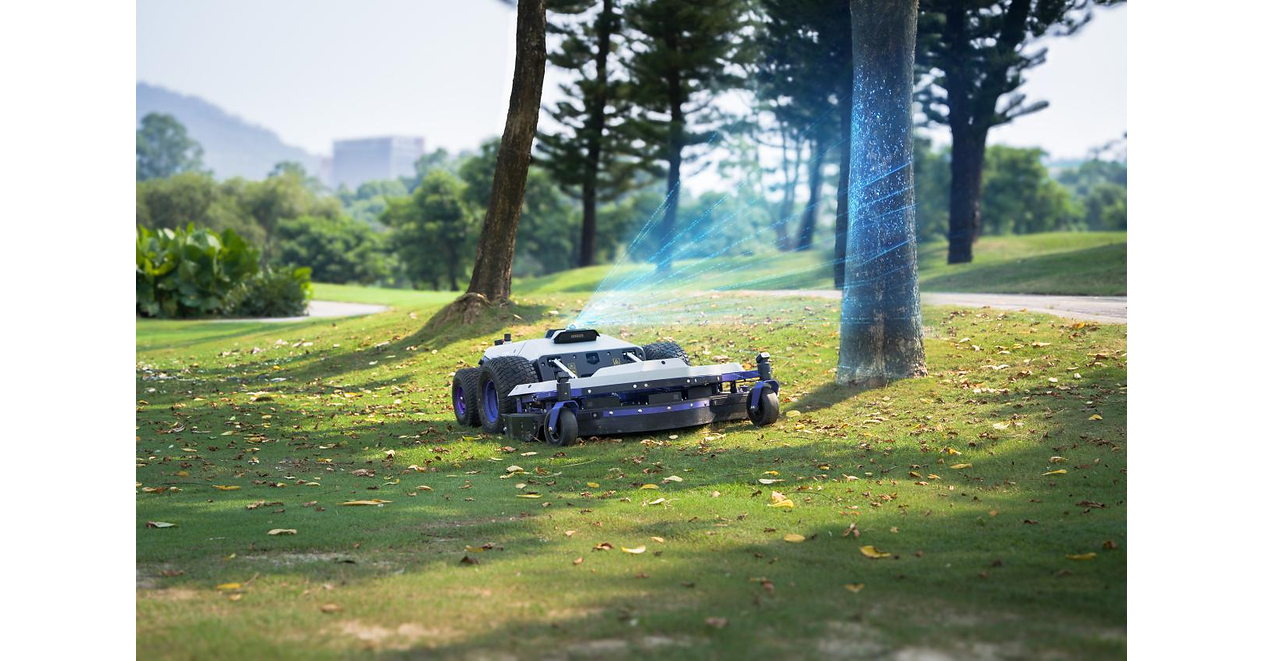
PANDAG will officially debut its G1 autonomous commercial mower at GaLaBau 2026, featuring LiDAR, AI vision, RTK and 4G navigation. The 48-inch modular mower can cover up to 12 acres (4.9 hectares) daily and handle slopes of up to 38°, targeting golf courses, parks, sports facilities and other large outdoor sites. The launch also begins a Europe-wide real-world demonstration program, but the announcement provides no sales, pricing, order or financial guidance.
Analysis
This is not yet an investable revenue event: a trade-show debut and planned demonstrations provide no disclosed order book, unit economics, certification status, dealer coverage, financing availability, or service-network capacity. The relevant read-through is that commercial autonomy is migrating from consumer robotic mowers into labor-intensive municipal and contractor applications, where utilization and avoided labor—not gadget appeal—determine adoption. European landscaping contractors face seasonal labor constraints, but deployment friction is likely highest in public spaces because insurance, theft, remote-monitoring reliability, and liability around obstacle detection can outweigh headline productivity claims.
Near term, the announcement is more likely to increase competitive marketing spend than alter earnings for listed equipment vendors. Deere (DE), Toro (TTC), Husqvarna (HUSQB SS), and Kubota (KUBTY) have dealer networks, parts availability, and fleet relationships that a new entrant must replicate; they can defend accounts by bundling autonomy with service contracts and financing. Conversely, a credible low-cost entrant could pressure the premium autonomous-mower pricing umbrella, particularly for Husqvarna, whose robotic-mowing exposure is more strategically visible than at diversified peers.
Over 6-18 months, the key second-order beneficiary is the autonomy component stack—RTK correction, connectivity, sensors, and fleet-management software—rather than the undisclosed OEM. The thesis becomes actionable only if field demonstrations convert into named distributor agreements and recurring fleet deployments. A meaningful risk to incumbents would be evidence that the product operates reliably in heterogeneous, GPS-challenged commercial environments at a total cost of ownership that undercuts an operator-plus-conventional mower by at least 20-30%; absent that, this remains a product-validation watch item rather than a disruption signal.
AllMind Terminal
AI-powered research, real-time alerts, and portfolio analytics for institutional investors.
Request TrialMarket Sentiment
Overall Sentiment
mildly positive
Sentiment Score
0.30
Key Decisions for Investors
- No directional trade on the announcement; create a 1-3 month diligence alert for named European distributors, customer pilots, price per unit, warranty terms, and service-partner commitments. Treat any claimed acreage productivity without independently disclosed uptime and operator-intervention data as promotional.
- Monitor HUSQB SS versus DE and TTC through the next two earnings cycles. Consider a long DE / short HUSQB SS relative-value position only if commercial autonomous-mower pricing or dealer feedback indicates low-cost entrants are gaining traction; HUSQB SS is the cleaner margin-risk expression, while DE's precision and dealer ecosystem provide diversification.
- For a structural autonomy theme, favor DE on a 6-18 month horizon only after management demonstrates that autonomous grounds equipment attaches higher-margin software, service, or fleet-management revenue rather than merely substituting hardware sales. Falsifier: no improvement in production-and-precision-ag segment margins or recurring-revenue disclosures despite autonomy investment.
- Watch European municipal procurement notices and insurer guidance over the next 6 months. A material liability restriction, required on-site attendant, or weak performance in wet/uneven terrain would impair the labor-savings proposition and reduce competitive risk to established commercial-equipment vendors.
More News
- Two camps have emerged in the debate over AI safety and regulation
- U.S. stock futures drift higher with Fed rate hike in focus
- Exclusive-Malaysia talks to rival airlines as it monitors AirAsia’s financial health, sources say
- MBS and Saudi Arabia Face Crisis With Key Oil Pipeline Shut for Weeks
- AWS says it can't restore service to Bahrain, UAE facilities 6 months after Iran strikes
- Oil’s next test: Saudi Arabia races to restore a key safety valve for prices