
PurposeEnergy Commissions $40M Ohio Facility Converting Yogurt Residuals to Renewable Energy
Source: PR Newswire
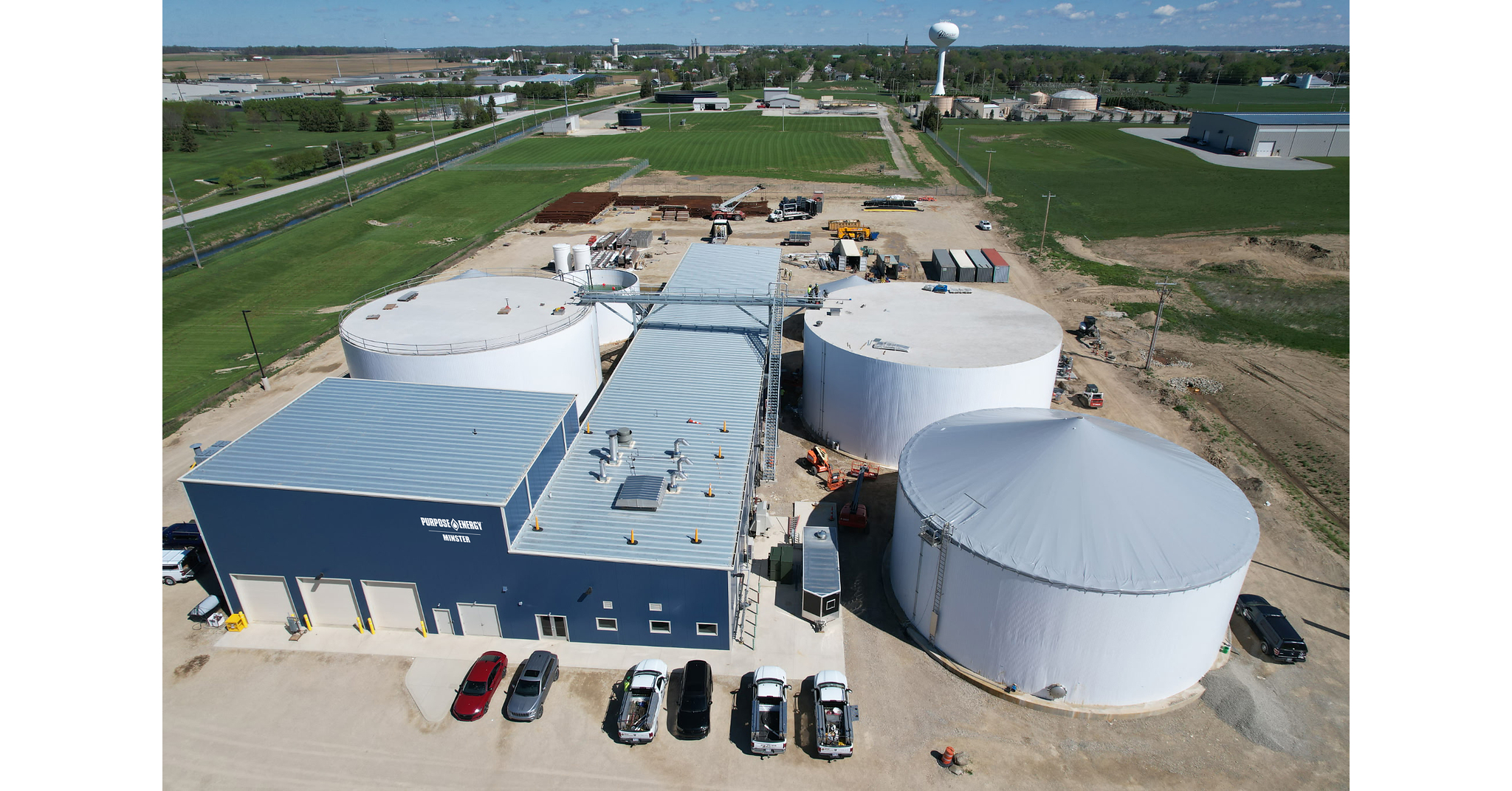
PurposeEnergy commissioned a facility in Minster, Ohio, representing an investment of more than $40 million and designed to process up to 250,000 gallons of organic residuals per day. At full operation, it is expected to produce about 50,000 MMBtu of renewable biogas annually for Danone’s Minster plant, displacing conventional natural gas; PurposeEnergy estimates the project will avoid about 3,200 U.S. tons of CO2e per year from biogas use and a further 720 tons versus the previous residuals-handling route. The facility is operational and ramping, with a grand opening planned for spring 2027.
Analysis
The investable signal is operational learning, not a near-term earnings swing for Danone (BN): a dedicated waste-to-biogas loop may improve energy and waste-treatment resilience at one site, but the disclosed output is not enough to infer material group-level savings. The economics hinge on delivered biogas cost versus natural gas, avoided waste-handling charges, uptime, and the capital or service terms between Danone and PurposeEnergy—none are disclosed. The project’s emissions figures are modeled estimates, not evidence of realized savings or regulatory-credit revenue.
For PurposeEnergy and its owner Quinbrook, successful ramp-up could validate a repeatable infrastructure model where food-plant waste streams are concentrated enough to support onsite digestion. Conversely, projects may be hard to replicate where feedstock is dispersed, permits are slow, or digestate and wastewater outlets are constrained. Local waste haulers or other residuals handlers could lose volumes if direct-piping arrangements expand, but the scale of any displacement is unknown.
Near term, commissioning and ramp performance are the key catalysts; over 1–3 months, verify throughput, biogas delivery, and boiler integration. Over 6–18 months, replication matters more than this facility’s direct contribution. The contrarian point: positive ESG framing can obscure ordinary project risks and modest consolidated financial impact. A material delay, lower-than-designed utilization, or weak economics would undercut the template thesis; verified repeat deployments and disclosed cost savings would strengthen it.
AllMind Terminal
AI-powered research, real-time alerts, and portfolio analytics for institutional investors.
Request TrialMarket Sentiment
Overall Sentiment
mildly positive
Sentiment Score
0.35
Ticker Sentiment
Key Decisions for Investors
- No directional BN trade on this announcement alone: treat it as a small site-level efficiency and resilience initiative, not a basis for revising group earnings without quantified savings.
- Add a watch item for Danone disclosures or follow-up reporting on realized gas displacement, waste-treatment savings, facility utilization, and any capital or operating commitments; these are the missing inputs for a financial-impact estimate.
- Monitor PurposeEnergy’s ramp through spring 2027 and evidence of additional contracted sites. Replication with disclosed economics would be a stronger signal for the private infrastructure thesis than the commissioning announcement itself.
- Falsifiers: sustained underutilization, interruptions in feedstock or biogas delivery, or no demonstrated savings versus conventional gas and prior waste handling. Positive confirmation would require operational data and repeat projects, not emissions estimates alone.
More News
- Saudi Arabia cancels 2026 ‘Davos in the Desert’ amid Houthi attacks
- X-Energy CEO on Amazon, AEP Nuclear Data Center Deal
- Ukraine’s drones lose their Starlink link above 100 mph. Musk, Rubio and Trump all say it wasn’t them
- Qatar warns global energy shockwaves from Iran war have yet to peak
- MTR Bets $5 Billion on a Hong Kong City That Doesn’t Exist Yet
- Gold dips as oil prices fuel inflation fears, Fed outlook in focus
From AllMind Research
- Anthropic IPO Preview: Valuation, Timing, and What to Watch
- Shein After the IPO: Venue, Valuation, and What Must Be Proved
- What AI Research Tools Should a Small Hedge Fund Buy First?
- Weekly Update: Adding Live MBO Level 3 Data - Liquidity Heatmap, OFI Charts, and More
- AI Software for Buy-Side Teams: Build the Research Stack