
ROE Dental Laboratory Introduces ArchBridge for Overdenture™, a Fully Digital Overdenture Solution With No Models, Chairside Pickups or PVS Records
Source: PR Newswire
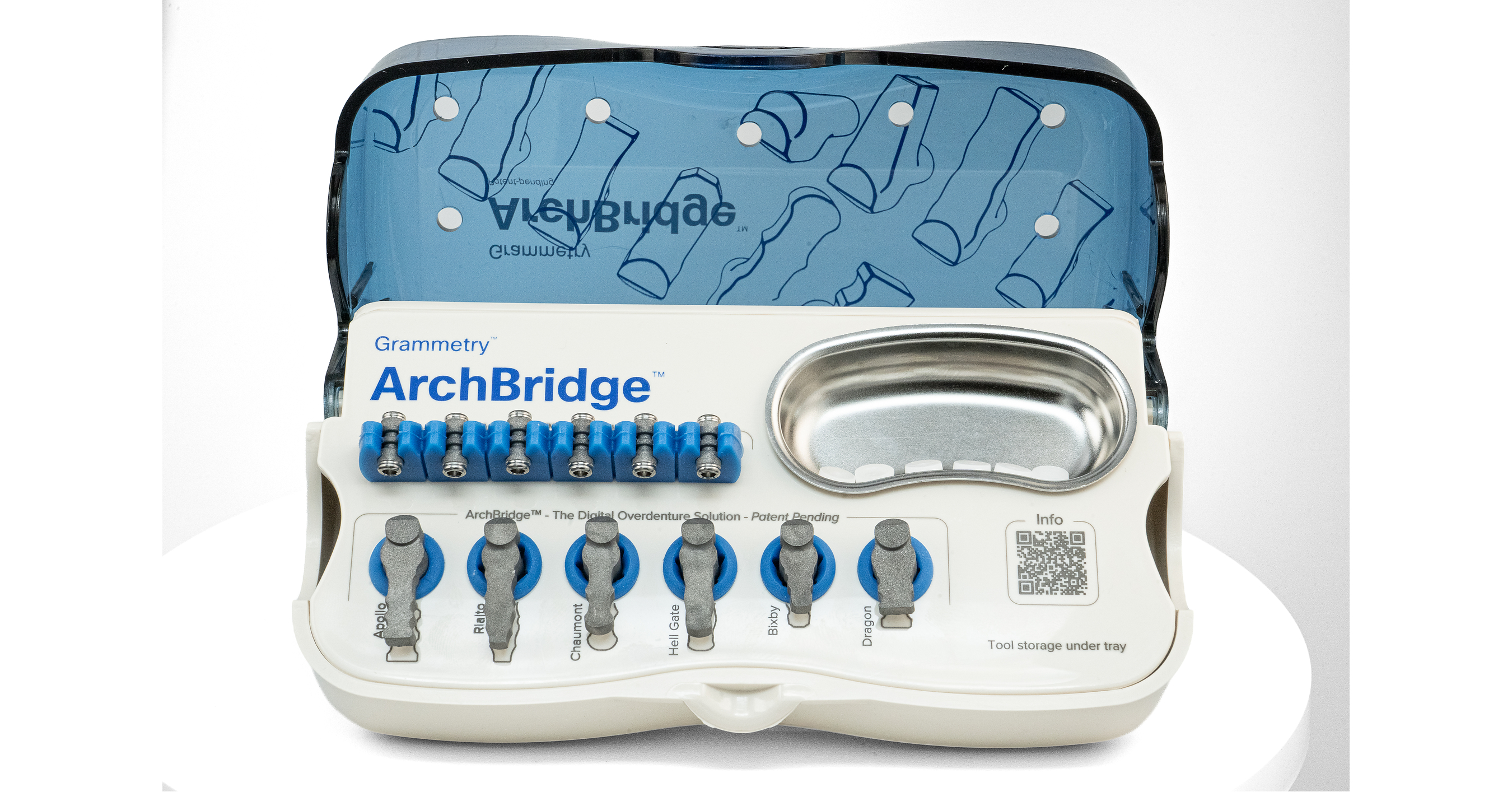
ROE Dental Laboratory introduced ArchBridge for Overdenture, a patent-pending digital scanning system using six reusable titanium scan bodies for fixed and removable overdenture cases. ROE says the workflow lets its lab position and cure prosthesis housings, replacing chairside acrylic pickup and reducing dependence on chairside placement accuracy. Kits are available now; no pricing, sales figures, or market response were reported.
Analysis
The investable signal is workflow economics, not the launch itself. If the system reliably reduces chairside pickup, adjustment and remake time, it can improve clinician throughput and make overdentures more attractive relative to workflows with greater appointment burden. ROE may capture value through case retention and lab relationships; however, without adoption, pricing and repeat-case data, that is a hypothesis—not evidence of material revenue or margin impact. The broader implication is incremental demand for digital implant workflows, potentially benefiting intraoral-scanner ecosystems and labs able to deliver predictable implant-supported prosthetics. It is not yet a clear threat to implant or attachment-system manufacturers: compatibility across systems could support their installed bases rather than displace them.
Near term, expect limited sector read-through absent measurable uptake. Over 1–3 months, watch clinician adoption, case volume and reports of fewer remakes or chairside adjustments. Over 6–18 months, the structural question is whether validated scan-to-lab workflows shift more procedural value from the clinic to the laboratory and deepen lab-clinician lock-in. The key operational risk is that scan-body positioning and digital capture do not consistently translate into passive fit across varied anatomy and existing prostheses; any resulting remakes would undermine the claimed time savings. The announcement provides no independent clinical or financial validation. No public ticker is supplied for ROE, and there is not enough evidence to justify a directional trade in dental-equipment names.
AllMind Terminal
AI-powered research, real-time alerts, and portfolio analytics for institutional investors.
Request TrialMarket Sentiment
Overall Sentiment
mildly positive
Sentiment Score
0.25
Key Decisions for Investors
- No trade on the launch alone. Treat it as a watch item for digital dentistry and dental-lab economics rather than a near-term earnings catalyst.
- Track adoption evidence: kits in use, overdenture case volumes, clinician repeat usage, lab pricing, and remake/adjustment rates. Verify whether any reported gains are incremental or simply shift work from clinic to lab.
- For listed dental-equipment and scanner companies, avoid attributing revenue impact without evidence of scanner compatibility, utilization or attachment-system pull-through; the workflow appears compatible with existing systems.
- Reassess the thesis if independent clinical data or customer reports show sustained reductions in chair time and remakes. Falsification would be persistent fit-related rework, weak clinician repeat adoption, or no measurable change in case volume or lab economics.
More News
- The U.S. market has never been more focused on one single bet—but AI’s payoff will likely take decades
- Meta put out an ambitious roadmap to Muse monetization after strong quarter and guide
- CoreWeave’s market confidence erodes as bond yields spike and stock sinks
- Elon Musk Thinks $3.5 Trillion Tesla-SpaceX Mashup Is a Good Idea
- Meta ordered to pay $25 billion in case related to Cambridge Analytica scandal
- Why is Tesla stock falling after-hours today?
From AllMind Research
- Anthropic IPO Preview: Valuation, Timing, and What to Watch
- Shein After the IPO: Venue, Valuation, and What Must Be Proved
- What AI Research Tools Should a Small Hedge Fund Buy First?
- The $4.7 Trillion Bet: When Does AI Capex Become AI Revenue?
- Equity Research Automation Statistics: A 2026 Evidence Check