
Security Expert Corey Wild Explains When Armed Security Makes Sense in HelloNation
Source: PR Newswire
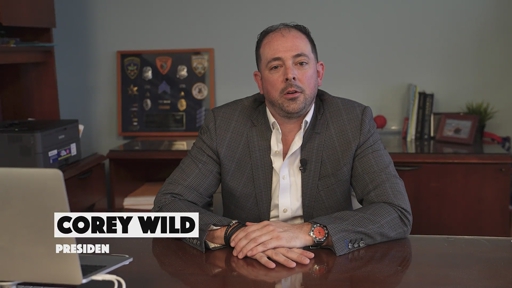
The article is a general risk-management discussion for Rochester businesses on when armed security is warranted—especially for high-value inventory, on-site cash handling, public-access facilities, and late-night operations. It notes armed guards add deterrence and faster response, but cost more due to training, certification, and insurance requirements, implying a case-by-case decision framework rather than a market-moving development.
Analysis
This is not a catalyst so much as a reminder that high-theft, cash-adjacent retail tends to see margin leakage first in SG&A and insurance, not in headline revenue. For CRMT, the relevant question is whether elevated security requirements translate into structurally higher lot protection, employee safety, and claims costs; if so, the impact shows up as incremental pressure on operating leverage before it becomes visible in unit volumes. The market usually underprices these “friction costs” until loss ratios or premium renewals force disclosure.
The contrarian view is that the signal is probably over-interpreted if traded as a standalone news item. Security spending is typically episodic and localized, and absent a documented spike in theft, late-night incidents, or insurer reassessment, there is no reason to model a durable step-up in costs. The real catalyst path would be 1-3 months of commentary on shrink, premiums, or labor scheduling; the structural effect, if any, would be a modest widening of the gap between larger operators that can absorb compliance and smaller operators that cannot.
AllMind Terminal
AI-powered research, real-time alerts, and portfolio analytics for institutional investors.
Request TrialMarket Sentiment
Overall Sentiment
neutral
Sentiment Score
0.00
Key Decisions for Investors
- No trade on CRMT from this item alone; treat as a watchlist alert for SG&A and insurance expense rather than a thesis.
- If holding CRMT, monitor the next earnings call for any mention of shrink, property/casualty renewal rates, or overtime/safety costs; a >50 bps SG&A surprise would falsify the ‘immaterial’ view.
- Relative-value idea: favor larger auto-retail operators with scale in loss prevention and insurance procurement over smaller names if security/claims costs are trending up; use CRMT only as a monitor, not a short.
- Set an internal trigger: if management guidance implies a sustained increase in operating expenses tied to security or insurance, reassess the position over the next 1-3 months; otherwise ignore the headline noise.
More News
- AI stocks plunge. Inflation heats up. Where we're still finding opportunities
- Bending Spoons wants to revive software castoffs. Berkshire is backing the plan
- AI rapidly improving, could vastly boost U.S. GDP, Anthropic's Clark tells policymakers
- ‘How many canaries have we killed in the coal mine?’ — Wall Street debates if the latest AI bubble warnings are another head fake or the real thing
- Semiconductor market to remain solid ‘at least through next year,’ South Korea finance minister says
- Nasdaq Index: AI Selloff Deepens as Chips and CoreWeave Break