
Calls for an AI slowdown meet vigorous pushback: Trump calls it a ‘sick conspiracy’
Source: MarketWatch
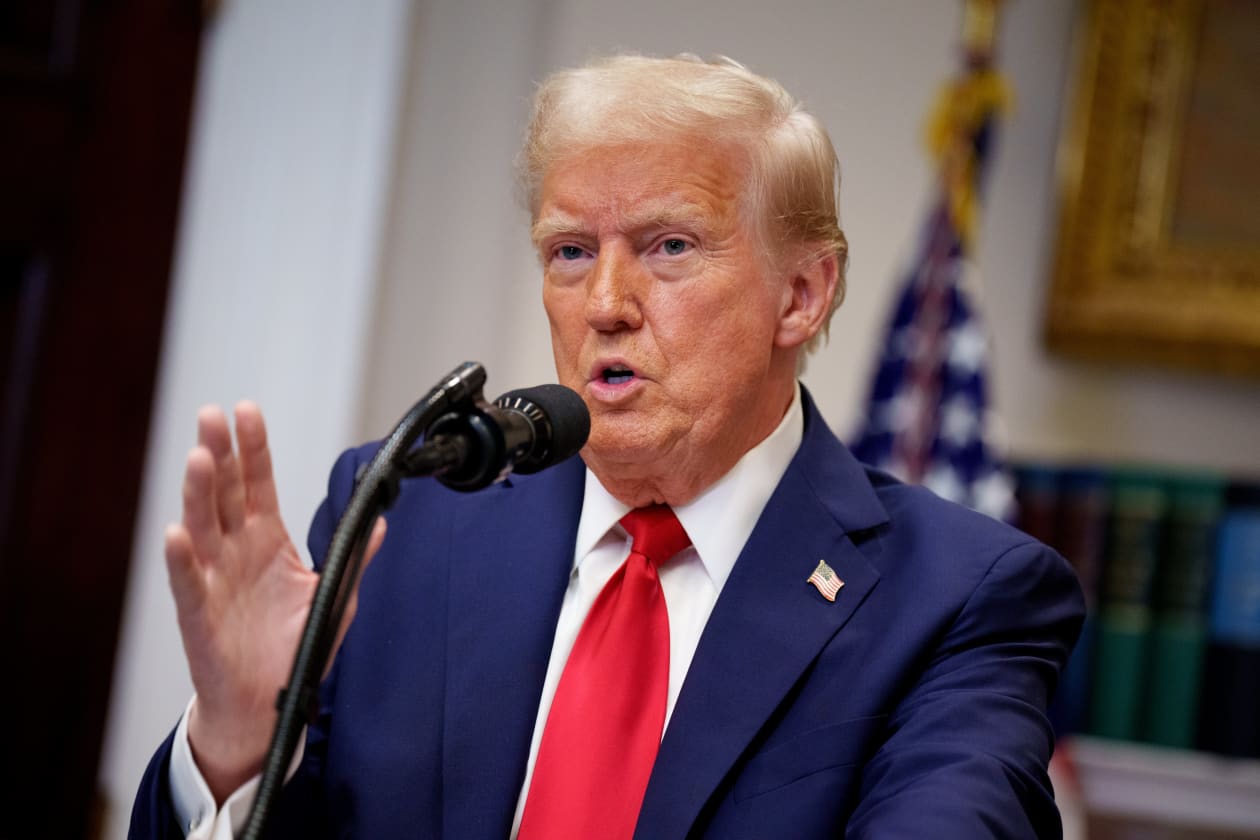
Leaders of SpaceX, OpenAI and Anthropic publicly argued that AI development should be paced, with Anthropic CEO Dario Amodei warning that rogue AI agents could cause “hundreds of billions” of dollars in damage by taking over parts of the internet within a year. Donald Trump and other prominent figures pushed back against calls for an AI slowdown, with Trump calling the effort a “sick conspiracy.” The dispute highlights rising policy and safety risks around rapid AI deployment, though no concrete regulatory action was announced.
Analysis
The investable issue is not a near-term halt in AI capex; it is a widening regulatory and liability discount between closed-model platforms with strong governance infrastructure and open-weight or lightly controlled ecosystems. Over the next 1-3 months, heightened safety rhetoric could increase enterprise procurement scrutiny, extending sales cycles for agentic deployments while favoring vendors able to provide audit trails, permissions, indemnification and private-cloud controls. Microsoft (MSFT), Amazon (AMZN), Google (GOOGL) and Palo Alto Networks (PANW) are better positioned to monetize that compliance layer than pure model developers whose economics remain opaque.
For SpaceX/SPCX, the direct read-through is limited. The more relevant second-order effect is that AI-security concerns raise the strategic value of secure compute, satellite connectivity and defense-related communications, but this is a multi-year procurement thesis rather than a catalyst for a private-company proxy. Do not extrapolate public disagreement into a binding policy outcome: absent executive action, congressional language, or a major cyber incident tied to autonomous agents, this remains narrative risk rather than an earnings event.
Consensus may be too focused on whether safety rules reduce AI demand. Moderate guardrails can increase enterprise adoption by reducing CIO and board-level liability concerns; the likely revenue shift is from experimental model access toward governed deployment stacks. The bearish case emerges if compliance requirements become model-specific or impose compute licensing thresholds, which would raise fixed costs, entrench hyperscalers, and pressure smaller AI software vendors' valuation multiples before revenues mature.
A material reversal requires either a documented AI-agent security incident, which could rapidly compress AI software multiples, or policy language that mandates deployment controls. Conversely, continued hyperscaler capex guidance and accelerating enterprise AI bookings would falsify a near-term demand-slowdown thesis. Monitor MSFT Azure AI growth, GOOGL Cloud backlog, AMZN AWS growth, and cyber-vendor billings through the next earnings cycle.
AllMind Terminal
AI-powered research, real-time alerts, and portfolio analytics for institutional investors.
Request TrialMarket Sentiment
Overall Sentiment
mixed
Sentiment Score
-0.05
Ticker Sentiment
Key Decisions for Investors
- Maintain/establish a 3-6 month pair: long MSFT and PANW versus short an equal-dollar basket of high-multiple, subscale AI software exposure (IGV as a liquid proxy if single-name borrow is unattractive). Thesis is compliance and security spending capture; exit if enterprise AI deployment metrics weaken materially or PANW billings fail to reaccelerate.
- Do not take directional SPCX exposure on this development. Set an alert for formal federal AI-security rules, defense procurement references to autonomous-agent security, or a disclosed AI-linked cyber event; those would create a more actionable catalyst for secure-connectivity and defense-adjacent assets.
- Use any policy-driven 5-8% pullback in hyperscalers as an accumulation window rather than a broad AI short, provided capex guidance is maintained. Risk/reward favors platform owners because governance requirements raise switching costs and favor bundled cloud, identity and security offerings.
- Hedge concentrated AI application-software longs over the next earnings cycle with IGV puts or reduced gross exposure. The key downside trigger is extended sales cycles or lower net-revenue retention attributed to customer governance reviews; absent that evidence, avoid treating rhetoric as a standalone regulatory shock.
More News
- We're adding a new, high-profile AI play to our Bullpen stocks to watch list
- FCC clears Amazon Leo to acquire mobile-satellite operator Globalstar
- The 'Magnificent Seven' is no more. Time to pick winners and losers as group's correlation breaks down
- Jim Cramer says these tech giants can weather market turbulence
- Prediction market bets set the tone for Anthropic’s much-awaited IPO
- Anthropic Could Begin Marketing Its IPO the Week of Nov. 9