
IEEE Study Presents a Compact Spectrometer for Optical Coherence Tomography Imaging
Source: PR Newswire
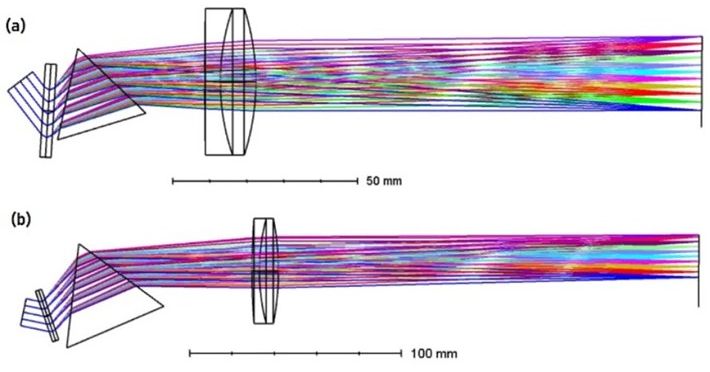
IEEE researchers developed a compact linear-in-wavenumber spectrometer for spectral-domain optical coherence tomography that delivers a theoretical 4.8 mm imaging depth across a 76 nm detection range. Using a 1,800 lines/mm grating reduced optical length to 190 mm from 325 mm and input beam diameter to 7.2 mm from 11 mm versus a conventional 1,200 lines/mm design. The system demonstrated in-vivo imaging of nailfolds and palm skin while eliminating interpolation and resampling steps, potentially lowering the size and cost of biomedical OCT systems.
Analysis
This is a component-level innovation rather than a near-term revenue event. The economic value of a smaller SD-OCT optical engine is highest for OEMs trying to broaden OCT into lower-cost point-of-care dermatology, dental, wound-care, and handheld applications; established ophthalmic platforms already benefit from installed-base service economics and may have limited incentive to pass through hardware savings. The likely beneficiaries are optical-component suppliers with high-density volume-phase holographic grating capability and compact line-scan camera suppliers, but the publication provides no evidence of manufacturable yield, unit cost, licensing, or commercial design wins.
The more relevant competitive question is whether reduced reconstruction complexity lowers compute, latency, and power requirements enough to enable portable systems. If validated in a product, that could narrow the system-cost gap between spectral-domain OCT and newer swept-source architectures, pressuring premium swept-source pricing and potentially extending SD-OCT's useful life in cost-sensitive indications. Over 6-18 months, a credible OEM adoption could improve gross margins through smaller optics and fewer processing requirements; in the next 1-3 months, no listed-equity earnings impact is identifiable.
Contrarian view: the apparent compactness gain may be less economically meaningful than the optical bill of materials suggests. High-groove-density gratings can introduce sourcing concentration, alignment tolerances, throughput trade-offs, and volume-production yield risk; clinical reimbursement and workflow integration, not spectrometer size, remain the binding constraints for most non-ophthalmic OCT markets. Treat this as a technology watch item, not a catalyst, until an OCT OEM discloses prototype-to-product conversion or cost-per-system data.
AllMind Terminal
AI-powered research, real-time alerts, and portfolio analytics for institutional investors.
Request TrialMarket Sentiment
Overall Sentiment
mildly positive
Sentiment Score
0.32
Key Decisions for Investors
- No directional trade on this publication alone; the stated impact lacks commercialization, IP ownership, unit-economics, and OEM-design-win evidence.
- Create a 6-12 month watchlist around ZEISS (private), Topcon (7732 JP), NIDEK (private), and Halma (HLMA LN) for product launches or earnings commentary indicating portable/low-cost OCT expansion; a disclosed compact SD-OCT platform would be a more actionable validation point.
- Monitor Coherent (COHR) and ams-OSRAM (AMS SW) only as indirect optical-component read-throughs; do not underwrite revenue upside without confirmation that their gratings, detectors, or related subsystems are qualified in a commercial design.
- Falsify the portability thesis if commercial prototypes fail to demonstrate equivalent image quality and scan speed at a materially lower system price, or if high-density grating sourcing creates lead times or gross-margin dilution that offsets the smaller optical assembly.
More News
- Wall Street’s Nasdaq hits all-time high as AI frenzy gathers pace
- Data-Center Bet Makes ESDS One of India’s Best New Listings
- Asia stocks ride tech wave higher, oil stays subdued
- Trump Says US Team Met With Iranians at UNGA
- U.S. regulators rush to write crypto rulebook after Clarity Act stalls in Senate
- Meta is breaking out after introducing Muse AI agent. Where the stock is going, according to the charts