
Zendure Introduces Agentic HEMS at IFA 2026: "The Home Energy Hub of the AI Era"
Source: PR Newswire
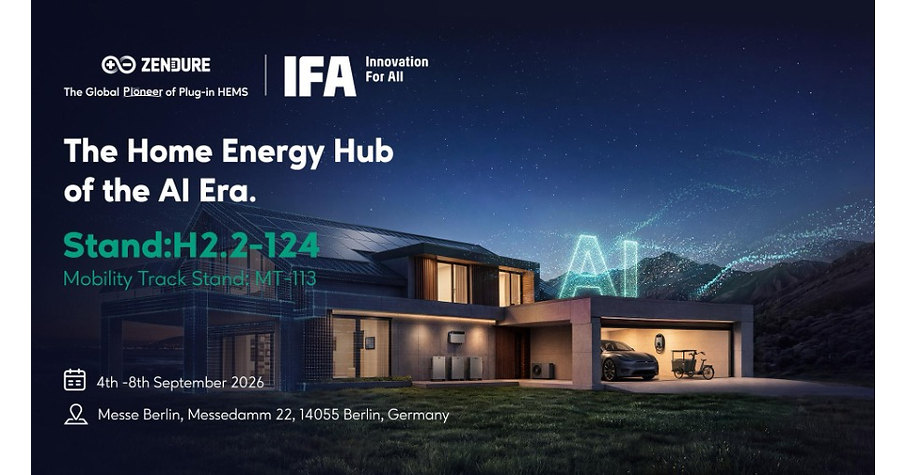
Zendure unveiled “Agentic HEMS” at IFA 2026, positioning it as a system-level home energy platform that can predict, plan, and autonomously act across solar, batteries, EVs, heat pumps, and dynamic tariffs using its ZenPulse forecasting model and ZENKI AI agents. The open Zen+OS platform integrates with major smart-home ecosystems (e.g., MQTT, Home Assistant, Homey) and connects to 870+ energy providers across Europe for 150M+ users, aiming to reduce electricity costs via automated load shifting and optimized power purchasing. This is product/technology-forward news with limited immediate financial impact, but it supports a bullish narrative around smarter, AI-driven energy management.
Analysis
This reads less like an earnings-driving event and more like a signal that the value chain is migrating from hardware margin to orchestration margin. If the market starts believing that the control layer, not the battery or inverter, is the scarce asset, the beneficiaries are the firms that own the software interface and installer relationships; the losers are the module-and-box vendors that compete on spec and price. In practice, that argues for a gradual multiple split between platform-like names and commoditized retrofit/storage hardware over the next 6-18 months, not an immediate re-rating today.
The second-order effect is on interoperability. Open APIs can expand the addressable market by lowering install friction, but they also weaken lock-in, which tends to compress pricing power across the stack once the category matures. That is constructive for installers and EV-charger adjacencies if it reduces customer acquisition cost, but negative for closed ecosystems and tariff-arbitrage middlemen whose economics depend on controlling the dispatch layer.
The key risk is that this is still a product narrative until there is evidence of attach rates, retained users, and realized bill savings. In the next 1-3 months, the main catalyst is channel checks from Europe around installation complexity and payback periods; over 6-18 months, the thesis only works if volatile power prices and grid constraints keep the savings proposition alive. If homeowner paybacks slip beyond roughly 5-7 years or integrations prove brittle, the AI premium should unwind quickly. The named tickers have no obvious direct fundamental linkage, so the best trade may be to wait rather than force exposure.
AllMind Terminal
AI-powered research, real-time alerts, and portfolio analytics for institutional investors.
Request TrialMarket Sentiment
Overall Sentiment
mildly positive
Sentiment Score
0.18
Key Decisions for Investors
- No trade in AERA/CETY/IUSDF on this headline; treat as a watch item only until there is evidence of bookings, install growth, or gross-margin impact.
- Tactical relative-value: long ENPH / short SEDG for 1-3 months if channel checks confirm that software-driven energy management is improving attach rates; thesis invalidates if SEDG shows better-than-expected storage conversion or relative strength persists through the next earnings cycle.
- If expressing the broader home-energy automation theme, prefer TSLA over pure-play hardware names on a 6-18 month horizon because the ecosystem can monetize EV charging, storage, and software together; stop out if Powerwall/charger adoption data or energy segment margins fail to inflect.
- Fade any first-day spike in small-cap clean-tech proxies unless management later quantifies unit economics; this is likely a narrative bid, not a near-term fundamentals bid.
More News
- Iran says two tankers catch fire after hitting mines in Strait of Hormuz
- Why Marco Rubio’s visit to Mumbai has ruffled feathers in India
- US and Iran both claim control of Strait of Hormuz amid attacks on vessels
- AI stocks plunge. Inflation heats up. Where we're still finding opportunities
- Bending Spoons wants to revive software castoffs. Berkshire is backing the plan
- AI rapidly improving, could vastly boost U.S. GDP, Anthropic's Clark tells policymakers