
FIRST-IN-HUMAN STUDY DEMONSTRATES Qi601 CAN PHYSICALLY CAPTURE MICROPLASTICS
Source: PR Newswire
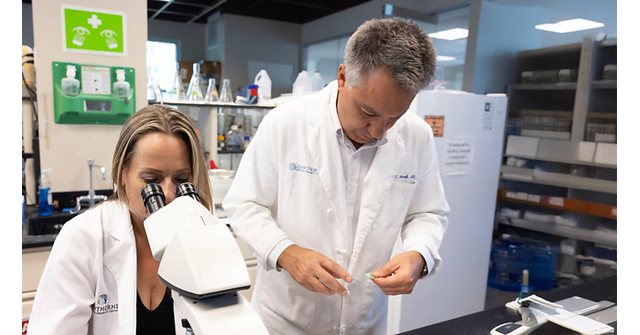
Quorum Innovations reported peer-reviewed first-in-human proof-of-concept data showing its Qi601 postbiotic physically associated with microplastics in saliva, reducing measured particles by approximately 91% versus a gum-only sample. Follow-on simulated digestion studies indicated 92% nanoplastic depletion, while cell experiments showed Qi601 prevented 98% of nanoplastics from entering human colon cells. The privately held company cites an FDA GRAS safety letter, two DARPA Direct-to-Phase II awards, and more than 55 patents, but the findings remain early-stage and do not establish clinical health outcomes.
Analysis
This is not yet investable public-equity news: Quorum appears private, and the evidence supports a mechanistic signal rather than a demonstrated clinical benefit. The key commercialization gap is whether particle capture translates into validated endpoints—lower systemic exposure, biomarker improvement, or reduced disease risk—without impairing absorption of nutrients or orally administered drugs. A GRAS safety determination does not establish efficacy, create a therapeutic claim pathway, or guarantee durable consumer demand.
The more relevant 6-18 month read-through is for consumer-health and functional-ingredient incumbents if microplastics becomes a scalable supplement category. Nestle (NSRGY), Danone (DANOY), ADM and IFF have distribution, formulation, and manufacturing advantages, but only if claims can survive FTC scrutiny and retailer diligence; early category economics would likely favor branded consumer-health platforms over commodity probiotic suppliers. Contrarian view: consumer awareness may be high while willingness to pay remains low, because the claimed benefit is preventative and hard for users to observe; that dynamic can make customer-acquisition costs uneconomic absent credible clinical-outcome data.
Near term, expect limited listed-market impact and treat subsequent press coverage as sentiment rather than earnings-relevant. The meaningful catalyst would be a larger independently run human study measuring systemic microplastic biomarkers and tolerability, followed by a disclosed retail partnership or licensing deal. Thesis is falsified for any category-read-through if follow-on work shows no systemic-exposure reduction, identifies nutrient/drug-interaction issues, or regulators constrain environmental-detoxification claims.
AllMind Terminal
AI-powered research, real-time alerts, and portfolio analytics for institutional investors.
Request TrialMarket Sentiment
Overall Sentiment
moderately positive
Sentiment Score
0.58
Key Decisions for Investors
- No immediate directional trade: the issuer is private and there is no disclosed revenue, valuation, manufacturing capacity, or public-company economic exposure.
- Create a 6-12 month watchlist for NSRGY, DANOY, ADM and IFF; consider a long only after a disclosed licensing, supply, or retail-distribution arrangement quantifies expected sales and gross-margin contribution.
- Monitor FDA/FTC claim-related developments and independent human biomarker data before assigning category value; absence of clinical endpoint validation should prevent extrapolating this result into supplement-sector earnings estimates.
- For existing consumer-health longs, treat any microplastics-product launch as optionality only; require evidence of repeat purchase and retailer reorder rates within 1-2 quarters before increasing exposure.
More News
- PHC Holdings surge to near 4-year high after Toho takeover proposal confirmed
- Google rolls out Gemini 4 Argon, its most advanced AI model
- Meta stock enjoys best month since 2022 on AI momentum
- Huawei unveils Mate 90 phones, leans on homegrown chip design to offset US curbs
- Bloomberg Tech: OpenAI Seeks $30B as Trump Backs Safety Audits
- OpenAI’s $30B Bet, Trump’s AI Safety Shift and Apple’s Next Act
From AllMind Research
- Anthropic IPO Preview: Valuation, Timing, and What to Watch
- Shein After the IPO: Venue, Valuation, and What Must Be Proved
- What AI Research Tools Should a Small Hedge Fund Buy First?
- State of Public Markets, June 2026: Higher for Longer Meets the AI Supercycle
- AI Research Tools With Exact Source Citations