
SeQent Publishes 2026 State of Industrial Alarming Report
Source: PR Newswire
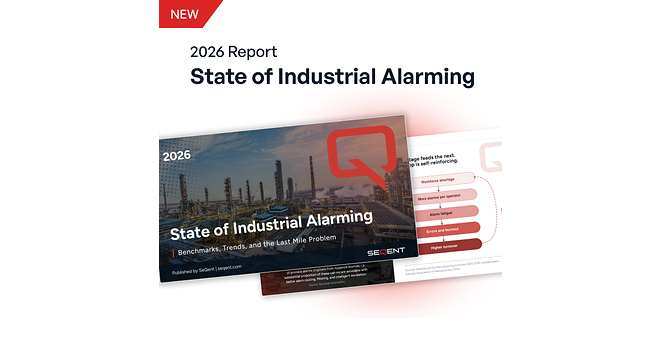
SeQent’s 2026 State of Industrial Alarming report highlights a persistent “last mile” gap: despite ISA 18.2 KPIs, there is no public benchmark confirming whether critical alarms reach the right person with the right context and audit trail. The report cites rising cost of alarm failure—Fortune Global 500 downtime losses of $1.4T annually and automotive line shutdowns at $2.3M per hour—alongside workforce shortages (1.9M potential unfilled manufacturing jobs by 2033) and increased OSHA enforcement tying alarm response to auditable events. It offers a five-stage maturity journey, new response-focused metrics, and an Alarm Health Scorecard for rapid internal benchmarking.
Analysis
This is not a near-term earnings event for the vendor; it is a budget-shaping document. The real read-through is that alarm modernization is migrating from maintenance spend into compliance, cyber, and uptime capex, which favors integrated automation vendors with software + controls attachments (SIEGY, HON, EMR, ROK) more than standalone hardware. Legacy paging/alerting niches should face pricing pressure as buyers demand audit trails, mobile endpoints, and escalation logic rather than replacement hardware.
The second-order effect is on plant economics: fewer operators and higher downtime sensitivity make response-time software a relatively easy ROI sell, so adoption should start in regulated, high-cost-stop industries first (pharma, utilities, auto, food). That creates a staggered procurement path: immediate awareness, 1-3 quarters to pilot, then 6-18 months for meaningful retrofit orders. If macro softens, this becomes a deferred-benefit project and order flow slips despite the structural need.
Contrarian view: the market may miss how mundane this spend is. The consensus will focus on "digital factory" narratives, but the spend bucket is really compliance and incident prevention, which is stickier and less cyclical than generic automation. Still, the report itself is vendor-sponsored and does not prove demand conversion; the falsifier is simple: no improvement in backlog/order comments from SIEGY/HON/EMR/ROK over the next two earnings cycles, or capex guides get cut before plants start replacing aging notification systems.
AllMind Terminal
AI-powered research, real-time alerts, and portfolio analytics for institutional investors.
Request TrialMarket Sentiment
Overall Sentiment
mildly negative
Sentiment Score
-0.15
Key Decisions for Investors
- Small starter long SIEGY vs short XLI for 3-6 months: express a view that retrofit/compliance software spend is more resilient than the industrial complex; target 1.5-2.0x downside if capex defers, but watch for a reversal if industrial software orders accelerate.
- Add HON and ROK to the buy watchlist into next earnings: only initiate if management commentary confirms auditability/compliance-driven demand; best entry is on any post-release weakness, with a 6-12 month horizon for backlog conversion.
- Do not short broad industrials on this headline: the read-through is too incremental for a clean macro short. If you want a hedge, use a modest XLI put spread only if manufacturing PMIs deteriorate and automation bookings soften simultaneously.
- Monitor OSHA/plant incident headlines in pharma, utilities, and auto as the true catalyst: a single enforcement event would be the fast path to adoption and could re-rate SIEGY/HON/EMR/ROK over days rather than months.