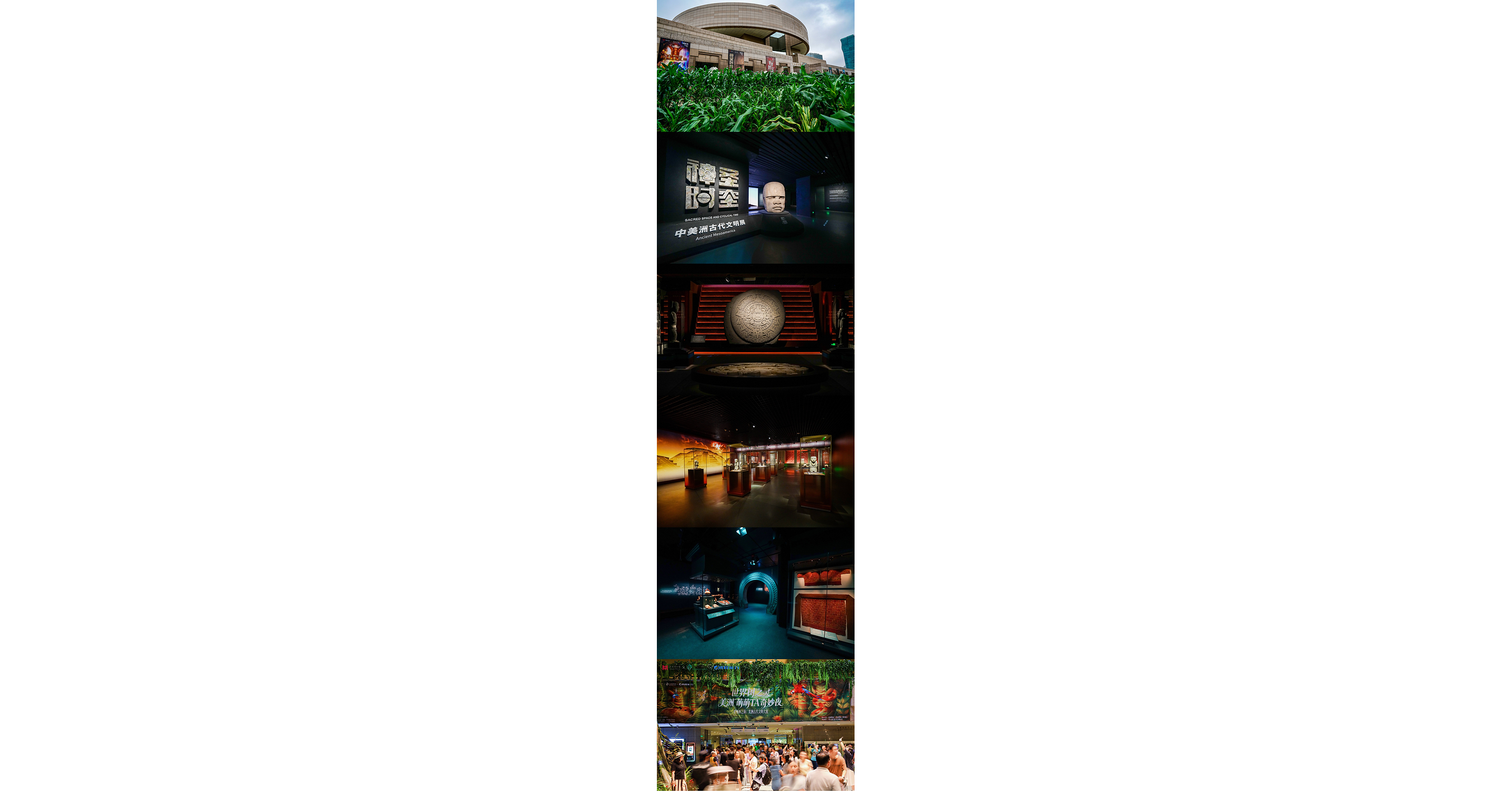
No hay un evento financiero: el artículo anuncia la apertura al público de la exposición del Museo de Shanghai “En la cima del Árbol del Mundo: civilizaciones antiguas de América”. La muestra reúne 1.129 grupos de objetos y cerca de 3.000 piezas de México, Perú y China, con más de 7.000 m² de galerías y 10.000 m² de experiencias inmersivas. No se reportan cifras económicas, resultados corporativos, ni impactos de mercado.
This is less a museum headline than a read-through on Shanghai’s ability to convert cultural traffic into adjacent spend. The real beneficiaries are the low-visibility monetization layers: local transport, F&B, premium souvenirs, and nearby hotels, not the exhibition itself. If the city can reliably bundle admission, transit, dining, and overnight stays, that is a better signal for China’s experience economy than for discretionary hard-goods demand.
Second-order, this supports operators that sell convenience and density rather than pure leisure: hotel chains, travel platforms, and destination retailers near tier-1 cultural nodes. The mechanism is incremental dwell time and higher conversion per visitor, which can lift margins even if top-line traffic growth is modest. But the effect is likely localized and short-duration unless Shanghai proves this model can be repeated at scale across other flagship institutions.
The contrarian view is that investors may overfit a one-off cultural event into a macro consumer narrative. These programs often create a sharp but temporary footfall spike without durable earnings impact, and the true test is whether nearby spend stays elevated 2-6 weeks after opening. If local occupancy, dining checks, and ticket bundles do not inflect, the tradeable signal is probably noise rather than a consumer recovery read-through.
AI-powered research, real-time alerts, and portfolio analytics for institutional investors.
Request TrialOverall Sentiment
neutral
Sentiment Score
0.00
