
Taiwan Excellence Showcases 21 Automotive Innovators at SEMA 2026, Strengthening U.S.-Taiwan Industry Ties
Source: PR Newswire
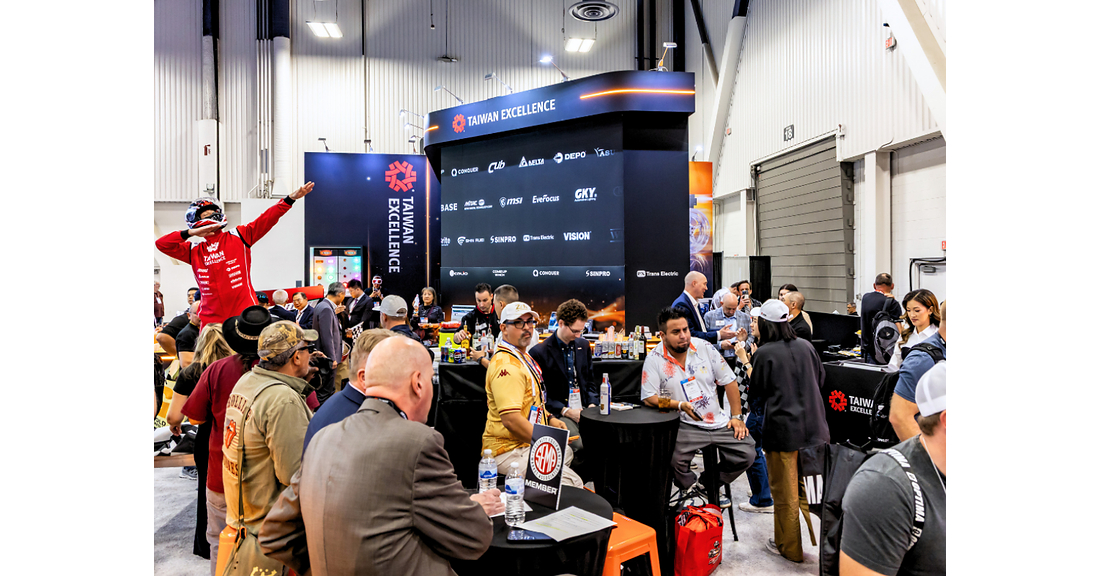
Taiwan Excellence opened its pavilion at SEMA 2026 in Las Vegas, featuring 21 Taiwanese automotive brands, including 15 Taiwan Excellence Award winners; approximately 75 Taiwanese companies are exhibiting across the show. The event highlighted AI-powered safety, smart mobility, automotive electronics, and aftermarket products, with participants discussing opportunities for U.S.-Taiwan collaboration. SEMA’s Jim Moore said many vehicle features are expected to be mandated by law starting in 2029, creating challenges and opportunities for aftermarket accessories.
Analysis
The investable signal is not the pavilion launch; it is a possible shift in aftermarket economics as ADAS becomes harder to modify without preserving sensor performance. If vehicle rules actually require additional features from 2029, demand could migrate toward validated, sensor-compatible accessories, installation standards, and calibration services—while unvalidated add-ons face fitment, liability, and channel-rejection risk. That favors capability and certification over low-cost component supply, but the article identifies no contracts, product-level sales, or rule details, so this is not evidence of near-term earnings upside for any exhibitor.
Taiwanese suppliers could benefit if U.S. buyers use them to diversify sourcing and access automotive electronics expertise. The counterweight is that cross-border partnership announcements do not establish production localization, customer qualification, or durable pricing power; trade-policy and Taiwan Strait exposure remain relevant. Nevada’s manufacturing ambitions are a longer-dated option, not a current demand catalyst.
Days: likely negligible fundamental impact. Over 1–3 months, watch for named OEM/customer awards, U.S. distribution agreements, and independently verifiable exhibit-to-order conversion. Over 6–18 months, the key question is whether regulations and insurer/OEM requirements make ADAS-compatible aftermarket products a meaningful, recurring category. The quoted 2029 mandate is too unspecific to underwrite: verify jurisdiction, covered systems, and final rulemaking. Contrarian point: the opportunity may be overstated if OEM-integrated systems constrain customization more than they expand the compliant-accessory market.
AllMind Terminal
AI-powered research, real-time alerts, and portfolio analytics for institutional investors.
Request TrialMarket Sentiment
Overall Sentiment
mildly positive
Sentiment Score
0.15
Key Decisions for Investors
- No event-driven position: a trade-show appearance and promotional claims do not establish revenue, margins, or customer wins.
- Set an alert for named Taiwanese suppliers winning U.S. OEM or aftermarket distribution programs; require evidence of qualification, order scale, and repeat demand before considering a single-name long.
- Monitor LKQ as an aftermarket-channel read-through, not a direct beneficiary: look for evidence that ADAS-compatible parts and calibration add services support growth without raising fitment, warranty, or liability costs.
- Falsify the structural thesis if the cited 2029 requirements are delayed or narrowed, or if OEMs restrict third-party modifications enough to prevent compliant aftermarket products from scaling.
More News
- What Wall Street billionaires are saying about Democrats' midterm sweep
- NextDC shares surge 43% after Goodman, Digital Realty stake purchases
- Voters rebuff data centers in every ballot measure except one during the 2026 midterms
- Oil and data centre stocks sink after US midterms
- Qualcomm issues disappointing earnings forecast as memory shortage weighs on smartphone sales
- China Blocks SoftBank Acquisition of ABB Robot Unit, FT Says