
Micron Q4: Brace Yourself For The Inflection
Source: seekingalpha.com
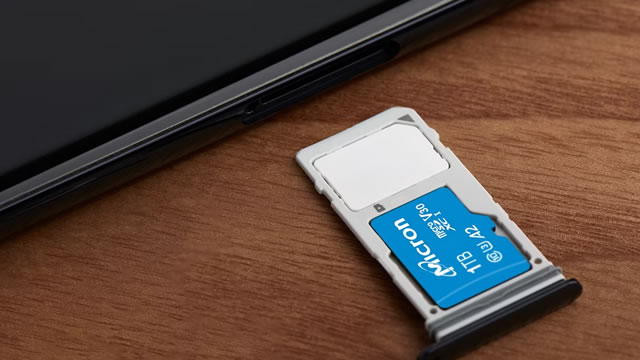
Micron is rated Buy on expected explosive fiscal 2026 revenue and margin growth, driven by AI-related memory demand and stronger pricing. Long-term contracts cover 20% of DRAM and one-third of NAND volumes through 2030, supported by $22B in financial commitments. The company also holds $24.43B in net cash, though moderating share-price momentum presents a near-term risk.
Analysis
The relevant change is not simply higher AI memory demand but a partial migration from spot-cycle economics to contracted capacity economics. If enforceable, longer-duration commitments lower MU's revenue volatility and support a higher through-cycle multiple; they also shift shortage risk toward cloud customers and OEMs, potentially making HBM/leading-edge DRAM allocation a bottleneck for NVDA, AMD and custom-ASIC deployment rather than compute silicon itself. The offset is that contracted volume can cap upside if pricing resets materially higher, so the critical diligence item is escalation clauses, take-or-pay terms and the mix of HBM versus commodity DRAM/NAND.
Near term (days to 1-3 months), MU remains vulnerable to profit-taking because consensus expectations now embed unusually strong operating leverage and memory equities tend to de-rate before fundamentals weaken. A modest miss on bit shipment growth, HBM yield, or gross-margin guide could matter more than another beat. The clearest falsifier is evidence that DRAM contract pricing is flattening while inventory days rise at hyperscale customers; that would imply AI-related demand is being met through inventory build rather than durable end demand.
Over 6-18 months, the more non-consensus risk is supply response. Samsung Electronics, SK Hynix and Chinese NAND suppliers have incentives to add capacity once returns normalize, particularly in NAND where differentiation is weaker; this could preserve HBM scarcity while reintroducing commodity NAND price pressure. MU's net-cash position reduces balance-sheet risk, but it does not insulate earnings from a pricing reversal, making relative exposure to high-end DRAM preferable to an unhedged long in the full memory cycle.
AllMind Terminal
AI-powered research, real-time alerts, and portfolio analytics for institutional investors.
Request TrialMarket Sentiment
Overall Sentiment
moderately positive
Sentiment Score
0.62
Ticker Sentiment
Key Decisions for Investors
- Maintain a tactical long MU only on post-earnings consolidation or a pullback tied to momentum, not ahead of an already elevated guide; target a 3-6 month holding period and size against a 10-15% drawdown risk from gross-margin or pricing disappointment.
- Prefer a relative-value expression: long MU / short WDC over 3-6 months. MU has greater exposure to AI DRAM/HBM economics, while WDC is more exposed to NAND pricing and a faster commoditization risk; exit if NAND contract pricing inflects upward for two consecutive monthly checks.
- For upside participation with defined risk, monitor 6-9 month MU call spreads after confirming the next-quarter HBM volume and DRAM contract-price outlook. Do not initiate solely on management's contract claims without disclosure of take-or-pay and price-reset protections.
- Set alerts around quarterly inventory days, DRAM contract-price indications, and Samsung/SK Hynix capacity commentary. Reduce MU exposure if inventory rises alongside flat contract pricing, or if peers signal accelerated HBM/DRAM capex that could compress 2027 returns.
More News
- Labor crisis in U.S. chip manufacturing leaves Samsung, TSMC desperate for talent
- Intel and Micron lead our portfolio higher, and J&J's strengthens our case for owning it
- SK Hynix jumps 5% Samsung rises 3% as Intel warning challenges peak memory fears
- Market Indexes Bounce Back From the Fed's Rate Hike
- Stocks stage a comeback after Fed-induced declines — plus, what's ailing Boeing
- Why Was Micron Technology Stock Up Today?