
Palm Oil Climbs as Indonesian Forest Fires Puts Supply at Risk
Source: Bloomberg
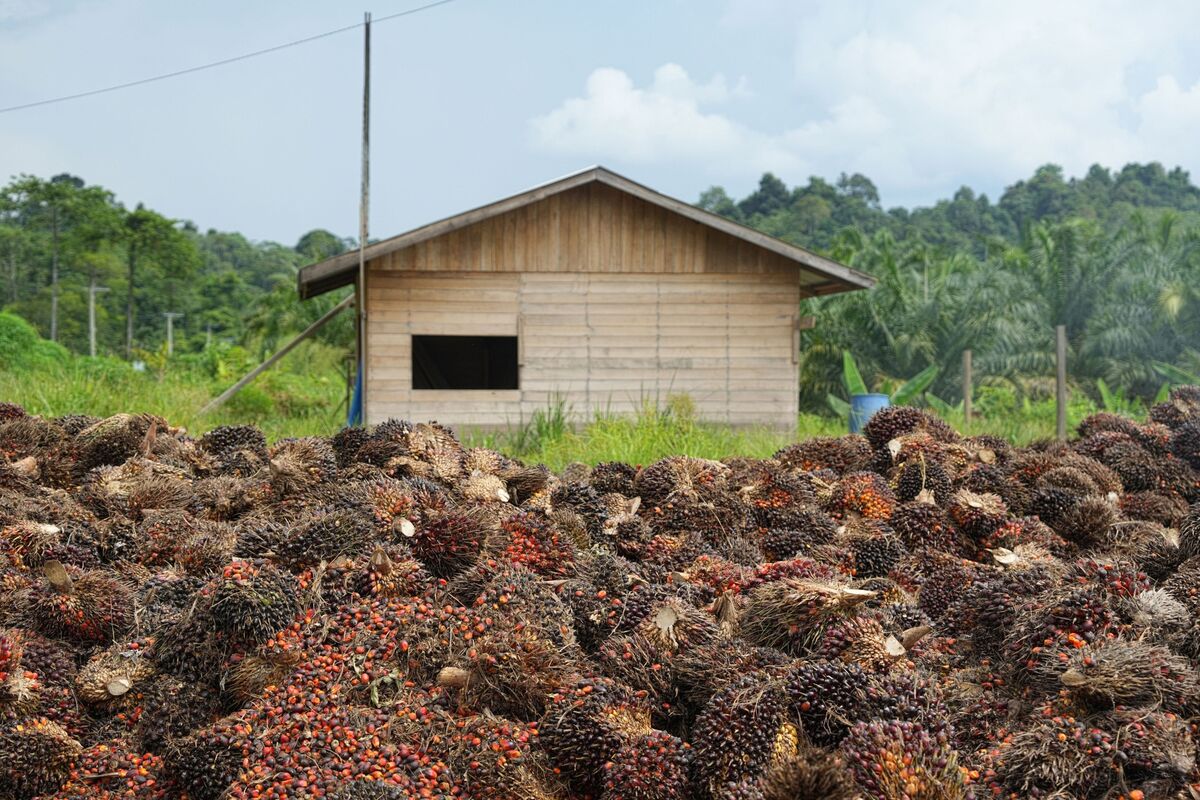
Benchmark palm oil futures in Kuala Lumpur rose as much as 0.9% to 4,975 ringgit ($1,229) per ton as Indonesian forest fires threatened supply from the world's largest producer. Harvesting has been disrupted as workers assist firefighting efforts, while haze, smoke and reduced sunlight could impair palm fruit growth. The supply risk is supportive for palm oil prices but raises uncertainty for regional agricultural output.
Analysis
The relevant trade is not simply long plantation equities: upstream producers face an offset between higher realized CPO prices and lower fresh-fruit-bunch volumes, while labor diversion and logistics disruption can raise unit costs. The cleaner near-term expression is Bursa Malaysia CPO futures (FCPO), with soybean oil futures (ZL) as a secondary beneficiary if buyers substitute away from palm-based food and biofuel feedstocks. Refiners and consumer-product manufacturers with fixed-price contracts are the weak link, because pass-through typically lags spot edible-oil inflation by one to two quarters.
Over the next 1-3 months, the market will focus on whether haze becomes persistent enough to impair yields rather than merely delay harvesting. A durable supply premium would be amplified by Indonesia's biodiesel program, which reduces exportable surplus when domestic feedstock availability tightens; that is constructive for FCPO and Malaysian growers such as KLK, IOICORP and SIMEDARBY, but potentially margin-negative for Wilmar International (F34.SI) if refining margins cannot widen. The contrarian point is that a sub-1% initial futures move likely prices operational disruption, not a multi-month biological yield loss; conversely, normal rainfall and rapid labor normalization would erase the weather premium quickly.
For the 6-18 month horizon, repeated haze episodes raise regulatory and financing risk for Indonesian-linked operators, including potential land-use scrutiny, remediation costs and export-policy intervention designed to protect domestic food inflation. This argues for favoring Malaysian upstream exposure over Indonesian processors if the event extends, while avoiding a broad consumer-staples short absent evidence of sustained retail-price resistance. Thesis falsifiers are declining regional hotspot counts, normalization in Malaysian Palm Oil Board inventory data, and a narrowing FCPO-soybean-oil spread despite continued haze.
AllMind Terminal
AI-powered research, real-time alerts, and portfolio analytics for institutional investors.
Request TrialMarket Sentiment
Overall Sentiment
mildly positive
Sentiment Score
0.20
Key Decisions for Investors
- Tactically buy FCPO or a liquid palm-oil ETF/proxy on a close above the recent 4,975 ringgit/ton area; use a 4-8 week horizon and a stop if prices close back below the pre-disruption range. The setup is attractive only if satellite hotspot and precipitation data remain adverse for at least 7-10 days.
- Pair trade for a 1-3 month supply-tightness scenario: long KLK (2445.MY) or IOICORP (1961.MY) versus short Wilmar International (F34.SI). Upstream price realization should re-rate faster than downstream processing margins; exit if management commentary indicates Wilmar is fully passing through feedstock costs or if FCPO retreats materially.
- Buy soybean oil futures (ZL) or use a long ZL/short CBOT soybean meal spread as a substitution hedge rather than a standalone directional oilseed bet. Palm tightness should support the vegetable-oil complex, but a broad soybean supply shock would dominate the relative-value thesis.
- Do not chase Indonesian plantation names solely on higher CPO prices until field-level volume data are available. Escalating fires can convert apparent pricing upside into lower harvests, higher operating costs and regulatory headline risk; revisit after monthly production and inventory releases confirm whether the physical market is actually tightening.
More News
- Are global oil reserves sufficient to withstand renewed US-Iran war?
- EU entering winter with lowest gas reserves on record, IEA boss warns
- OpenAI Trims Target Value & Volvo Cars Cuts 2,500 Jobs
- U.S. oil holds above $100, Brent at five-month high as Iran says it’s prepared for warfare
- U.S. prepares for prolonged Iran conflict, Trump envoy tells FT
- Volvo Cars to cut 2,500 jobs as third quarter swings to loss
From AllMind Research
- Anthropic IPO Preview: Valuation, Timing, and What to Watch
- Shein After the IPO: Venue, Valuation, and What Must Be Proved
- What AI Research Tools Should a Small Hedge Fund Buy First?
- AI Financial Research Benchmarks: What the Scores Mean
- State of M&A and Private Markets, June 2026: A $4.9 Trillion Rebound, Underwritten on Money That Never Got Cheaper