
When 210 million people learn Chinese, they see more than a language
Source: PR Newswire
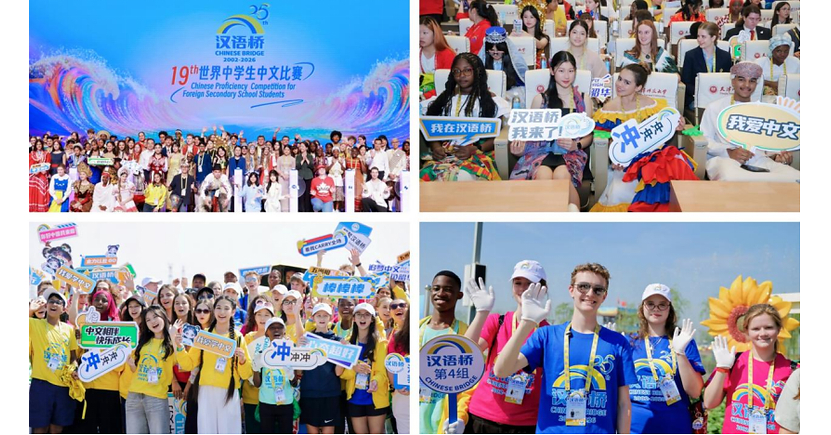
China Daily reported that nearly 210 million people worldwide are learning or using Chinese, with 90 countries incorporating the language into national education systems. Global HSK test takers reached 564,000 in the first half of 2026, up 36% year over year. The article highlights Chinese-language learning and cultural programs such as Chinese Bridge as expanding China's international cultural engagement, but it has limited direct financial-market relevance.
Analysis
This is soft-power messaging rather than a monetizable corporate event, and the claimed demand indicators are not independently tied to public-company revenue. Near-term equity implications are therefore negligible; the relevant transmission channel is gradual normalization of Chinese consumer platforms, media, travel and cross-border commerce among younger overseas users.
Over 6-18 months, sustained language adoption could modestly lower customer-acquisition friction for global expansion by Chinese internet platforms and merchants, benefiting ADR proxies such as BABA, PDD and JD only if overseas GMV, active buyers and advertising monetization corroborate the narrative. The more direct beneficiaries may be privately held education, testing and content providers, leaving listed-market exposure diffuse and unlikely to move earnings estimates.
The contrarian view is that cultural engagement does not reliably translate into durable spending or policy liberalization. Geopolitical restrictions, data-security scrutiny and limits on Chinese apps/content distribution can sever the conversion from audience growth to revenue; absent disclosed international-user or cross-border-sales acceleration, this is not a tradeable catalyst.
AllMind Terminal
AI-powered research, real-time alerts, and portfolio analytics for institutional investors.
Request TrialMarket Sentiment
Overall Sentiment
mildly positive
Sentiment Score
0.30
Key Decisions for Investors
- No immediate position: impact is too low and the source is promotional rather than independently verifiable.
- Set a 1-3 quarter watchlist on BABA, PDD and JD for overseas GMV, international active-user growth and marketing-spend efficiency; consider relative long exposure only if at least two companies show accelerating overseas revenue growth alongside stable take rates.
- Do not use KWEB or CQQQ as a thematic expression of this item alone: broad China ETF returns remain dominated by domestic macro, regulatory posture and earnings revisions rather than cultural-engagement data.
- Falsification for any future long thesis: renewed app-store restrictions, new cross-border data rules, or two consecutive quarters of decelerating international commerce metrics would indicate engagement is not converting into commercial demand.
More News
- Here are the 3 big things we're watching in the stock market this week
- Tech leads shares higher in Asia, oil eases
- China slows humanoid robot IPO rush as hype outruns reality
- U.S. economy hits pivotal milestone: Spending on data centers and other information-processing hardware now exceeds housing investment
- Anthropic Mulls New AI Model Amid Investors' Pre-IPO Worries
- SoftBank plans more than $11 bln bond sale to fund OpenAI bets, Bloomberg reports
From AllMind Research
- Anthropic IPO Preview: Valuation, Timing, and What to Watch
- Shein After the IPO: Venue, Valuation, and What Must Be Proved
- What AI Research Tools Should a Small Hedge Fund Buy First?
- What Is an AI Investment Research Platform?
- What Exactly Does Post-Training in LLMs and Finance-Focused AI Actually Mean for Asset Managers?