
Smart Ring Maker Oura Files for US IPO as Revenue Surges
Source: Bloomberg
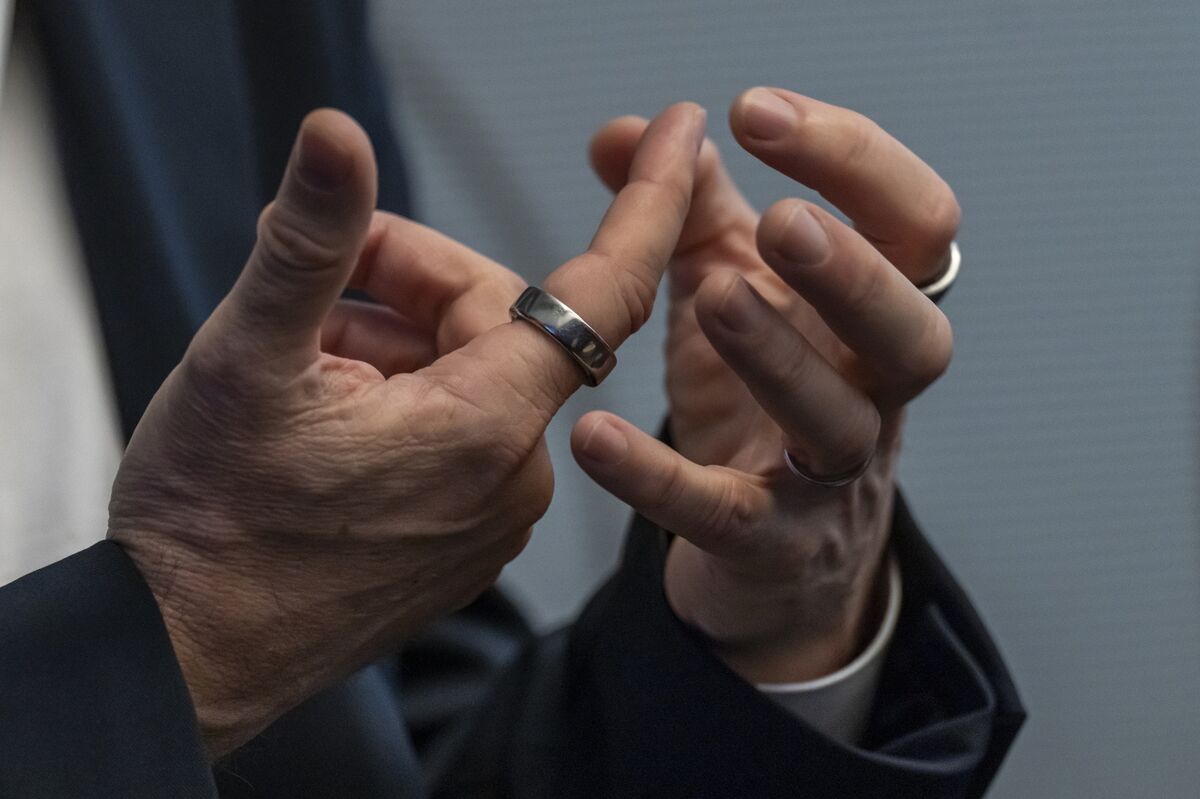
Oura filed for a US IPO, reporting $1.21B revenue for the nine months ended June 30 but a substantially larger net loss of $924.3M (vs. a $182.8M loss a year earlier). The loss widened as a deemed dividend related to redeemable convertible preferred stock impacted results, according to the SEC filing.
Analysis
This is less a pure growth story than a financing event for a category that still has to prove it can monetize beyond device sales. The key market question is whether the business behaves like a consumer hardware company with recurring software attached, or a software/data platform that happens to ship hardware. That distinction will drive valuation far more than top-line growth, and it will matter for any read-through to public wearables names such as AAPL and GRMN: if the IPO rewards the subscription layer, investors may rotate toward platforms with sticky engagement; if not, the market will keep discounting the whole category as low-quality hardware.
The second-order effect is supply-chain and pricing pressure. A well-funded IPO can subsidize customer acquisition and accelerate product iteration, which raises the bar for incumbents and smaller copycats, especially in sleep and wellness monitoring where feature parity is high. Over 1-3 months, the main catalyst is the pricing range and the disclosure of gross margin, CAC payback, and retention cohorts; those data will determine whether the market sees this as an asset-light growth model or a cash-burning consumer device rollout. Over 6-18 months, dilution risk and ongoing inventory/working-capital demands are the real watch items.
The contrarian view is that investors may over-index on revenue acceleration and underweight how quickly losses can scale if the company has to keep buying demand. A strong IPO could actually be bearish for the broader wearables basket if it validates a premium valuation for unprofitable entrants, inviting more competition and compressing future returns. Conversely, if pricing comes in below private marks, it is a warning that the market still demands clear path-to-profitability discipline in health-tech hardware.
There is no high-conviction public-equity trade from this filing alone; the right posture is to wait for terms and operating disclosures, then decide whether this deserves a growth multiple or a hardware discount.
AllMind Terminal
AI-powered research, real-time alerts, and portfolio analytics for institutional investors.
Request TrialMarket Sentiment
Overall Sentiment
mildly negative
Sentiment Score
-0.30
Key Decisions for Investors
- No immediate trade pre-pricing; set an alert for the S-1/IPO range and underwrite only after gross margin, CAC payback, and subscription attach are disclosed. If gross margin is below ~65% or retention is weak, fade any first-day pop.
- Watch AAPL and GRMN as public read-throughs on premium wearables sentiment. If Oura prices at a rich forward sales multiple, use any sector enthusiasm to sell strength in slower-growing hardware proxies; if it prices weakly, expect a brief de-rating across consumer health-tech.
- If the IPO shows a meaningful recurring-revenue mix, consider a relative long in the best software-heavy health platform versus short a pure-device basket. The trade works only if the market starts paying for engagement, not just shipment growth.
- Set a 1-3 month catalyst watch: first quarterly updates on paid conversion and churn. A material slowdown in cohort retention would falsify the 'platform' thesis and point to a hardware-style multiple compression.
- Avoid using the IPO as a broad bullish signal for consumer tech until the filing clarifies cash burn and inventory intensity; if operating losses are still expanding faster than sales, dilution risk remains the dominant medium-term issue.
More News
- AI stocks plunge. Inflation heats up. Where we're still finding opportunities
- Bending Spoons wants to revive software castoffs. Berkshire is backing the plan
- AI rapidly improving, could vastly boost U.S. GDP, Anthropic's Clark tells policymakers
- ‘How many canaries have we killed in the coal mine?’ — Wall Street debates if the latest AI bubble warnings are another head fake or the real thing
- Nasdaq Index: AI Selloff Deepens as Chips and CoreWeave Break
- Alphabet’s chief investment officer responds to Jefferies warning that the most likely outcome of the AI boom is massive U.S. capital destruction