
From Chaos to Calm: Streamline Your Holiday Kitchen with YouCopia® Organizers
Source: PR Newswire
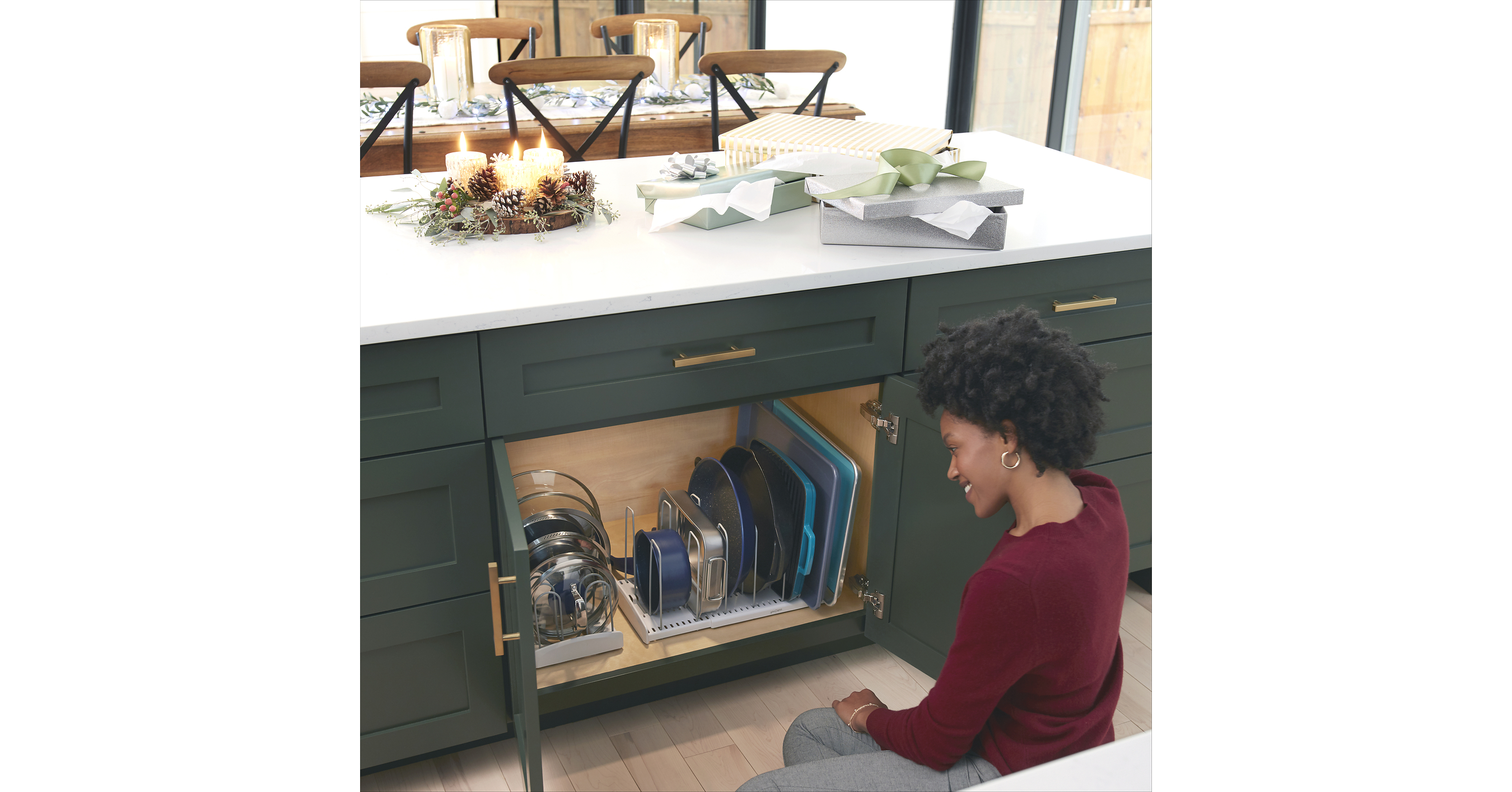
YouCopia promoted its Organizing Hero collection and new MagicTrack Rectangle Turntables ahead of the holiday season, targeting demand for kitchen, pantry and refrigerator storage products. The women-owned home-organization brand sells through YouCopia.com, Amazon, Sam's Club, Walmart and The Container Store. The announcement contains no financial results, sales guidance, pricing, or material corporate developments.
Analysis
This is not a material demand signal for AMZN or WMT; it is vendor marketing without disclosed distribution expansion, order volumes, retail sell-through, pricing, or promotional funding. At most, it reinforces the seasonal shift toward low-ticket, convenience-oriented home goods, where unit velocity is driven by search placement, fulfillment availability, and holiday discounting rather than brand differentiation.
AMZN is structurally better positioned to capture incremental category demand because organizer purchases are highly searchable, fragmented, and easily bundled with adjacent kitchen-storage items. The economic benefit is nevertheless immaterial at the consolidated level; the more relevant read-through is whether holiday discretionary spending migrates toward practical household categories, which would favor Amazon’s third-party marketplace and fulfillment utilization over specialty retail.
For WMT, the category is only incrementally supportive if it accompanies a broader trade-down in holiday spending toward functional consumables and value home goods. Margin risk offsets this: storage and kitchen-accessory promotions are likely to be price-led, and a promotional intensity increase can lift GMV while diluting general-merchandise gross margin. The near-term competitive loser would be specialty home organization retailers, including CONN and privately held/container-store formats, if mass merchants secure exclusive SKUs or stronger online assortment.
The contrarian view is that holiday organization demand may be pulled forward and heavily promotion-dependent, producing weak January replenishment. A durable retail implication requires independent evidence: category search trends, Amazon best-seller rank persistence, Walmart general-merchandise commentary, and evidence that conversion improves without deeper discounting. Absent those data, there is no standalone tradable catalyst.
AllMind Terminal
AI-powered research, real-time alerts, and portfolio analytics for institutional investors.
Request TrialMarket Sentiment
Overall Sentiment
mildly positive
Sentiment Score
0.18
Key Decisions for Investors
- No directional trade in AMZN or WMT on this announcement; the disclosed information lacks scale, economics, and independently verifiable sell-through data.
- Monitor Amazon kitchen-storage search trends and third-party seller rank/price data through Black Friday. A sustained rank improvement with stable average selling prices would modestly support AMZN’s 4Q marketplace and ads mix, but remains too small for a single-name position.
- Watch WMT’s 4Q general-merchandise gross-margin commentary and promotional cadence. Avoid interpreting category unit growth as earnings-positive if markdowns or vendor allowances deteriorate; a margin-guidance reduction would falsify the value-home-goods upside thesis.
- If broad holiday data show value-oriented home-goods share gains while specialty retail traffic weakens, consider a 1-3 month long WMT / short CONN relative-value expression; exit if WMT general-merchandise margins compress or specialty traffic stabilizes.
More News
- Time for Cyclical Sector ETFs?
- Amazon in EU Crosshairs Over Suspected Price Curbs on Sellers
- Snap is betting $3.5 billion on AR glasses that businesses can use as CEO Evan Spiegel sees a post-smartphone era
- Amex launches high-yield savings account to complement business checking
- Beauty, health and wellness are converging into one retail category
- Amazon is investing $230 million in higher pay, benefits, and college perks for more than 100,000 Whole Foods workers—bumping up hourly pay to $21