
Amazon in EU Crosshairs Over Suspected Price Curbs on Sellers
Source: Bloomberg
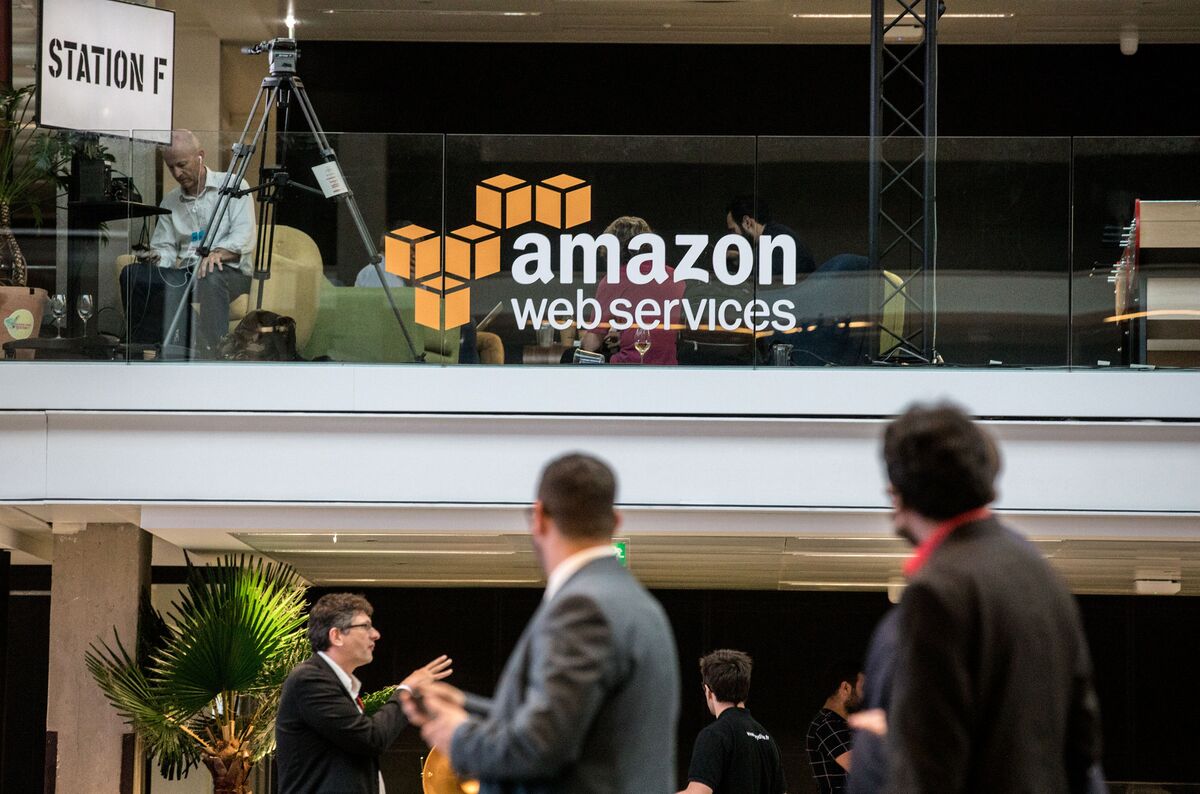
Amazon is facing European Commission scrutiny over suspected price-parity restrictions that may deter third-party sellers from offering lower prices on rival marketplaces or their own websites. The EU has surveyed sellers as part of a potential competition investigation, creating regulatory and legal risk for Amazon's marketplace practices in Europe.
Analysis
The economic risk is less likely to be a headline fine than a forced change in Amazon’s marketplace pricing architecture. If sellers can price more aggressively on direct-to-consumer sites, eBay (EBAY), Etsy (ETSY), Zalando (ZAL.DE), or regional platforms, Amazon may need to accept lower third-party take rates, fund more seller incentives, or tolerate lower conversion as price discovery migrates off-platform. The vulnerable earnings stream is high-margin third-party seller services and advertising: lower marketplace price consistency can reduce purchase frequency and weaken the closed-loop data advantage that supports ad pricing.
Near term, this is primarily an EU valuation overhang rather than a material EPS event; formal proceedings, a statement of objections, or evidence that policy enforcement persisted after prior regulatory commitments would be the catalysts over 1-3 months. A meaningful 6-18 month outcome would be behavioral remedies that prohibit both explicit and algorithmically enforced parity, creating a template for UK CMA and other jurisdictions. That would be incrementally positive for merchant-enablement vendors such as Shopify (SHOP), payment providers including Adyen (ADYEN.AS), and selected European marketplace competitors, though their benefit depends on whether merchants can acquire traffic profitably outside Amazon.
Consensus may overstate the direct damage: price parity can be reproduced economically by consumer trust, Prime shipping economics, and Amazon’s superior conversion, even without contractual restrictions. The thesis becomes investable only if the inquiry reveals seller repricing activity or Amazon responds with increased promotional and fulfillment subsidies; absent those indicators, the likely remedy is narrow and AMZN’s AWS and first-party retail profit pools remain largely insulated. Falsify the bearish marketplace-margin view if EU third-party services growth, advertising growth, and North American/international retail contribution margins remain stable through the next two earnings reports despite regulatory escalation.
AllMind Terminal
AI-powered research, real-time alerts, and portfolio analytics for institutional investors.
Request TrialMarket Sentiment
Overall Sentiment
mildly negative
Sentiment Score
-0.30
Ticker Sentiment
Key Decisions for Investors
- Do not initiate a standalone AMZN short on the inquiry. Treat any 3-5% regulation-driven weakness without a disclosed remedy or seller-service guidance cut as a potential tactical long entry; the current signal is legal-process risk, not yet an earnings reset.
- For a 1-3 month relative-value hedge, consider long EBAY versus short AMZN in equal beta-adjusted notional only if the Commission opens a formal case or publishes evidence of active parity enforcement. Target 8-12% relative upside; exit if AMZN seller-services growth holds above consensus and EBAY does not show improving active-buyer or GMV trends.
- Monitor AMZN’s next two quarterly disclosures for international retail margin, third-party seller-services growth, advertising growth, and promotional expense. A combined deceleration in seller services/ads of more than 300 bps versus prior trend would validate a more durable margin-risk thesis and justify adding AMZN downside.
- Keep SHOP and ADYEN.AS on a regulatory-beneficiary watchlist rather than buying immediately. Upgrade only if seller surveys show material migration to owned storefronts or direct checkout; without traffic migration, lower off-Amazon prices may simply transfer consumer surplus rather than expand merchant software/payment volumes.
More News
- Traders Wary Of Rising AI Risks: Market Snapshot
- Amazon is investing $230 million in higher pay, benefits, and college perks for more than 100,000 Whole Foods workers—bumping up hourly pay to $21
- Anthropic Could Go Public in Weeks. Here Are the 5 Numbers That Will Actually Matter.
- Amazon-owned Zoox’s 100-robotaxi limit in Nevada is about to disappear
- Stock Movers: Generac, CoreWeave, Securitize (Podcast)
- The U.S. says China's AI progress is down to 'distillation.' But is it that clear cut?
From AllMind Research
- Anthropic IPO Preview: Valuation, Timing, and What to Watch
- Shein After the IPO: Venue, Valuation, and What Must Be Proved
- What AI Research Tools Should a Small Hedge Fund Buy First?
- What a Concept From Nature Tells Us About How C-Suite Executives Actually Think About AI
- How to Track Earnings Call Sentiment Across Companies