
Demand The Limits Challenges Traditional Legal Advertising with Bold New Campaign in South Florida
Source: PR Newswire
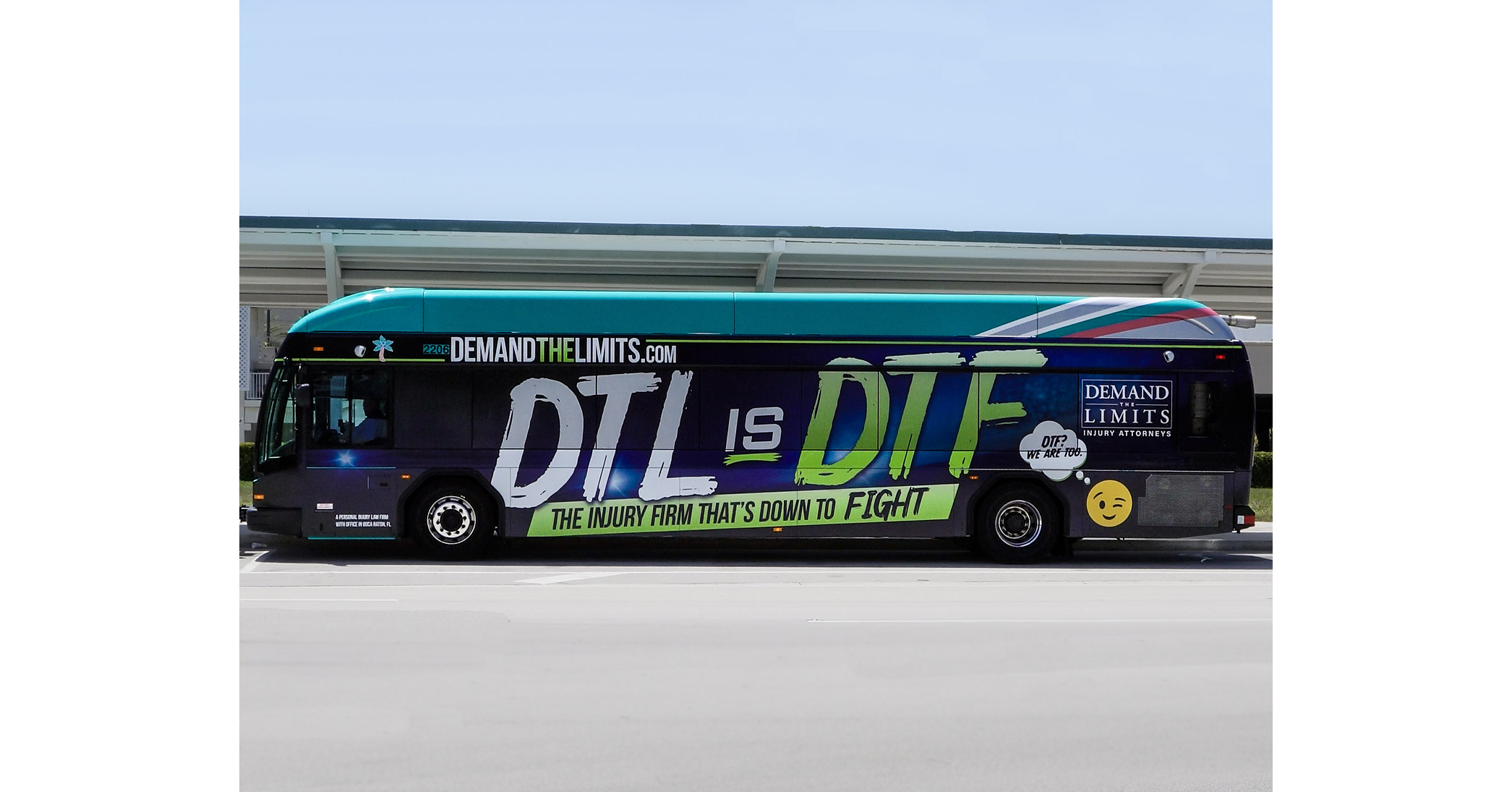
Demand The Limits (DTL) launched a humorous, self-aware personal injury marketing campaign, replacing stereotypical legal ads with newly wrapped inter-city buses in Palm Beach County using the slogan “DTL is DTF” (“Down To Fight”). The firm is also running a broader digital push across Meta, TikTok, and YouTube to gauge real-time public reaction, with co-founders saying early feedback has been “a hit” even amid some controversy. The article is primarily brand/advertising news with no financial results provided, implying limited immediate market impact.
Analysis
This is more a read-through on local-services customer acquisition than a direct corporate event. If the campaign gains traction, the economic winner is the platform that monetizes high-intent, geographically targeted attention at the bottom of the funnel; that skews slightly toward META over GOOGL because the creative is built for short-form sharing, comment velocity, and low-cost incremental reach rather than search capture. The second-order effect is not higher ad budgets per se, but a reallocation from static/legacy local media into performance-plus-brand hybrid spend, which can lift ROAS for platforms that can prove call conversions.
The main loser is incumbent local media inventory: traditional TV, billboard, and bus-wrap vendors face margin pressure if more professional services firms conclude that provocative creative can be distributed cheaper through social. That said, this is still a tiny signal in a fragmented market, so there is no clean earnings model change for any named ticker today. The broader implication is that personal-injury advertising remains a contest for memory share, and firms willing to test controversy can lower CAC if the creative avoids actual brand damage.
The contrarian risk is that this is over-interpreted as a scalable trend. In legal services, one viral spot does not equal durable client acquisition; response quality, geographic fit, and case mix matter more than impressions, and any regulatory/brand-safety backlash could quickly cap the tactic’s effectiveness. The realistic horizon is 1-3 months for any measurable platform spend effect, and 6-18 months only if multiple local-services advertisers imitate the format at scale.
AllMind Terminal
AI-powered research, real-time alerts, and portfolio analytics for institutional investors.
Request TrialMarket Sentiment
Overall Sentiment
neutral
Sentiment Score
0.05
Ticker Sentiment
Key Decisions for Investors
- No direct trade on the press release; treat as a watch item unless we see multiple local-services advertisers shifting budget toward short-form social in the next 1-3 months.
- Modest relative-value lean: long META / short GOOGL for 1-3 months only if ad checks show local-service spend migrating to Reels/TikTok-style creative; expected edge is small, so size should be minimal and thesis-falsified by search-share resilience.
- Avoid chasing any perceived ad-tech beneficiary until we see spend data; the signal is too small for a standalone long in ad platforms or media names.
- Set an alert for any public evidence of campaign backlash or ad-platform rejection; if the creative gets throttled, the “viral CAC” thesis breaks and the read-through to digital ad budgets disappears.
- Monitor Florida local-services marketing spend and call-volume commentary over the next earnings cycle; if this style correlates with lower CAC, then a broader basket trade versus legacy local media becomes viable.
More News
- CoreWeave credit default swaps hit distress levels as investors sour on AI debt
- TSMC chip capacity is ‘fierce’ battleground for AI customers, amid record quarter
- Factbox-CoreWeave’s AI contracts and the lenders financing its build-out
- Apple and Meta team up to make Muse AI model run on Mac computers
- Tale of two markets: Our 3 biggest winners and losers over the past five weeks
- Nvidia’s European spending spree is about much more than Europe