
Trump’s Push and Pull Relationship With Oil Execs as Midterms Approach
Source: Bloomberg
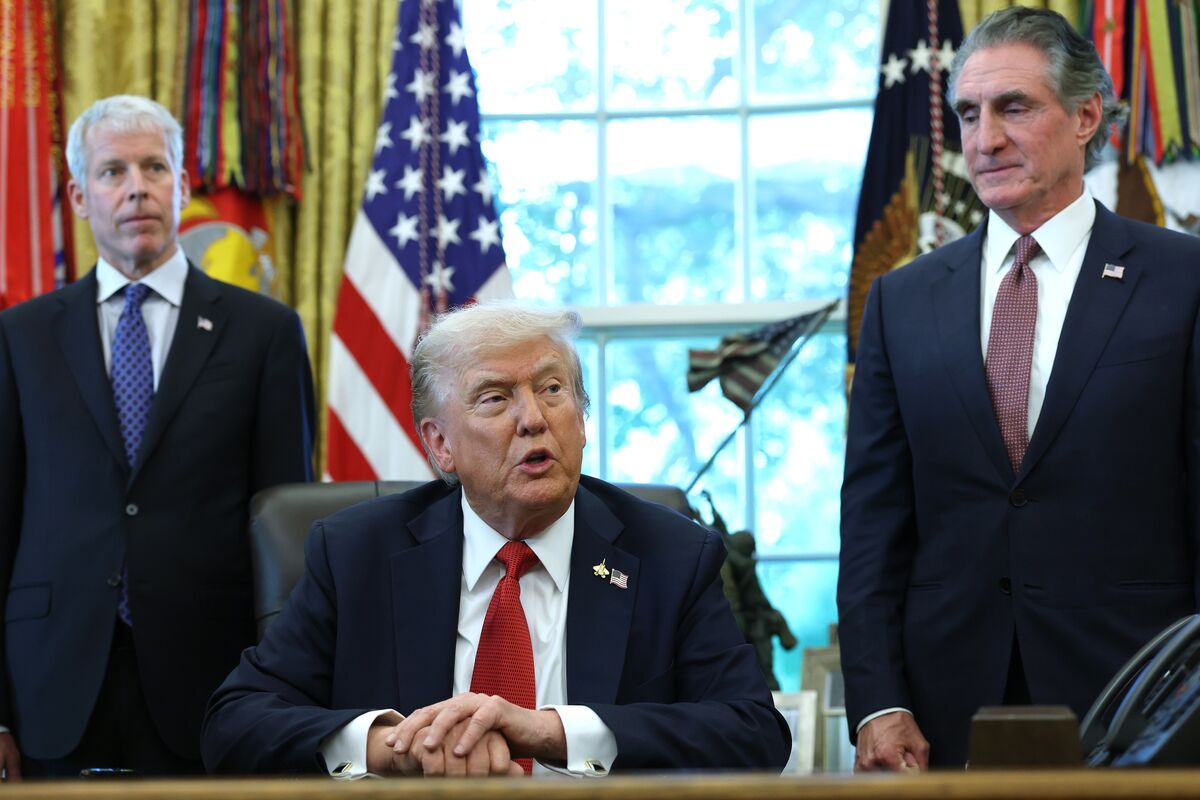
The excerpt provides only a newsletter preview stating that Trump will meet with oil executives amid midterm/election pressure and references additional topics (Apple, AI). No specific policy actions, pricing moves, numbers, or outcomes are provided, so market impact cannot be quantified from this text alone.
Analysis
This is mainly a volatility signal, not a clean fundamental catalyst. In an election window, the market tends to overprice headline alignment between energy producers and candidate rhetoric, but the real mechanism is policy risk premia: upstream multiples compress when investors anticipate either tighter price management or a faster regulatory response if fuel costs stay elevated. The more domestically levered names are service-heavy operators like SLB and HAL; they would benefit most if the market starts to price a post-election pickup in drilling activity rather than just a higher crude tape.
The bigger second-order effect is that record fuel prices raise the probability of intervention, not just celebration. If prices keep making new highs, both jawboning and supply-release optics become more likely over the next 30-60 days, which is bearish for XLE but constructive for transport and consumer-sensitive baskets like JETS if crude mean-reverts. That makes chasing outright energy beta unattractive here; the trade is more about owning downside convexity in oil than buying a straight line to higher prices.
Contrarian view: consensus is likely missing that a pro-oil political message can still be net-bearish for oil if it triggers a policy cap. The market may be underestimating how quickly gasoline pain becomes a swing-state issue, which limits sustained upside in crude even if rhetoric improves for producers. Falsifier: a sustained WTI/Brent breakout over the next 2-3 weeks with no visible policy pushback or inventory response would invalidate the bearish oil-policy thesis.
AllMind Terminal
AI-powered research, real-time alerts, and portfolio analytics for institutional investors.
Request TrialMarket Sentiment
Overall Sentiment
neutral
Sentiment Score
0.00
Key Decisions for Investors
- Buy a 1-2 month USO or XLE put spread as a hedge against election-driven policy intervention; prefer spreads over outright puts if implied vol is already rich. Cut if crude keeps trending higher for more than 2 weeks without any jawboning or release risk.
- Pair trade: long JETS or a basket of airlines (AAL/LUV) vs short XLE for the next 1-3 months to express a cap-on-fuel-prices thesis. Risk/reward improves if gasoline stays near recent highs and political rhetoric intensifies.
- If you want energy exposure, prefer SLB/HAL over integrateds on any pullback, as service names have the highest operating leverage to a post-election drilling-cycle repricing over 6-12 months.
- Keep DJT as a separate political-beta trade only if polling/news flow starts to move; this headline alone is not enough to justify adding risk.
More News
- Giant Taiwanese chipmaker TSMC confirms it’s in talks with Elon Musk to join ‘Terafab’ complex in Texas: ‘The AI market continues to be very strong’
- Suddenly, Wall Street is worried that the U.S. economy is more ‘vulnerable’ than it looks
- TSMC chip capacity is ‘fierce’ battleground for AI customers, amid record quarter
- Can TSMC earnings help settle AI jitters?
- Apple and Meta team up to make Muse AI model run on Mac computers
- Smartphone shipments plummet as memory crisis pumps up prices