
New FreeFab Pallet Brings Together Two Longstanding Middle Tennessee Companies
Source: PR Newswire
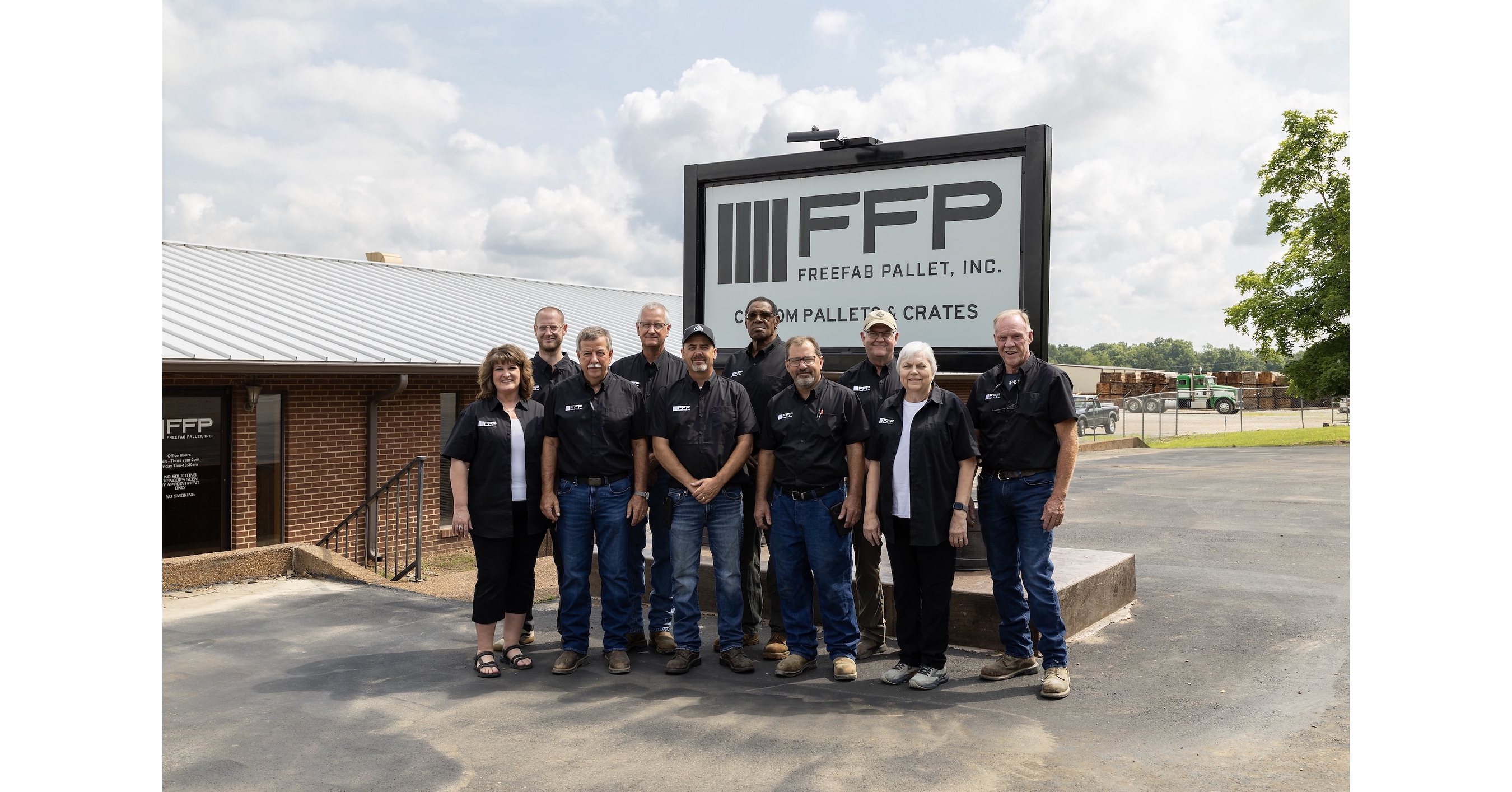
Freeman Wood Products and Fabrication Specialties merged effective Jan. 1, 2026 to form FreeFab Pallet, Inc., a custom wood pallet manufacturer. The combined business employs 49 people and claims greater production capacity than either firm had independently, while expanding capabilities in pallet design, custom manufacturing, and recycled pallet programs. Management highlighted plans to invest in equipment, automation, and production improvements to increase capacity and reduce customer shipping costs, signaling a cautiously positive outlook.
Analysis
This reads less like a marketable catalyst and more like a micro-level consolidation signal in a structurally fragmented, low-margin industry. The real economic mechanism is not “growth” but operating leverage: better route density, higher asset utilization, and some procurement savings can lift EBITDA margin if lumber and freight stay stable. The flip side is that integration benefits are often front-loaded in press releases while the cost side—systems, capex, and labor retention—shows up over the next 2-4 quarters.
For public-market read-through, the only plausible beneficiaries are upstream lumber/wood-products suppliers and, to a lesser extent, logistics operators if a larger combined pallet shop improves local freight efficiency. But the dollar impact is too small to move names like WY, BCC, LPX, or packaging proxies on its own; this is not a sector event. The more important second-order effect is competitive pressure on other regional pallet shops: scale winners can offer tighter design specs and recycling loops, which can squeeze smaller independents and force them into price competition.
The contrarian take is that consolidation here is usually defensive, not a sign of strong end-demand. If customer volume were robust, the firms would be prioritizing capacity expansion rather than merger synergies; that makes this mildly recessionary in tone for the regional industrial customer base. Falsifiers over the next 1-3 months would be concrete evidence of new customer wins, higher capex that actually expands throughput, or margin improvement despite flat/lower lumber prices; otherwise this should fade into noise.
AllMind Terminal
AI-powered research, real-time alerts, and portfolio analytics for institutional investors.
Request TrialMarket Sentiment
Overall Sentiment
mildly positive
Sentiment Score
0.15
Key Decisions for Investors
- No immediate trade in public equities; treat FOFA/TSTS as a watch item only. The event is too small to justify risk capital unless a subsequent filing shows material leverage, customer concentration, or margin expansion.
- If you need a sector expression, keep it small and defensive: avoid chasing any bullish reaction in lumber proxies (WY, BCC, LPX) on this headline alone. Expected risk/reward is poor because the read-through is operationally real but economically immaterial.
- Set a 1-3 month alert for any follow-on disclosure on automation or capacity expansion. If the merged entity reports measurable margin improvement or booking growth, reassess for a small long in a local-industrials basket; absent that, assume integration noise.
- Watch for lumber input inflation over the next 2-4 quarters. A spike in wood prices would be the main way this merger becomes margin-negative, as consolidation only helps if procurement savings outrun commodity beta.
- If a public packaging/wood-products name trades down on this news, consider fading the move. The best risk/reward is a contrarian short-term mean reversion trade, not a directional industry thesis.
More News
- Nvidia GPUs are everywhere. Here are the ways companies are accessing them
- Bank of America is bullish on these top stocks ahead of earnings
- Stocks were up this week. Here are the names that are now overbought
- As companies pour billions into Earth-based AI infrastructure, Google is taking the data center race off-planet
- How U.S. know-how is fracking Australia into a gas boom, from Texas oilmen to Trump’s energy secretary
- The world needs Ukraine’s grain. Its farmers are running out of reasons to plant
From AllMind Research
- Anthropic IPO Preview: Valuation, Timing, and What to Watch
- Shein After the IPO: Venue, Valuation, and What Must Be Proved
- What AI Research Tools Should a Small Hedge Fund Buy First?
- Run Cost-Controlled Financial Research in AllMind Agent Studio
- State of Public Markets, June 2026: Higher for Longer Meets the AI Supercycle