
PepsiCo Sharpens Price-Pack Strategy: Can Affordability Pay Off?
Source: zacks.com
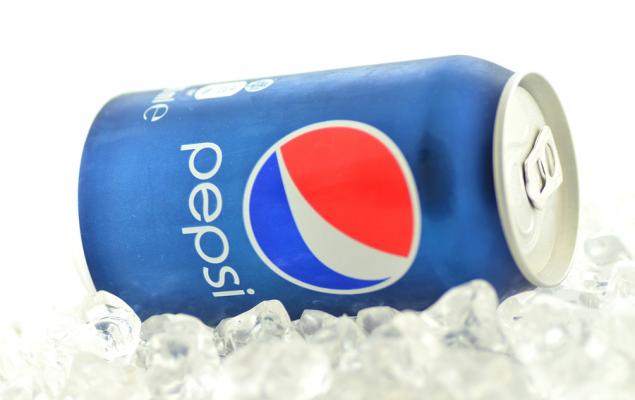
PepsiCo reported a 0.5% decline in North America organic revenue and a 2% drop in PepsiCo Foods North America net revenue in Q2 2026, while affordability-focused portion-control multipacks generated more than $3.5B in annual net revenue and grew volume and sales. North America's core operating margin contracted, and higher input-cost inflation is expected in the second half; management plans to use record productivity savings to fund affordability investments and offset costs. PEP shares fell 13.6% over three months, 2026–27 EPS estimates declined over the past seven days, and the stock trades at 14.21x forward earnings versus an 18.49x industry average.
Analysis
The key issue is whether targeted value packs add enough incremental trips and units to offset mix dilution and higher promotional intensity. Smaller packs can protect the consumer’s cash outlay while increasing price per ounce, but that benefit is fragile if shoppers simply trade down from larger, higher-revenue baskets or if retailers demand more support to maintain shelf space. Productivity savings are the swing factor: if they do not cover both affordability investment and input inflation, volume repair may arrive with weaker earnings quality.
Near term, falling estimates and margin pressure argue against treating PEP’s share-price underperformance or lower relative valuation as an automatic mean-reversion signal. Over the next 1–3 months, watch North American unit volumes, effective net pricing, segment margin, and evidence that savings are recurring rather than a one-off offset. A sustained volume improvement with stabilizing margins would indicate the architecture is recruiting demand rather than subsidizing existing buyers. Over 6–18 months, competitors’ responses could normalize the value advantage and turn the strategy into a category-wide price-pack arms race. KO’s and MNST’s affordability efforts show the tactic is not unique, but do not establish equivalent execution or economics.
Contrarian point: affordability is not necessarily margin-destructive if pack design expands occasions and household penetration; the market may be underpricing that upside. The counterpoint is that initial growth in selected formats does not establish consolidated profit accretion. No strong outright long signal until volumes and margins validate the mechanism.
AllMind Terminal
AI-powered research, real-time alerts, and portfolio analytics for institutional investors.
Request TrialMarket Sentiment
Overall Sentiment
mildly negative
Sentiment Score
-0.30
Ticker Sentiment
Key Decisions for Investors
- Keep PEP underweight rather than buying solely on the valuation discount; reassess after the next results or guidance update for North American unit-volume improvement alongside stabilization in core operating margin.
- For relative exposure, consider a modest PEP-underweight/KO-overweight pair only if seeking a defensive-staples expression; size conservatively because the article provides no comparable pack-level profitability or volume data for KO. Revisit if PEP shows better volume-margin conversion than KO.
- Track retailer promotion intensity, pack-level mix, and productivity savings against second-half input costs. These are the missing data needed to distinguish incremental demand from sales shifted into lower-value formats.
- Falsify the cautious PEP view if North American volumes improve for more than one quarter while effective net pricing and segment margins stabilize; worsen it if further estimate cuts or margin contraction persist despite claimed productivity gains.
More News
- 'Magnificent Seven' profit lag: How the rest of the stock market may outpace tech giants this earnings season
- This photonics stock is already up 600% in one year. Now it's breaking out again
- Unsure how long this AI bull has? Bonds now offer a cushion at the best values in years
- Diesel Price Surge Hits Farmers, Raising Food Inflation Risk
- GIC Private Ltd, Medline 10% owner, sells over $721m in shares
- A 32% beat, a +6% jump: the IT solutions name our models picked in July