
Antofagasta: Water Infrastructure Anchors A Copper Growth Story
Source: seekingalpha.com
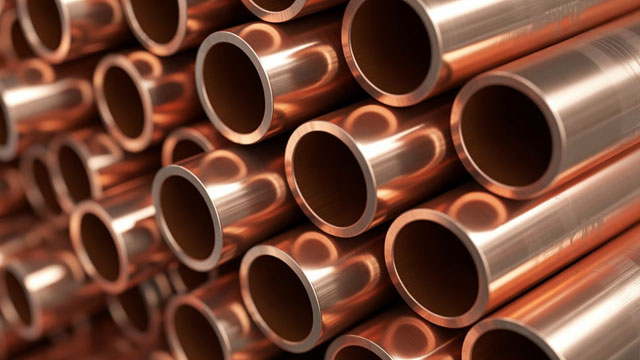
Antofagasta reported strong first-half 2026 EBITDA growth and margin expansion, though cash conversion was constrained by elevated capital expenditure and tax outflows. Major water infrastructure investments, Centinela's second concentrator and Los Pelambres expansion are intended to raise copper production by about 30%, reduce costs and improve operational reliability. The investment program supports longer-term cash-flow stability but creates near-term free-cash-flow pressure.
Analysis
ANTO is shifting from a high-margin copper producer into a multi-year self-funded buildout, so the key equity question is no longer near-term EBITDA but whether incremental tonnes arrive on schedule without a sustained deterioration in FCF yield. Dedicated water capacity reduces Chile-specific operating volatility and should lower the probability of production misses versus water-constrained peers, supporting a relative valuation premium if execution remains on track. The offset is that capital intensity and tax payments can keep reported earnings and distributable cash flow diverging for several reporting periods, limiting dividend upside even in a constructive copper tape.
Over the next 1-3 months, ANTO's shares should remain more sensitive to copper-price momentum and capex guidance than to backward-looking margin expansion. At a 6-18 month horizon, successful commissioning would create substantial operating leverage: unit-cost reductions and higher throughput would make ANTO a cleaner way to express a copper-deficit thesis than diversified miners BHP, RIO and GLNCY, whose copper gains are diluted by iron ore, coal and other exposures. The contrarian risk is that the market may be assigning too much certainty to volume growth; Chilean labor, permitting, power and desalination-cost inflation can convert a reliability investment into a lower-return capital cycle.
The thesis is falsified by a material increase in remaining project capex, a schedule slip, or guidance indicating that cash conversion will not normalize after peak spend. Macro falsification is a sustained copper decline driven by weaker Chinese grid/property demand; ANTO's fixed-cost base would then amplify downside despite improved water security. Conversely, a copper move above prior-cycle highs combined with unchanged capex guidance would likely force upward FCF estimates before new capacity is fully reflected in reported production.
AllMind Terminal
AI-powered research, real-time alerts, and portfolio analytics for institutional investors.
Request TrialMarket Sentiment
Overall Sentiment
moderately positive
Sentiment Score
0.42
Ticker Sentiment
Key Decisions for Investors
- Initiate a 6-12 month long ANTO position only on confirmation that full-year capex and project timing remain intact; size as a copper-beta allocation rather than an income position. Target relative outperformance versus BHP/RIO if commissioning milestones are met, with a hard review on any material capex rebase or production-guidance cut.
- Express the idiosyncratic thesis as long ANTO / short BHP or RIO over 6-18 months, hedging broad copper exposure while retaining ANTO's potential re-rating from reduced operational-risk discount. Do not deploy until relative valuation and project-cost disclosures are updated; the principal risk is ANTO-specific execution disappointment while diversified peers retain stronger balance-sheet resilience.
- For a directional copper view, pair a modest ANTO long with a hedge in COPX or HG copper exposure over the next two quarters. This isolates delivery upside while reducing risk from a China-led copper correction; reduce the hedge only after evidence that volume ramp and unit-cost targets are being achieved.
- Set alerts for quarterly free-cash-flow conversion, net-debt trajectory, desalination/power-cost escalation and Centinela/Los Pelambres commissioning dates. A weaker-than-expected cash-conversion trend without a corresponding reduction in future capex is a signal to avoid adding, irrespective of EBITDA beats.
More News
- Here’s the ‘core economic flaw’ in the AI bull case as stock and bond trades unravel, according to a top economist
- Iran says won’t allow US warships to get close as Trump ponders new attacks
- Biotech stocks are surging. How investors can play the new drug innovation boom
- AI funding fears rattle Wall Street. Here's how we're adjusting our portfolio
- Braskem creditors, shareholders near deal on $11bn debt restructuring
- Instacart reportedly discussed selling itself with DoorDash and Uber
From AllMind Research
- Anthropic IPO Preview: Valuation, Timing, and What to Watch
- Shein After the IPO: Venue, Valuation, and What Must Be Proved
- What AI Research Tools Should a Small Hedge Fund Buy First?
- The $4.7 Trillion Bet: When Does AI Capex Become AI Revenue?
- Equity Research Automation Statistics: A 2026 Evidence Check