
Micron: My Target Was Hit, And One Question Is Still Open
Source: seekingalpha.com
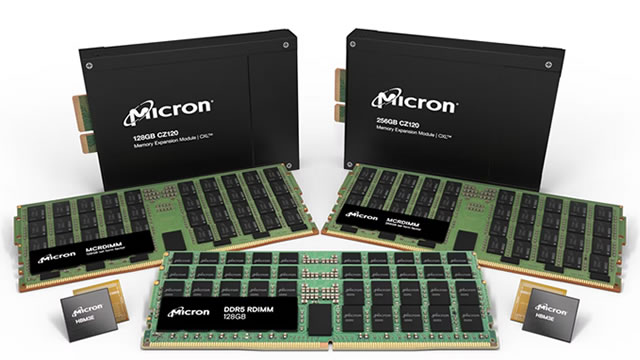
Micron Technology was downgraded to Hold from Buy following a 23% rally, with the prior valuation discount viewed as largely closed. The key uncertainty is the mix of roughly $100B in long-term contracts between commoditized DRAM/NAND and higher-margin HBM, while $22B in commitments supports enforceability. Potential upside is constrained by less certain terminal value and rising Chinese competition.
Analysis
MU's next valuation leg depends less on headline AI-memory demand and more on mix: HBM revenue carries materially higher ASPs, tighter supply and better operating leverage than conventional DRAM/NAND. If contracted volume is predominantly legacy memory, the market is likely capitalizing revenue durability as though it were margin durability; that would leave consensus gross-margin and FY27 EPS estimates vulnerable even without a demand downturn. Samsung Electronics (005930 KS), SK Hynix (000660 KS) and Chinese suppliers remain the relevant competitive reference set, since incremental capacity and qualification progress can compress the HBM scarcity premium faster than end-demand weakens.
Over the next 1-3 months, the key catalyst is management disclosure around HBM share of contracted backlog, pricing duration, take-or-pay terms, and customer concentration—not another aggregate contract-value figure. A favorable mix disclosure could re-open upside, but absent it MU is exposed to multiple compression as investors shift from an AI scarcity narrative toward a cyclical-memory framework. The 6-18 month risk is that Chinese DRAM/NAND progress depresses commodity-memory clearing prices, forcing MU to rely disproportionately on HBM execution to sustain returns.
The contrarian case is that skepticism over contract composition creates an opportunity if upcoming results demonstrate that HBM conversion is occurring faster than analysts expect. However, the asymmetry is presently unfavorable after the rerating: evidence of commodity exposure can reduce both earnings estimates and the earnings multiple simultaneously, while HBM confirmation may already be partly reflected in expectations. This is not a clean directional short without semiconductor-cycle confirmation, because industry supply discipline can keep conventional DRAM pricing firm longer than bears expect.
AllMind Terminal
AI-powered research, real-time alerts, and portfolio analytics for institutional investors.
Request TrialMarket Sentiment
Overall Sentiment
mildly negative
Sentiment Score
-0.35
Ticker Sentiment
Key Decisions for Investors
- Move MU to neutral/benchmark weight for the next earnings cycle; do not add until management quantifies HBM versus conventional-memory exposure within contracted demand. Re-enter long only if HBM mix, gross-margin trajectory and pricing visibility support upward FY27 EPS revisions.
- For existing long exposure, consider a 1-3 month collar: retain MU shares, sell upside calls near post-rally resistance and buy downside puts below the prior earnings-gap area. This preserves participation if backlog quality is validated while protecting against a contract-mix-driven de-rating.
- Monitor a relative-value alert: long MU versus short SOXX only after MU demonstrates HBM-led margin outperformance; otherwise, prefer SOXX over MU as diversified AI semiconductor exposure with less single-company memory-cycle risk.
- Thesis is falsified bullishly by disclosed HBM-heavy commitments, sustained gross-margin expansion and raised forward pricing guidance; falsified bearishly by weaker conventional DRAM/NAND pricing, rising inventory, or evidence that Chinese competition is winning qualified customer volume.
More News
- CrowdStrike CEO's alarming prediction — plus, the sell-off spreads beyond tech
- We're exiting our position in this chipmaker and right-sizing another winner
- 3 Key Things to Monitor When Tech Giants Report Earnings
- Caterpillar Is Quietly Becoming an AI Stock. Here's the Segment Growing 72% That Proves It.
- The Next AI Infrastructure Winner Isn't a Memory Stock. It's This.
- Micron: HBM's Margin Drag Flips Into A Profit Driver In 2027