
Indonesia’s Worst Wildfires in Years Tested by Prabowo Budget Cuts and El Niño
Source: Bloomberg
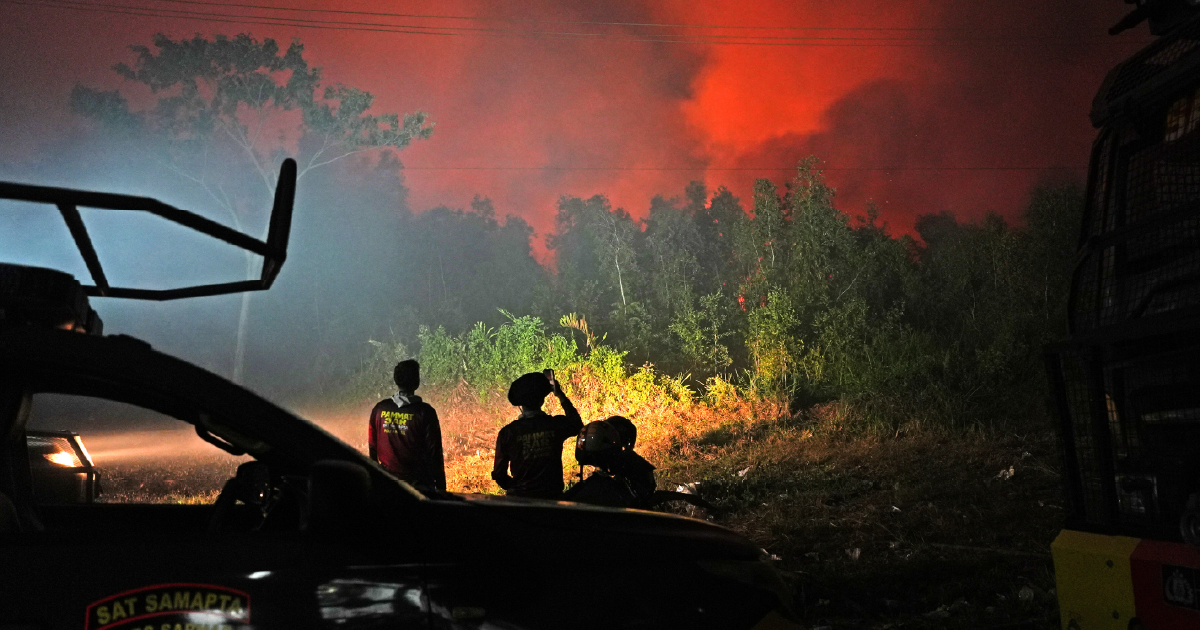
Indonesia's 2026 wildfire season has burned more than 895,000 hectares through August, the highest comparable total since 2019, with fire-related economic and health damages estimated at 123 trillion rupiah ($6.9 billion). El Niño-driven drought has pushed precipitation nearly 80% below normal since June, while fires have emitted more than 100 megatons of carbon, the highest year-to-date level in a decade. The crisis is worsening regional haze risks for Singapore, Malaysia, Vietnam and the Philippines, while Indonesia's disaster-agency budget has been cut to 491 billion rupiah ($27.4 million), roughly one-tenth of its 2024 level.
Analysis
The investable transmission is through a higher-risk premium on Indonesian palm supply rather than an immediate volume shock. Benchmark CPO can tighten if disrupted harvesting, transport restrictions, or regulatory enforcement constrain marginal smallholder output; this favors vertically integrated, traceable producers such as Wilmar International (F34.SI) and Golden Agri-Resources (E5H.SI) over less integrated Indonesian plantation operators. The offset is politically driven: higher domestic biodiesel mandates and food-inflation sensitivity could lead Jakarta to prioritize local supply, raise levies, or alter export policy, limiting producer margin capture even if global CPO rises.
Near term (days to weeks), haze exposure is more likely to impair logistics, labor availability, aviation and urban consumption than to materially damage listed plantation assets with established fire-control systems. The more consequential 1-3 month catalyst is a delayed wet season, which would raise the probability of renewed export-policy intervention and accelerate ESG scrutiny from European buyers and financiers; companies with opaque smallholder sourcing face a valuation discount before any legally adjudicated liability. Insurance and cleanup costs are unlikely to be large enough alone to move mega-cap earnings, but reputational damage can tighten financing and increase traceability capex over 6-18 months.
Consensus may overemphasize a simple bullish palm-oil supply narrative. Large estates generally have inventories, diversified sourcing and better fire mitigation, while a policy response can transfer scarcity rents to domestic consumers and biodiesel programs rather than shareholders. The cleaner expression is therefore relative quality within palm oil, not outright long exposure, until CPO futures confirm a sustained supply deficit and Indonesian export policy remains unchanged.
AllMind Terminal
AI-powered research, real-time alerts, and portfolio analytics for institutional investors.
Request TrialMarket Sentiment
Overall Sentiment
strongly negative
Sentiment Score
-0.72
Key Decisions for Investors
- Watch FCPO/CPO pricing and Indonesian export-policy announcements; do not initiate an outright palm-oil long solely on fire headlines. Upgrade to a tactical long only if CPO sustains above its pre-event range for 10 trading days while export restrictions remain off the table.
- If CPO confirms, implement a 1-3 month relative-value trade: long Wilmar International (F34.SI) versus short a basket of Indonesian plantation exposure (AALI IJ, LSIP IJ, SIMP IJ). Target 8-12% relative return; exit if Jakarta announces export curbs, reduced biodiesel blending, or Wilmar guides to supply-chain disruption.
- Avoid adding to Indonesian domestic-demand and transport exposures during the dry-season window; monitor JCI consumer/transport names for a haze-driven earnings-reset opportunity rather than pre-positioning. The required trigger is disclosed operating disruption, flight cancellations, or a material downgrade to quarterly guidance.
- For 6-18 month ESG positioning, favor listed producers with auditable traceability and downstream processing over pure acreage expansion. Reassess if enforcement remains limited and yields improve, which would reduce the cost advantage of land expansion without constraining sector supply.
More News
- Oil extends gains as Middle East supply concerns persist
- Luckin Coffee, flush with Persian Gulf cash, weighs entry into Middle East markets
- Oil prices rise for second session on continued Middle East supply concern
- Iran Refuses to Soften Demands as Trump Rejects Hormuz Offer
- Iran touts Hormuz attacks as oil flows increase despite tensions
- Trump made the right decision to reject Iran’s offer