
Huawei predstavuje cieľovú architektúru inteligentnej siete WAN pre poskytovateľov internetových služieb
Source: PR Newswire
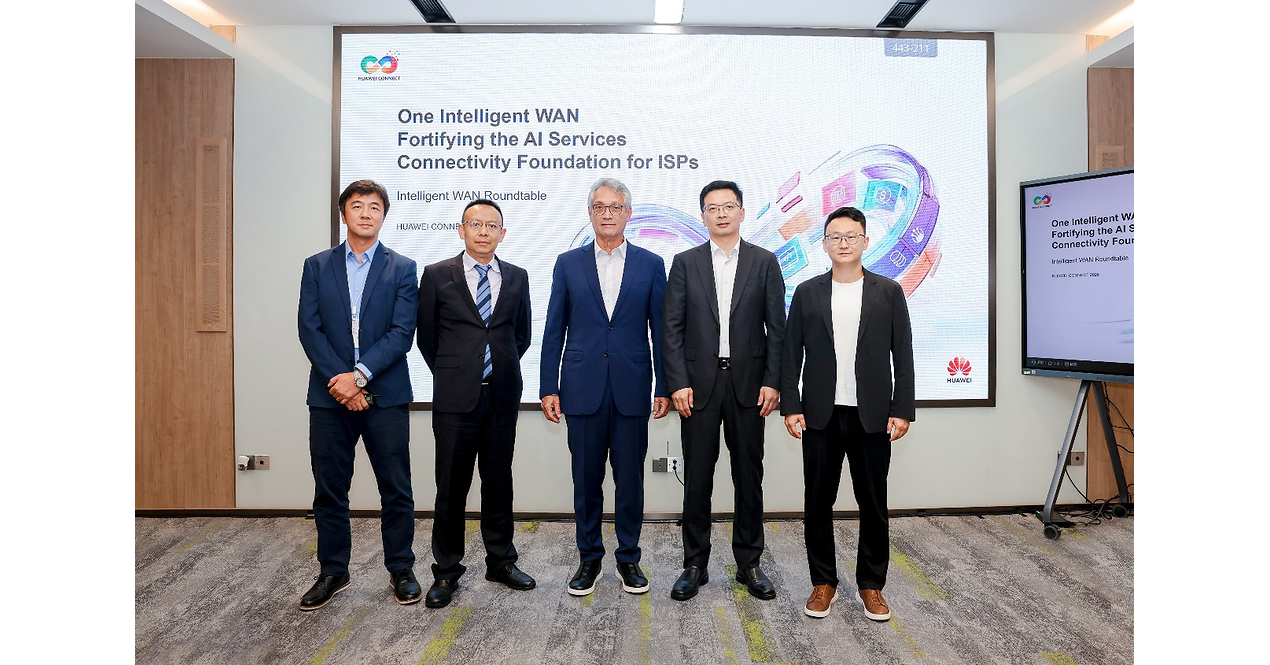
Huawei unveiled a target intelligent WAN architecture for internet service providers at HUAWEI CONNECT 2026, designed to integrate connectivity, computing capacity and APIs for AI-service delivery. The company said agentic AI is shifting network demand toward agent-to-agent connections, substantially higher uplink traffic and end-to-end workflow assurance. Huawei's proposed IP-and-optical network design and AI-enabled operations tools aim to help ISPs monetize differentiated AI services while lowering network operations and maintenance costs.
Analysis
This is strategically supportive of the networking capex cycle, but not yet an investable demand datapoint: it is vendor-led architecture marketing without disclosed orders, customer budgets, deployment scale, or pricing. The economically relevant shift is toward higher upstream traffic and latency-sensitive distributed inference, which raises the value of routing, optical transport, edge switching, and network automation rather than merely expanding commodity access bandwidth.
Over 6-18 months, AI-service monetization could favor carriers and ISPs with dense enterprise/edge footprints, but only if they can sell assured-performance tiers rather than absorb the capex as a defensive upgrade. That creates a bifurcation: optical and IP equipment vendors with credible automation and high-capacity routing portfolios—Ciena (CIEN), Juniper (JNPR, subject to transaction/regulatory outcomes), Nokia (NOK), and Cisco (CSCO)—are better positioned than bandwidth-only operators whose ARPU may not cover incremental backbone and power costs.
The contrarian view is that “AI WAN” may be less incremental than advertised. Centralized hyperscale inference and private interconnects can bypass retail ISP monetization, while enterprise customers may resist paying for network SLAs absent measurable application-level performance gains. The near-term beneficiary could instead be data-center interconnect suppliers such as Arista (ANET) and Ciena, as traffic aggregation moves between regional compute clusters; Huawei’s ability to convert this architecture into global share gains remains constrained by geopolitical procurement restrictions in major developed markets.
AllMind Terminal
AI-powered research, real-time alerts, and portfolio analytics for institutional investors.
Request TrialMarket Sentiment
Overall Sentiment
mildly positive
Sentiment Score
0.30
Key Decisions for Investors
- No directional trade on Huawei-related news alone; treat as a watch item until disclosed ISP contracts, order values, or evidence of AI-network revenue appear in supplier guidance over the next 1-3 months.
- Maintain a 6-12 month preference for long CIEN versus short a broad telecom-services proxy (IYZ): regional AI cluster interconnect requires optical capacity before carriers prove they can monetize end-user AI traffic. Reassess if CIEN order growth fails to accelerate or gross margin falls below management’s normalized range.
- For liquid large-cap exposure, favor CSCO over legacy connectivity-only telecom operators on a 6-18 month horizon: automation/software attach can protect margins if AI-WAN spending materializes, whereas carrier returns are vulnerable to capex rising ahead of service revenue.
- Monitor ANET and CIEN earnings for commentary on distributed inference, metro DCI, and uplink utilization. A material upward revision to 2027 capex expectations from cloud or regional compute customers would be a catalyst; absence of such commentary would falsify the broader infrastructure-readthrough.
More News
- All Iranian airlines to be 'shut down' from Wednesday, Bessent tells CNBC
- Taiwan benchmark Taiex rises to record intraday high as tech stocks advance
- AMD joins the $1 trillion club as chip rally surges - our AI Strategy saw it early
- Jamie Dimon says hyperscaler AI spending could hit $1 trillion next year
- Factbox-Key issues for this week’s Trump-Xi summit in Washington
- 20 countries propose global oversight body to manage AI dangers