
Nearly Half of Enterprise Threat Intelligence Teams Are Using or Piloting Agentic AI as AI Threats Lead 2027 Priorities, Flashpoint Research Finds
Source: PRWeb
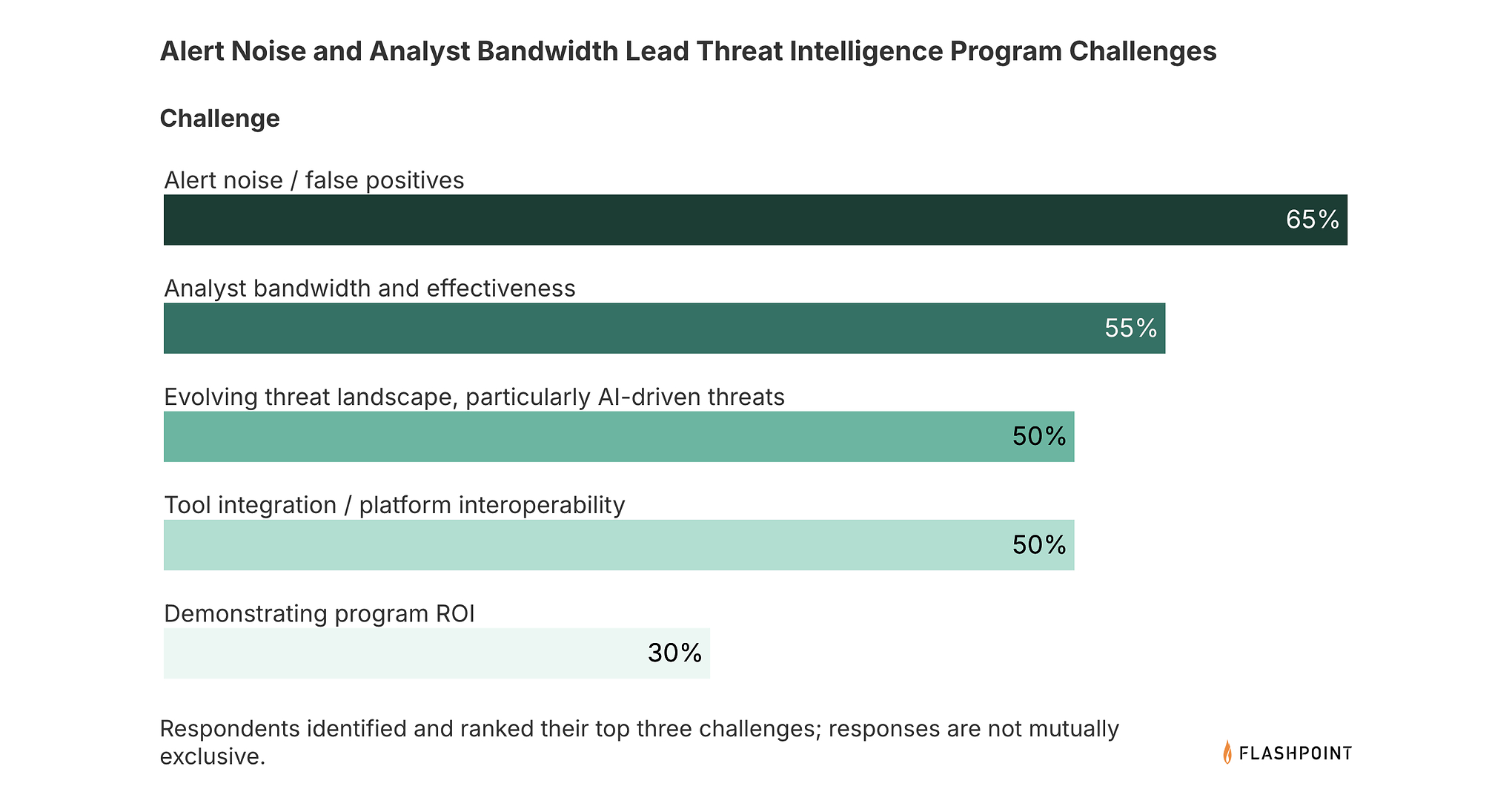
Flashpoint’s commissioned survey found 50% of enterprise respondents expect threat intelligence budgets to rise over the next 12 months, with 35% anticipating increases of at least 10%; none expect a decrease. AI-related threats are the top priority for expanded coverage, while agentic AI adoption remains measured: 25% use it in production, 20% are piloting it, and 35% plan adoption within 12–24 months. Respondents emphasized demonstrable value, trusted output, human oversight, and predictable costs.
Analysis
The signal is more useful for mapping budget allocation than forecasting a near-term cybersecurity revenue step-up. The survey is commissioned by Flashpoint, qualitative, and based on just over 20 enterprise respondents; stated budget intentions are not bookings, and Flashpoint is private, so the release itself offers no direct public-equity catalyst.
If spend does materialize, procurement is likely to favor vendors that can show lower false-positive burden, analyst time saved, and integration into existing workflows. That favors platforms with broad data and distribution; standalone intelligence providers may face bundling and consolidation pressure unless their source quality demonstrably improves detection. A second-order risk for labor- or analyst-heavy security services is that successful automation could constrain labor-linked growth even as software budgets rise. Conversely, agents that generate more alerts without improving precision could increase SIEM, cloud-log, and analyst workload rather than reduce it.
Near term, treat this as a weak sentiment datapoint, not an earnings catalyst. Over 1–3 months, verify through vendor guidance and customer commentary whether security budgets translate into pipeline, shorter sales cycles, and paid AI module adoption. Over 6–18 months, differentiation should accrue to vendors proving accuracy, auditability, predictable inference costs, and interoperability—not simply agent launches. The contrarian point: nominal budget growth can coexist with tougher vendor economics as buyers demand pilots and measurable ROI, while platform bundling redirects dollars away from niche products. Thesis weakens if cybersecurity vendors report sustained security-spend caution, slower bookings, or AI features failing to convert to paid adoption; it strengthens with disclosed attach rates and measurable workflow savings.
AllMind Terminal
AI-powered research, real-time alerts, and portfolio analytics for institutional investors.
Request TrialMarket Sentiment
Overall Sentiment
mildly positive
Sentiment Score
0.30
Key Decisions for Investors
- Do not trade the release as a sector-wide buy signal; treat it as low-confidence evidence of planned spend, not realized demand.
- Over the next earnings cycle, monitor security-vendor bookings, net retention, sales-cycle commentary, paid AI attach rates, and customer proof of analyst-hour or false-positive reduction. Favor demonstrated conversion over AI product announcements.
- Watch for relative pressure on standalone threat-intelligence vendors if larger security platforms bundle comparable feeds and workflows. Consider a platform-versus-niche relative-value expression only after confirming bundle-driven displacement in customer or earnings data; the survey alone is insufficient.
- Falsify the constructive read if vendors report weaker security budgets, lengthening sales cycles, or rising AI delivery costs without paid adoption. Reassess positively if multiple vendors disclose repeatable ROI and predictable costs from production deployments.
More News
- US fines Bank of America $1.2bn for money laundering, sanctions violations
- South Korean carmaker Hyundai plans 'strategic' investment of $15.5 billion in India by 2032
- Applied Materials’ $5 billion AI lab aims to cut chip development time in half—and restore Silicon Valley’s edge
- Wells Fargo CFO on Earnings, Deals, Consumer Strength
- Bank of America hit with more than $1.2 billion in penalties over money-laundering violations
- China's exports likely grew by double-digits in September
From AllMind Research
- Anthropic IPO Preview: Valuation, Timing, and What to Watch
- Shein After the IPO: Venue, Valuation, and What Must Be Proved
- What AI Research Tools Should a Small Hedge Fund Buy First?
- AI Financial Research Benchmarks: What the Scores Mean
- State of M&A and Private Markets, June 2026: A $4.9 Trillion Rebound, Underwritten on Money That Never Got Cheaper