
Tesla: To FSD And Beyond
Source: seekingalpha.com
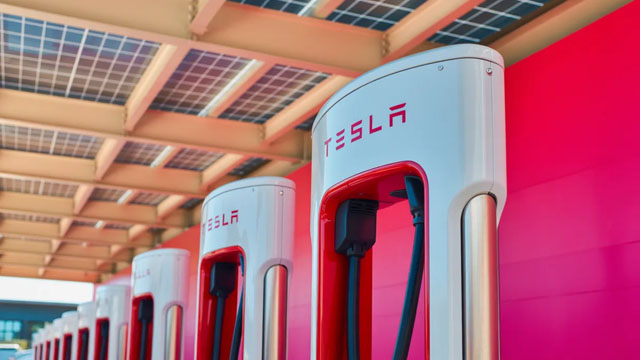
Tesla's FSD adoption has exceeded 55% of new North American deliveries, while paid FSD subscriptions rose 56% year over year to 1.48 million. The figures support a more software-driven, recurring-revenue investment case for Tesla, although the article notes the stock is not cheaply valued and favors cautious incremental buying.
Analysis
The key valuation question is not software attach rate but incremental recurring revenue per vehicle net of cannibalization from free trials, bundle discounts and one-time purchases. If the claimed subscriber base is monthly recurring at roughly $99/month, the implied annualized revenue pool could approach $1.8B before churn; at software-like contribution margins this is material to automotive gross-profit volatility. However, investors should verify the figure against Tesla disclosures, because trial activations, transferred licenses and paid subscriptions have very different revenue-recognition and lifetime-value implications.
Over the next 1-3 months, the stock’s sensitivity will be to evidence that subscription growth converts into rising deferred revenue, services-and-other gross margin, and lower customer-acquisition cost—not headline adoption. A sustained improvement could support multiple expansion by reducing the market’s reliance on vehicle volume growth and price cuts. Conversely, if FSD promotion is being used primarily to protect delivery demand, the near-term effect may be lower realized vehicle ASPs and higher incentives, offsetting software economics.
The 6-18 month upside case depends on regulatory permissions and demonstrably lower intervention rates, not merely broader usage. Tesla’s installed-base advantage creates a potential data flywheel, but it also concentrates liability and regulatory risk: a high-profile incident, NHTSA action, or more restrictive state-level rules could sharply increase churn and defer robotaxi optionality. The consensus may be over-crediting a "software tollbooth" before Tesla establishes pricing power versus alternatives from Waymo, Mobileye and OEM-assisted-driving systems.
A cautious long is more attractive following independently verifiable evidence of recurring software revenue acceleration than after adoption headlines. The thesis is falsified if quarterly deferred revenue and services gross margin fail to improve while FSD-related marketing expands, or if management reduces subscription pricing to sustain adoption.
AllMind Terminal
AI-powered research, real-time alerts, and portfolio analytics for institutional investors.
Request TrialMarket Sentiment
Overall Sentiment
moderately positive
Sentiment Score
0.42
Ticker Sentiment
Key Decisions for Investors
- Maintain TSLA as a watch-list long rather than add aggressively before the next earnings release; initiate only if filings or management commentary substantiate paid recurring subscribers, churn and deferred-revenue growth. Target a 6-12 month position sized for regulatory-event volatility, with exit discipline if software-related revenue growth decelerates for two consecutive quarters.
- For existing TSLA exposure, use a 3-6 month collar: retain upside from validated software monetization while buying downside protection around earnings and regulatory milestones. The principal risk is that automotive margin pressure overwhelms incremental subscription contribution.
- Monitor Tesla’s services-and-other revenue, deferred revenue, automotive ASPs and gross margin ex-credits as a four-part confirmation screen. A rise in subscription claims without corresponding deferred revenue or segment-margin improvement should be treated as a negative quality-of-growth signal.
- Consider a relative-value basket only after data confirmation: long TSLA versus short a broad EV proxy such as DRIV if Tesla demonstrates recurring-margin expansion while industry vehicle pricing remains weak. Avoid the pair if Tesla’s adoption is driven by discounting, since TSLA’s automotive-margin downside would dominate.
More News
- Anthropic selects Accenture as first embedded evaluator to help implement Amodei's slowdown proposal
- Auto industry urges Trump to not allow Chinese automakers in U.S. ahead of Xi visit
- Elon Musk talks up AI safety while fighting regulation in wild week of strange alliances
- Stocks are headed for another losing week. One group is limiting the decline
- Musk bets AI will double US economic growth next year
- OpenAI is offering engineers up to $500,000 in salary as it pushes into robotics