
Fibocom LTE Cat.1 bis Modules: Starlink DTC Field Test Report
Source: PR Newswire
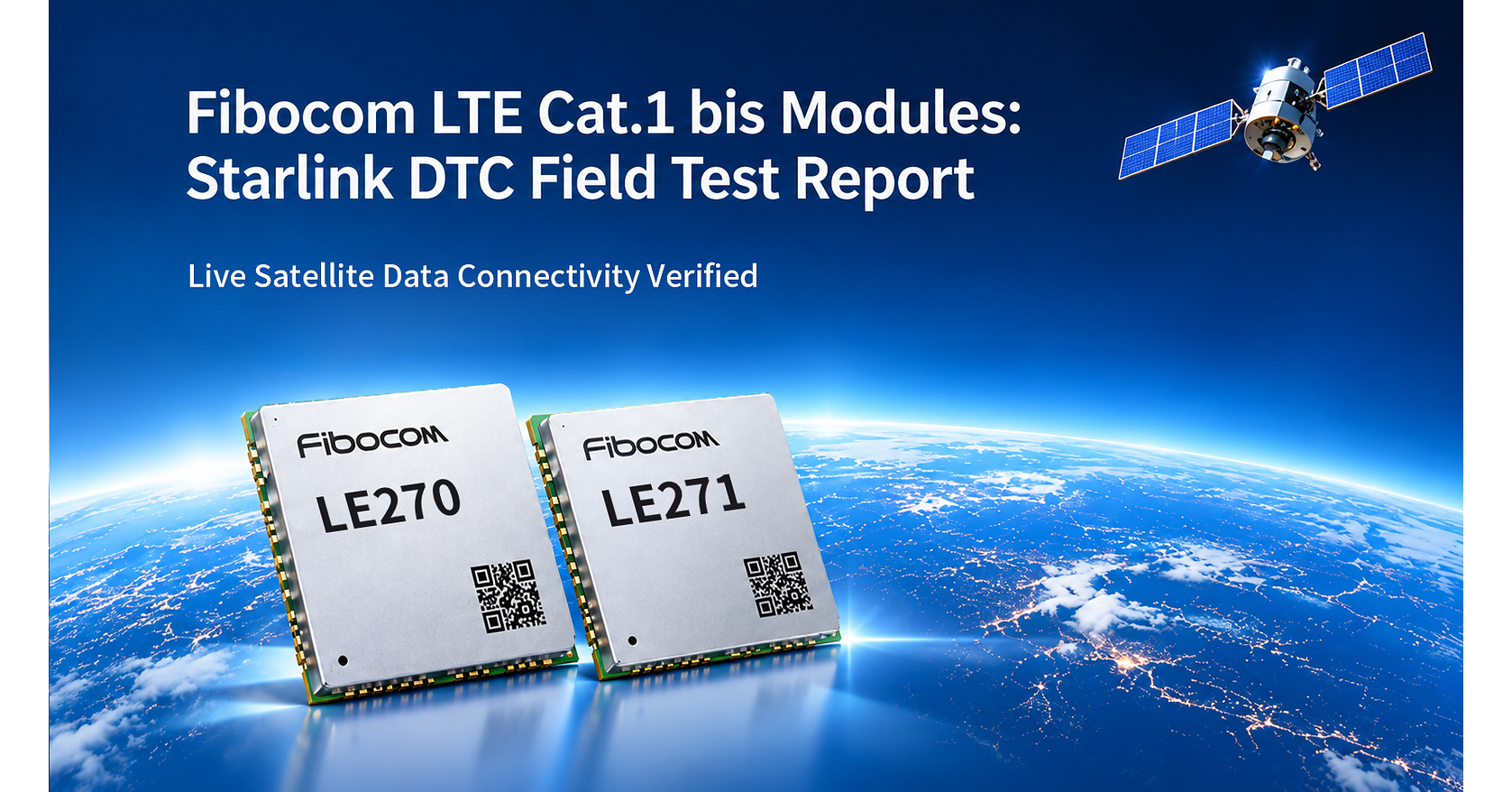
Fibocom's LE270-EU and LE271-GL LTE Cat.1 bis modules connected to SpaceX's Direct to Cell satellite network in live testing in New Zealand, using standard firmware and no satellite-specific hardware modifications. With good sky visibility, downlink throughput reached approximately 2.2 Mbps and 2.0 Mbps, respectively, while uplink was around 0.3 Mbps; indoor obstructions reduced downlink to about 0.5 Mbps in some tests. Satellite file uploads used approximately 1.5–1.8 times the energy of terrestrial cellular uploads, and Fibocom is continuing to optimize firmware compatibility and connection resilience.
Analysis
This is a component-compatibility signal, not yet evidence of a scaled revenue stream for SpaceX (SPCX). The strategic value is reducing an OEM’s redesign friction: if commercial access, certifications and firmware support follow, IoT manufacturers could add satellite fallback without a separate radio, widening the device funnel for DTC and potentially improving the value proposition for mobile-network-operator partners. But low-volume sensor traffic may generate modest economics per device, and the reported indoor degradation and higher energy use limit the addressable use cases to sparse, delay-tolerant data rather than continuous connectivity.
The release is Fibocom-sponsored testing; it does not establish broad device certification, service availability, pricing, battery life in field duty cycles, or recurring orders. Treat the performance figures as engineering evidence, not independently verified commercial validation. Fibocom may gain a design-in advantage, while module rivals such as Quectel have incentive to qualify comparable support; terrestrial operators could benefit from coverage extension, though substitution risk is limited where their networks already work.
Near term, likely low materiality for SPCX absent evidence of paid deployments. Over 1–3 months, watch for MNO access terms, device approvals, and OEM commitments. Over 6–18 months, the key question is whether satellite fallback becomes a standard IoT feature and generates incremental wholesale traffic without capacity or power constraints. The thesis weakens if certification remains narrow, OEM adoption stalls, or service economics cannot support low-ARPU IoT use cases.
AllMind Terminal
AI-powered research, real-time alerts, and portfolio analytics for institutional investors.
Request TrialMarket Sentiment
Overall Sentiment
mildly positive
Sentiment Score
0.30
Ticker Sentiment
Key Decisions for Investors
- No trade on this announcement alone; do not extrapolate a Fibocom test into material SPCX revenue or market share gains.
- Keep SPCX on a catalyst watchlist: upgrade the signal only with named MNO commercialization, device approvals, paid OEM deployments, or disclosed DTC traffic/revenue contribution.
- Monitor Fibocom and module competitors such as Quectel for production design wins, not compatibility announcements. Verify service access, certification scope, field battery-life impact, and customer pricing before underwriting adoption.
- Falsification signals: no meaningful OEM deployments over the next 6–18 months, persistently narrow network availability, or evidence that satellite transmission energy and retry requirements undermine target-device battery-life economics.
More News
- Cathie Wood 'always feels better when the market is worried' — here's why
- SpaceXAI Grok Bot availability just keeps growing - here's which plans offer it
- Donald Trump Claims He'll Become "Mr. Veto" After Midterm Elections, but the Results Put the President and Wall Street in a Precarious Situation
- The one Starlink perk that gives it an edge over traditional internet
- SpaceX Stock Fell After the Midterm Elections. Is This a Buying Opportunity?
- Morgan Stanley Says $300. Michael Burry Says Overvalued. Here's Who Is Right About SpaceX Stock.