
SpaceX Stock Fell After the Midterm Elections. Is This a Buying Opportunity?
Source: fool.com
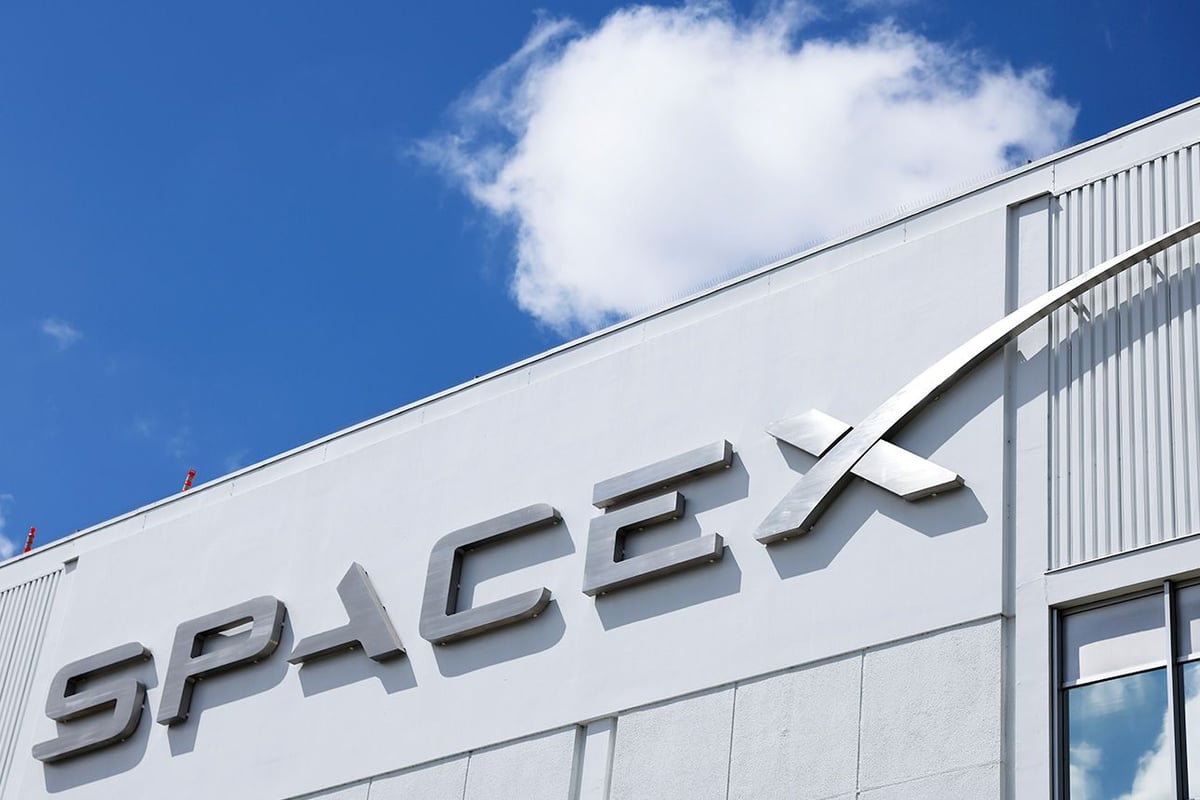
SpaceX reported third-quarter revenue of $14.6 billion, up 161% year over year, and net income of $4.4 billion versus a $1.1 billion loss a year earlier; its Super Intelligence unit generated $7.6 billion, up 830%. The company is targeting 10 gigawatts of compute capacity in 2027 to pursue an AI market opportunity it estimates at $26.5 trillion, but faces heavy capital spending, competition, power constraints and uncertain demand. Election results have raised investor concerns about tougher regulation and slower data-center construction; shares were about $125, roughly 7% below the IPO price, and the article’s author says the stock is not yet attractive enough to buy.
Analysis
The key underwriting question is not whether AI demand is large, but whether SpaceX can turn projected demand into financeable, deliverable compute before power, permitting, and construction schedules become binding. “Could rent several times over” is not equivalent to contracted, creditworthy demand; verify backlog, customer concentration, pricing, utilization, and cancellation terms before assigning value to the proposed build-out. If the reported segment figures are accurate, the concentration of earnings in SI also makes consolidated results unusually sensitive to compute pricing and execution—not necessarily a diversified growth story.
Regulatory risk has a second-order infrastructure channel: delays to data-center permits or grid interconnections can strand equipment spending and defer revenue, even without a direct restriction on AI. Space-based compute is not an immediate hedge; its economics depend on launch cadence, on-orbit reliability, and approvals, so Starship delays would push that optionality out rather than rescue near-term returns. Hyperscalers such as Alphabet and Meta face related capex and power exposure, but SpaceX adds a distinct execution and financing burden; Microsoft and Amazon are also relevant competitors, though relative valuation and exposure data are needed for a clean pair.
Near term, election-driven risk repricing may dominate fundamentals. Over 1–3 months, watch permitting/interconnection milestones, customer contracts, and capex guidance. Over 6–18 months, utilization and realized compute margins—not TAM claims—will determine whether capacity creates returns. Contrarian angle: a regulatory scare could be over-discounted if approvals and contracted demand hold; equally, an IPO-price anchor is not evidence of cheapness. The stated financial figures and segment scope should be independently verified before trading.
AllMind Terminal
AI-powered research, real-time alerts, and portfolio analytics for institutional investors.
Request TrialMarket Sentiment
Overall Sentiment
mixed
Sentiment Score
0.10
Ticker Sentiment
Key Decisions for Investors
- Do not buy solely on the post-election pullback. Keep SPCX on a watchlist pending verification of reported segment results, SI customer commitments, capex funding, and the terms behind claimed excess demand.
- Treat a short SPCX / long Alphabet or Meta relative-value position as a conditional idea, not a current recommendation: consider only if SPCX re-rates on capacity plans while contract, power, or permitting evidence deteriorates. Both sides have AI-capex exposure, so size against that common factor and confirm valuation and borrow availability first.
- For a 1–3 month catalyst check, track data-center permits, grid-interconnection timelines, contracted utilization, and capex guidance. Escalate downside concern if build-out spending rises while signed demand or expected utilization weakens; reconsider the bear case if contracts and infrastructure approvals advance without material delays.
- Falsifiers: independently verified results show SI is not the dominant earnings driver; management demonstrates funded, contracted capacity with credible utilization economics; or regulatory/permitting milestones progress on schedule. Starship delays alone would weaken the satellite-compute option but should not be treated as proof that terrestrial demand fails.
More News
- How sustainable is the AI investment boom after Thursday’s selloff?
- Cathie Wood 'always feels better when the market is worried' — here's why
- He arrested a hacker, then spent 18 months clearing his own name. Now he’s a cybersecurity VC.
- As AI data centres guzzle energy, can we harness their wasted heat?
- SpaceXAI Grok Bot availability just keeps growing - here's which plans offer it
- Apple CEO Pushes for Greater Progress on AI