
IRG, PREP Funds Team Launches Retail Redevelopment Phase at Franklin Crossroads Park
Source: PR Newswire
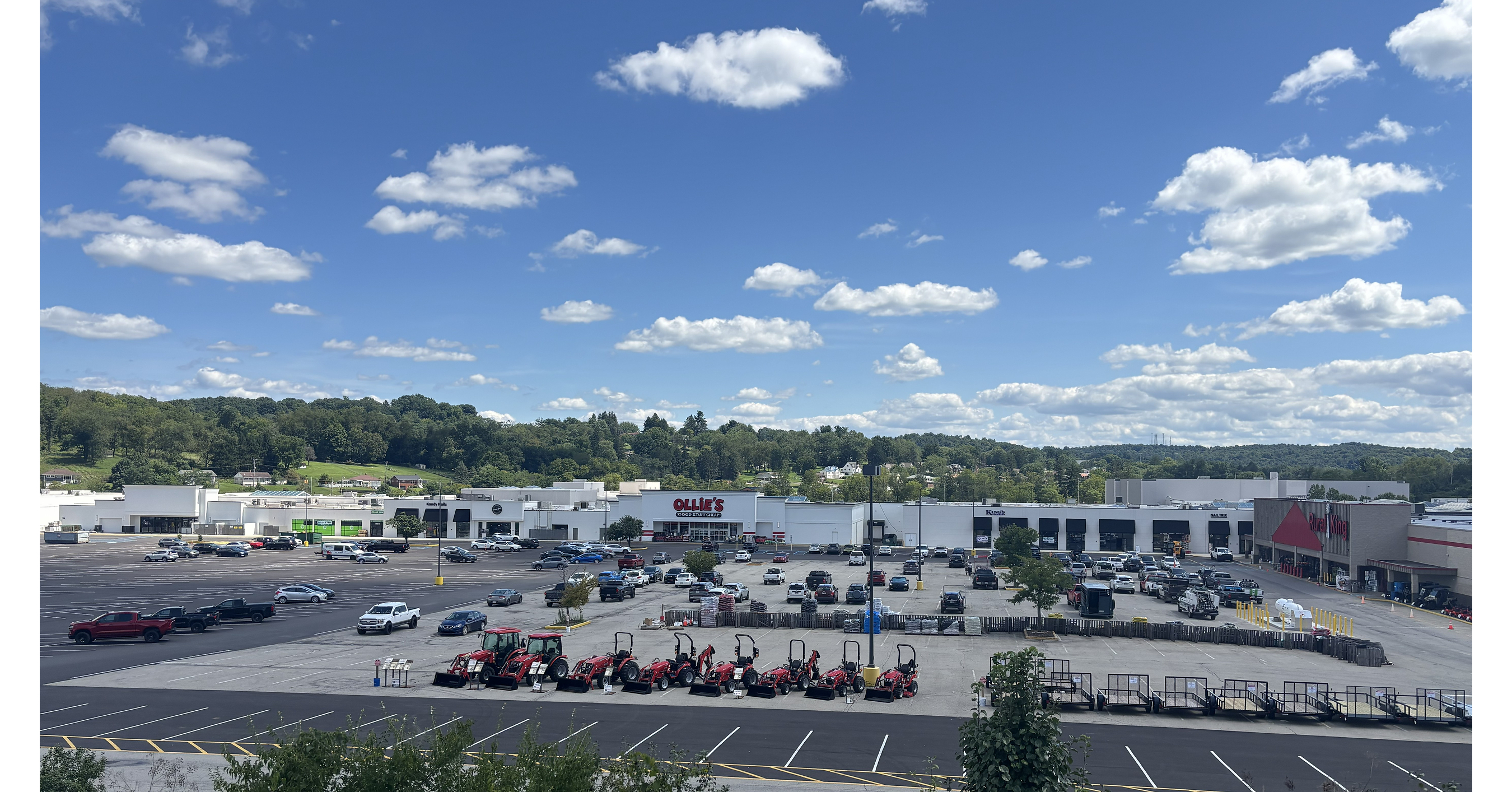
Industrial Realty Group and PREP Funds opened the 100,000-square-foot retail phase at Franklin Crossroads Park, with the renovated retail segment 98% leased. The broader 450,000-square-foot adaptive-reuse redevelopment continues, with a 350,000-square-foot business park phase (flex office, light industrial and R&D) under renovation and leasing underway. The announcement is incremental for public markets but signals strong local leasing demand along the Interstate 70 corridor.
Analysis
The investable signal is not the ribbon-cutting; it is the proof that secondary-market retail can still command tenant demand when the box is repurposed into a highway-visible, low-rent format. That is structurally negative for legacy enclosed-mall economics because it lowers the salvage value of obsolete malls and makes redevelopment the preferred outcome, which compresses the long-duration optionality embedded in weaker mall landlords. Public-equity impact is modest today, but the direction is clear: more obsolescence risk for lower-quality mall assets and more bargaining power for discount chains that can arbitrage cheap real estate into traffic.
For OLLI and DLTR, the benefit is indirect and mostly over months, not days. These concepts win when landlords are willing to subsidize expansion through lower occupancy cost and tenant improvement packages, so the real upside is unit growth with less capital intensity rather than a near-term sales spike. The key falsifier is margin pressure: if new formats require meaningfully higher buildout capex or if same-store traffic does not improve, the “growth through redeployment” story loses punch.
The contrarian read is that consensus may be overestimating this as a broad consumer-strength indicator. More likely, it is a micro-market reuse story: capital can still find demand for value retail and service tenants in a dead-mall shell, but that does not imply healthier mall traffic everywhere. The longer-term implication is bearish for mall reuse scarcity and supportive for adaptive-reuse developers, while the broad retail complex remains largely unchanged.
AllMind Terminal
AI-powered research, real-time alerts, and portfolio analytics for institutional investors.
Request TrialMarket Sentiment
Overall Sentiment
mildly positive
Sentiment Score
0.18
Ticker Sentiment
Key Decisions for Investors
- Stay neutral on DLTR and OLLI on this headline alone; treat it as a watch item for lease economics, not a standalone earnings catalyst. Reassess only if upcoming commentary shows occupancy cost, rent-per-square-foot, or capex-per-opening moving favorably over the next 1-2 quarters.
- Relative-value: long OLLI / short MAC over 3-6 months. Thesis: adaptive reuse reinforces the decline in residual value for obsolete enclosed malls, while OLLI can keep harvesting cheap, traffic-adjacent sites with limited capital intensity. Fade if MAC can show redevelopment NOI inflection or if OLLI margin guidance deteriorates.
- If looking for a cleaner consumer exposure, prefer OLLI over DLTR on pullbacks. OLLI’s format is more levered to opportunistic real-estate expansion and should benefit more from landlord willingness to backfill dead boxes; DLTR is more exposed to mix/markdown pressure if traffic is promotional rather than durable.
- Set an alert on any additional redevelopment lease-up announcements at similar assets over the next 1-3 months. A cluster of comparable deals would strengthen the case for shorting lower-quality mall REITs into earnings; a one-off project should be ignored.
More News
- Musk says Terrafab chip factory could outperform rivals despite challenges
- Nvidia GPUs are everywhere. Here are the ways companies are accessing them
- Stocks saw new highs and big declines: How the volatile AI trade moved last week's market
- Will Warner Bros. kill Skydance — or will David Ellison kill Warner Bros?
- The world needs Ukraine’s grain. Its farmers are running out of reasons to plant
- Cerebras Is About as Big as Nvidia's Data Center Business Was Nearly a Decade Ago. The Similarities Mostly End There.
From AllMind Research
- Anthropic IPO Preview: Valuation, Timing, and What to Watch
- Shein After the IPO: Venue, Valuation, and What Must Be Proved
- What AI Research Tools Should a Small Hedge Fund Buy First?
- Run Cost-Controlled Financial Research in AllMind Agent Studio
- State of Public Markets, June 2026: Higher for Longer Meets the AI Supercycle