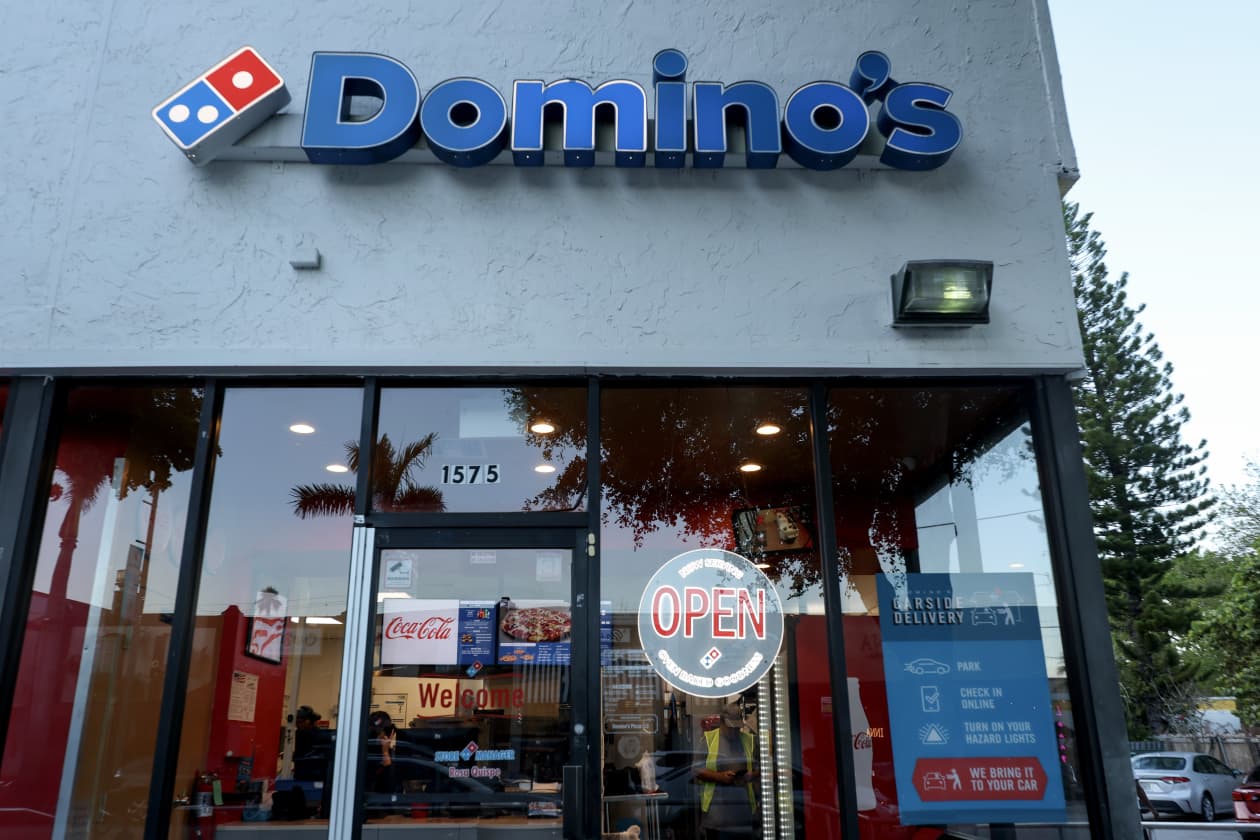
Domino’s shares jumped after the company reported Q2 revenue of $1.194B, up 4% year over year and about 2.5% above Wall Street’s consensus, driven by franchisees increasing purchases of ingredients and supplies.
The important read-through is not the top-line beat itself, but that DPZ can monetise system throughput twice: first via franchise royalties, then via supply-chain pass-through. That makes reported revenue more sensitive to ordering behavior than to pure consumer demand, so a strong print can be high-quality only if it is accompanied by evidence that franchisee unit economics are holding up. If the extra ingredient buying is inventory rebuild or inflation pass-through, the revenue signal decays quickly and the market should not pay up for it.
Near term, the main winner is DPZ; the more interesting loser is not a direct pizza peer but the franchisee base, which can absorb the margin squeeze before corporate feels it. That often shows up with a lag as slower remodels, fewer new store openings, and more cautious local discounting, which can cap system growth over the next 1-3 quarters. Relative share gains versus weaker franchised brands such as PZZA matter more than category-wide demand.
The contrarian view is that investors may be over-anchoring on a revenue beat that is partly mechanical. The key falsifier is not the stock reaction but whether upcoming same-store sales, franchisee profitability, and unit growth stay firm; if any of those soften, the stock likely gives back the gap quickly. Over 6-18 months, the thesis only remains constructive if menu innovation and traffic support sustained order growth rather than one-off stocking behavior.
AI-powered research, real-time alerts, and portfolio analytics for institutional investors.
Request TrialOverall Sentiment
mildly positive
Sentiment Score
0.35
Ticker Sentiment
