
Tiny Blue Dot Foundation Awards $9M For 11 New Research Grants Exploring the Science of the Perception Box
Source: PR Newswire
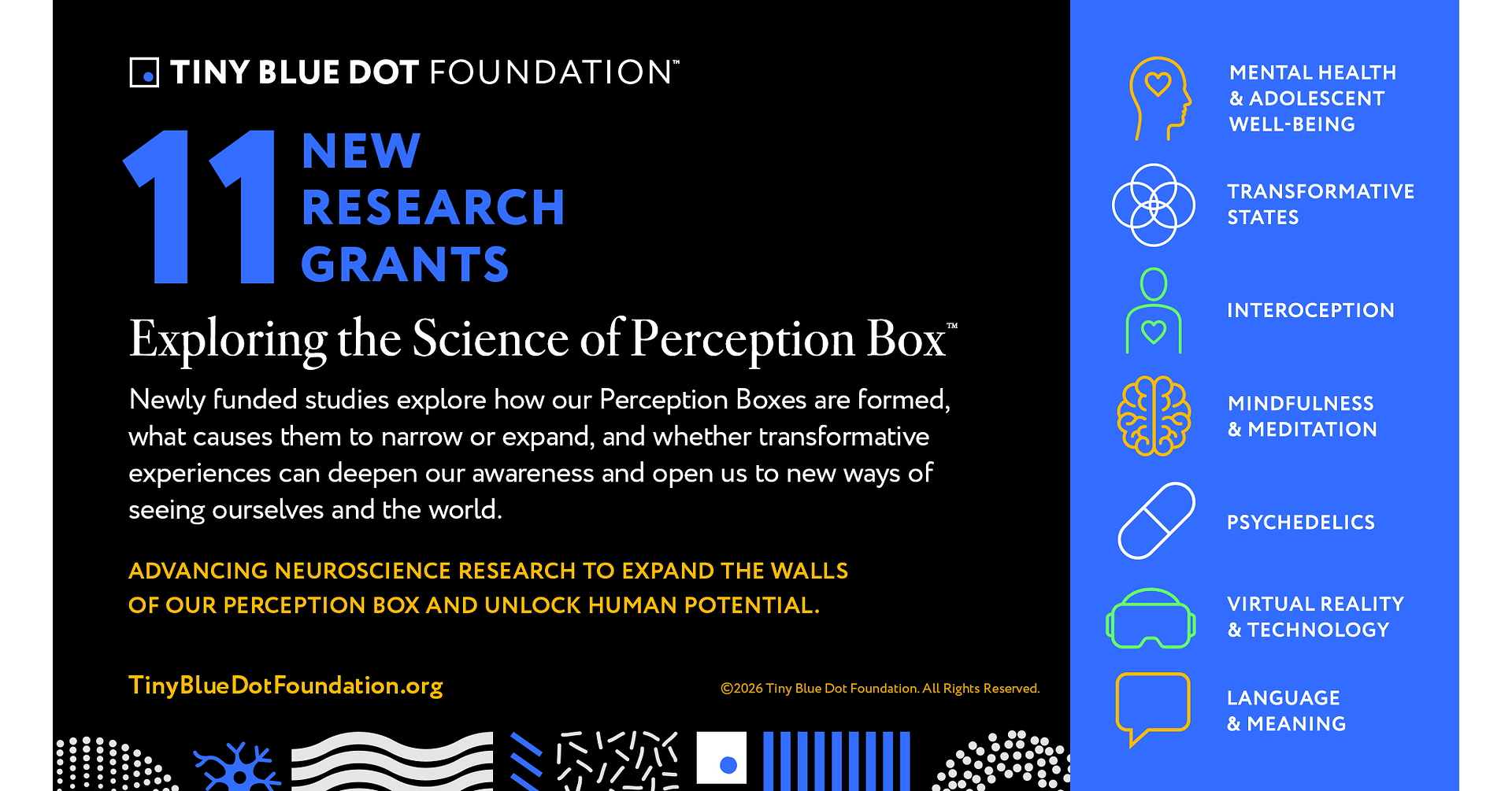
Tiny Blue Dot Foundation announced $9 million in funding for 11 new research projects to study its “Perception Box” framework—how beliefs, learning history, and experiences shape perception and anxiety. The studies span adolescent and young adult anxiety/emotion regulation (including a web-based game program with a 200-adolescent randomized trial), psychedelic- and mindfulness-based interventions (e.g., MDMA-assisted therapy in autistic youth; psilocybin plus meditation), and technology-enabled approaches (VR + EEG neurofeedback and non-invasive deep brain stimulation). Overall, the news is a constructive research milestone with limited direct near-term market impact.
Analysis
This is not a direct earnings event; the tradable impact is almost entirely narrative and second-order. The real signal is that the market for evidence-based mental-health innovation is shifting toward measurable mechanisms, which favors platforms with biomarkers, closed-loop feedback, or clinically defensible protocols over generic wellness content. In public equities, that is a slow-burn validation effect, not an immediate revenue bridge.
The likely winners over 6-18 months are the enabling layer: neurotech, EEG/VR toolchains, and any psychedelic-adjacent developer that can show reproducible signal in anxiety, autism, or body-perception endpoints. The losers are undifferentiated digital-therapy names if capital rotates toward more rigorous, protocol-driven approaches. Second-order, any reproducible language/EEG index could create a data moat for companies that own longitudinal patient data, not just content.
Near term, there is little reason to expect meaningful price discovery in the named micro/retail tickers; this is too small and too academic to matter by itself. The key falsifiers are safety issues in youth populations, failure to replicate in small controlled studies, or any payer/FDA pushback that keeps these modalities confined to research settings. If those occur, the whole theme reverts to science-project status rather than investable healthcare innovation.
AllMind Terminal
AI-powered research, real-time alerts, and portfolio analytics for institutional investors.
Request TrialMarket Sentiment
Overall Sentiment
mildly positive
Sentiment Score
0.15
Key Decisions for Investors
- No position in BABYD/BRSF/TGT on this headline; treat as a non-catalytic event unless one of these names later announces a real commercial partnership or licensing agreement within 1-3 months.
- Maintain a watchlist basket of CMPS / ATAI / MNMD for 6-18 month validation, but only add on sector weakness after confirmatory clinical or regulatory data; thesis breaks on any adverse youth-safety, replication, or FDA signals.
- If expressing the broader theme, prefer XBI as a liquid proxy for optionality rather than a single-name bet; size small and treat as 6-12 month convexity, with a hard stop if the next wave of neuro/psychedelic readouts disappoints.
- Use this as an alert on neurotech enablers rather than consumer wellness: monitor any future disclosure from VR/EEG or closed-loop neuromodulation suppliers for partnership revenue, since that is where the most plausible second-order monetization would surface.
More News
- Cata-Kor Enters Physical Retail with Target Launch, Bringing Its NAD⁺ Longevity Line to Stores Nationwide
- Musk says Terrafab chip factory could outperform rivals despite challenges
- CBO chief warns it’s ‘probably not plausible’ that a strong economy alone can steady U.S. debt as 5%-6% growth is needed—more than Bessent’s 3% view
- Stocks saw new highs and big declines: How the volatile AI trade moved last week's market
- Will Warner Bros. kill Skydance — or will David Ellison kill Warner Bros?
- Nvidia GPUs are everywhere. Here are the ways companies are accessing them