
Perpetua Resources Provides Construction Update on the Stibnite Gold Project and Exploration Activities
Source: PR Newswire
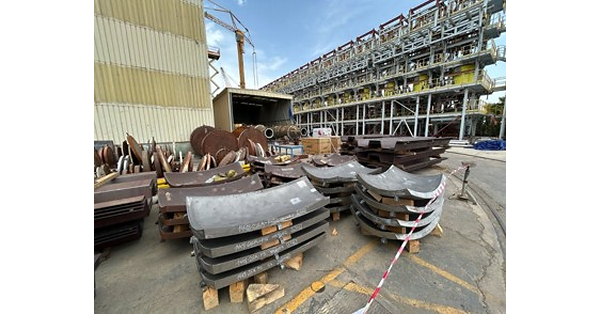
Perpetua Resources reported continued momentum at its Stibnite Gold Project, with 4 rigs running on a ~10,000-meter 2026 drill program (about 5,800 meters completed to date) and key near-surface intercepts including 6.4m at 16.2 g/t gold & 1.7% antimony from surface plus 15.0m at 6.3 g/t gold & 0.8% antimony from an 11m depth. Construction is advancing with long-lead dual autoclave components being fabricated in Europe and roughly half of the modular ATCO workforce housing units delivered as of Aug. 24, 2026, with the rest staging nearby and daily deliveries underway. Legally, the U.S. District Court of Idaho upheld federal approvals (NEPA/ESA/general mining law challenges) but remanded a discrete incidental-take reporting issue; Perpetua said this does not require reconsideration of the no-jeopardy findings and construction continues.
Analysis
The market mechanism here is not “more drill holes,” it is a slow re-rating of execution credibility. PPTA is moving from a litigation-discounted optionality asset toward a financeable development story, which matters because the next leg of value creation will likely come from lower perceived project risk and better access to capital, not from near-term earnings. The antimony processing pilot is strategically useful, but it is not yet a cash-flow driver; investors should treat it as policy validation rather than monetizable scale.
The most obvious winner is PPTA, but the second-order beneficiary is the domestic critical-mineral/defense supply chain narrative: any evidence that U.S.-based antimony processing can be localized supports procurement resilience for ammunition, flame retardants, and select industrial uses. That said, this can also crowd out attention from incumbent non-U.S. supply sources and may modestly improve the relative scarcity premium for substitute inputs if domestic capacity is slow to ramp. Gold beta is a weaker read-through; this is primarily a single-asset development de-risking event, not a sector-wide margin shock.
The key risk is that the current optimism underprices financing and schedule friction. Over days, the stock will trade on whether the court remand is viewed as clerical or as an opening for delay; over 1-3 months, the real catalyst is disclosure around capex, funding runway, and whether construction spend stays on plan. Over 6-18 months, the thesis fails if permitting scope widens, autoclave/infrastructure costs inflate, or drill success proves too isolated to move reserve economics. The consensus may be overvaluing the strategic-antimony headline while underweighting dilution risk and the possibility that policy support validates the asset without materially shortening time to production.
AllMind Terminal
AI-powered research, real-time alerts, and portfolio analytics for institutional investors.
Request TrialMarket Sentiment
Overall Sentiment
mildly positive
Sentiment Score
0.15
Ticker Sentiment
Key Decisions for Investors
- Tactically long PPTA on post-news pullbacks over the next 1-3 weeks; keep size small and use a tight risk limit, because the upside is from continued de-risking while the downside is an appeal-driven schedule reset.
- If PPTA holds recent gains and management confirms no incremental capex creep, consider a 3-6 month call spread in PPTA to express upside from financing re-rating without paying for full delta.
- Use a PPTA / GDX pair only if you want to isolate idiosyncratic project-risk compression from gold beta; the hedge makes sense only if gold is expected to be range-bound over the next quarter.
- Avoid chasing the antimony policy narrative until there is evidence of funding durability and construction burn-rate discipline; the pilot plant is strategically positive but not yet a basis for aggressive multiple expansion.
- Set a bearish alert if the appeal broadens beyond the narrow remand or if management signals any material delay to critical-path work; that would likely unwind the current de-risking trade quickly.
More News
- CoreWeave credit default swaps hit distress levels as investors sour on AI debt
- Brian Sullivan: Why the 'real' price of oil is likely $30-$40 higher than where it is now
- Treasuries Soar as Tech Slump Threatens Growth
- Penske Automotive agrees to be taken private by Penske, Mitsui
- Faraday Copper completes acquisition of BHP’s San Manuel project
- Latest Oil Market News and Analysis for Oct. 16