
Socfin publishes its 2026-2031 Sustainability Strategy and updated Responsible Management Policy
Source: PR Newswire
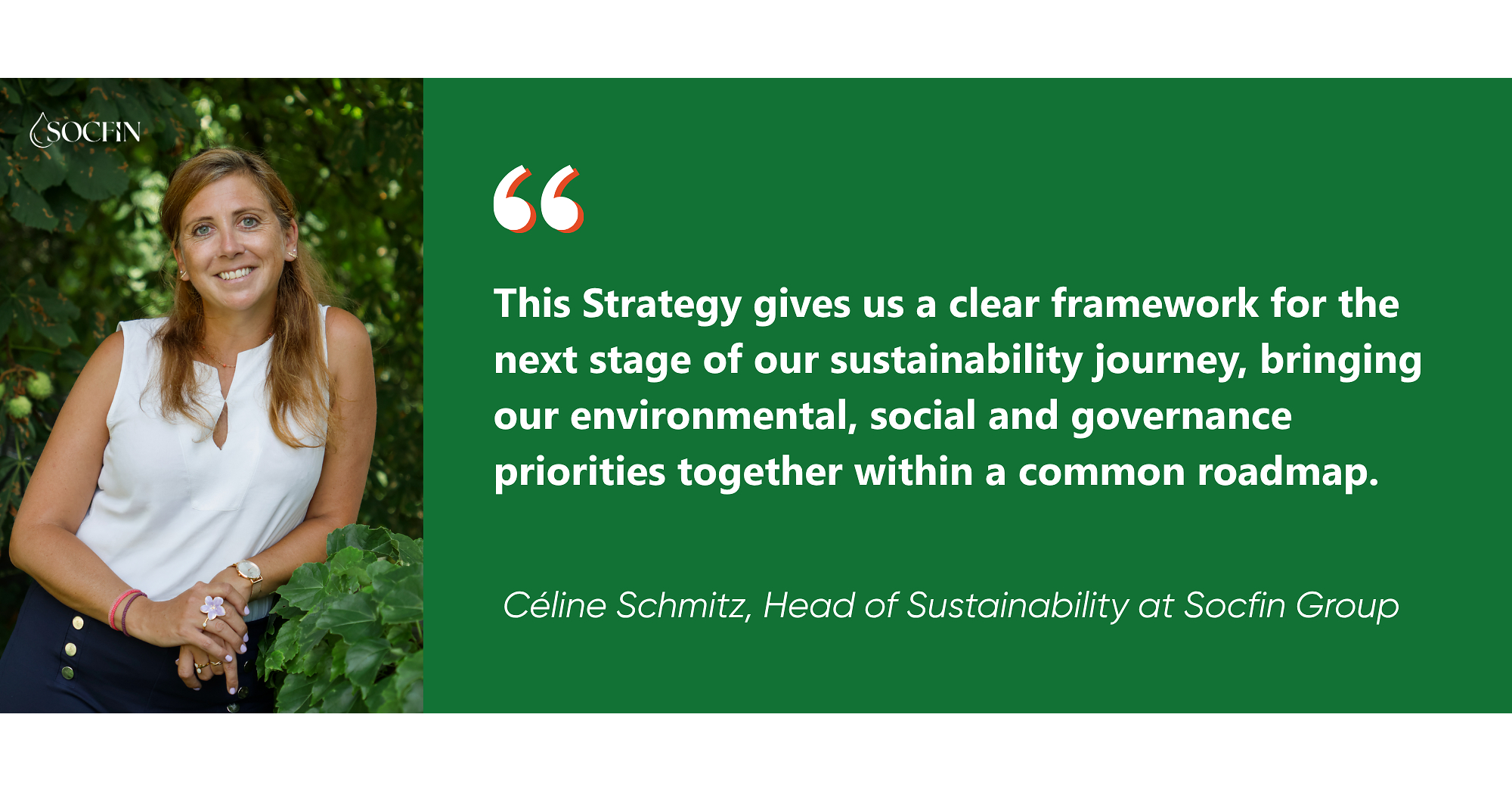
Socfin published a 2026–2031 Sustainability Strategy and updated Responsible Management Policy for its natural rubber and palm oil operations across 10 countries in Africa and Asia. The five priorities include governance and transparency, nature and climate, people and communities, traceable supply chains, and ESG performance. Implementation is scheduled in three phases: 2026–2027, 2028–2029, and 2030–2031, with greater emphasis on performance monitoring and continuous improvement in the final phase.
Analysis
This is a governance signal, not evidence yet of lower deforestation, improved labor outcomes, or reduced supply risk. The market mechanism matters only if the roadmap changes operating costs, access to buyers, or the probability of supply-chain exclusions. Socfin’s private status also limits direct equity expression; listed palm-oil and natural-rubber producers are only proxies, and should not be treated as equivalent exposures.
The near-term risk is that buyers and lenders treat the policy as disclosure without verifiable site-level outcomes. Over 1–3 months, the useful catalysts are publication of baselines, measurable milestones, assurance scope, grievance/remediation data, and buyer or certification responses. Over 6–18 months, credible traceability and human-rights controls could protect market access as customer due diligence and deforestation rules tighten; implementation could also raise costs or expose legacy disputes. The roadmap’s staged rollout leaves a meaningful gap between commitment and measurable performance.
Contrarian read: the announcement may be mildly positive for Socfin’s stakeholder positioning but is not, on its own, a reason to re-rate the sector. A relative-value trade based solely on this release is premature. Falsification of the cautious view would be independently assured progress and evidence that key buyers recognize the controls; deterioration in certification status, unresolved community grievances, or buyer restrictions would instead make the risk material.
AllMind Terminal
AI-powered research, real-time alerts, and portfolio analytics for institutional investors.
Request TrialMarket Sentiment
Overall Sentiment
mildly positive
Sentiment Score
0.15
Key Decisions for Investors
- No immediate trade on the announcement: Socfin is not a supplied listed identity, and the release provides no quantified operating or financial impact.
- Set a 1–3 month diligence alert for published baselines, site-level traceability coverage, third-party assurance, remediation outcomes, and any buyer or certification-body response; these determine whether the policy is incremental or mainly procedural.
- For listed palm-oil and natural-rubber exposure, favor a relative-risk screen—not a directional sector position—using verified traceability, certification, and buyer-concentration data. Do not infer peer performance from Socfin’s commitments.
- Reassess over 6–18 months if implementation changes procurement access or operating costs. A confirmed buyer restriction or loss of certification is a downside trigger; independently verified milestones and continued buyer access would weaken the cautious thesis.
More News
- Trump's diesel agreement with Putin accused of contradicting Russia sanctions law
- Trump reaches Russian diesel supply deal as U.S. fuel prices surge
- ‘I drive a Tesla’: After Elon Musk said he’d lose his job, Delta CEO Ed Bastian says there’s ‘no tit for tat’ as airline unveils earnings miss
- Trump struck a diesel deal with Putin just weeks after signing Russia sanctions. Zelenskyy calls it ‘a weak decision’
- Why is the Chinese stock market missing the AI rally
- Trump announces Russian diesel deal amid soaring US fuel prices
From AllMind Research
- Anthropic IPO Preview: Valuation, Timing, and What to Watch
- Shein After the IPO: Venue, Valuation, and What Must Be Proved
- What AI Research Tools Should a Small Hedge Fund Buy First?
- State of Public Markets, June 2026: Higher for Longer Meets the AI Supercycle
- AI Research Tools With Exact Source Citations