
KeyBank's Key Secured Credit Card® Program Surpasses 48,000 Client Graduations Since 2019
Source: PR Newswire
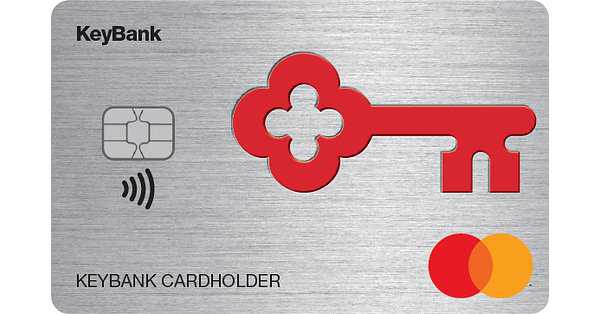
KeyBank said more than 4,600 clients graduated from its secured-card program in the first half of 2026; 68% graduated within 12 months and 85% within 24 months. Among graduates who entered with a low FICO score, the average improvement was 86 points, while those who entered without a score graduated with an average FICO score of 724. Since the program began in 2019, 48,055 clients have graduated; the update highlights consumer credit-building outcomes but is unlikely to materially move the stock.
Analysis
Investment read-through: strategically sensible customer acquisition and retention, but not an earnings catalyst on the disclosed evidence. Credit improvement is not equivalent to profitable customer lifetime value: the missing variables are card spend, interchange and interest income, acquisition/service cost, conversion into other Key products, and cohort delinquency/charge-off rates. The program may create a modest deposit relationship while collateral is pledged; graduation releases that collateral, so deposit retention and subsequent unsecured-card usage determine whether the relationship deepens or becomes a funding outflow plus higher credit exposure. Better credit histories could support cross-sell into cards or loans, but expansion to unsecured lending also exposes Key to weaker consumer conditions and adverse selection. Competitors can replicate secured-card features, making execution and cross-sell—not the program itself—the differentiator. The reported outcomes are internally analyzed customer results and do not demonstrate incremental profitability or causation.
Timing: near term, expect little fundamental repricing from this announcement. Over 1–3 months, monitor Key’s earnings disclosures for card balances, consumer delinquencies, charge-offs, deposit trends, and any evidence of product cross-sell. Over 6–18 months, the key question is whether graduates become durable, profitable unsecured borrowers without deterioration in credit quality. The announced education expansion is a potential engagement tool, not yet a measurable earnings driver. The contrarian point is that graduation is not purely positive: collateral is released and credit risk becomes less secured. The thesis improves only if conversion and retention outweigh that shift; it weakens if deposit attrition or credit losses rise.
AllMind Terminal
AI-powered research, real-time alerts, and portfolio analytics for institutional investors.
Request TrialMarket Sentiment
Overall Sentiment
mildly positive
Sentiment Score
0.25
Ticker Sentiment
Key Decisions for Investors
- No trade in KEY on this release alone; the announcement does not establish material revenue, margin, or credit-cost impact.
- Treat the program as a watch item alongside KEY earnings: seek cohort conversion, card spending, deposit retention after graduation, and loss/delinquency data before assigning earnings value.
- Falsify the constructive cross-sell thesis if unsecured-card growth is accompanied by worsening consumer delinquencies or charge-offs, or if graduates do not retain deposits or adopt additional Key products.
- Avoid a relative-value position versus other regional banks based solely on this company-reported program; reconsider only if subsequent disclosures show measurable, repeatable economics.
More News
- KeyCorp head Andrew Paine sells $829,556 in shares
- Analysts react as Binance freezes assets after $6.3 billion security breach
- DoorDash offers $17 billion for Instacart: ‘the largest companies are only eating more and more of the pie’
- Alphabet Erases $500 Billion as ChatGPT, Google AI Cut into Search
- Alphabet’s stock has worst day in over 20 years, dragging the S&P 500 to first loss in four days
- PC chip plunge wipes out a quarter of Intel’s value