
RoboParty presenta RP1 en IROS, un robot humanoide de alto rendimiento y código abierto full-stack
Source: PR Newswire
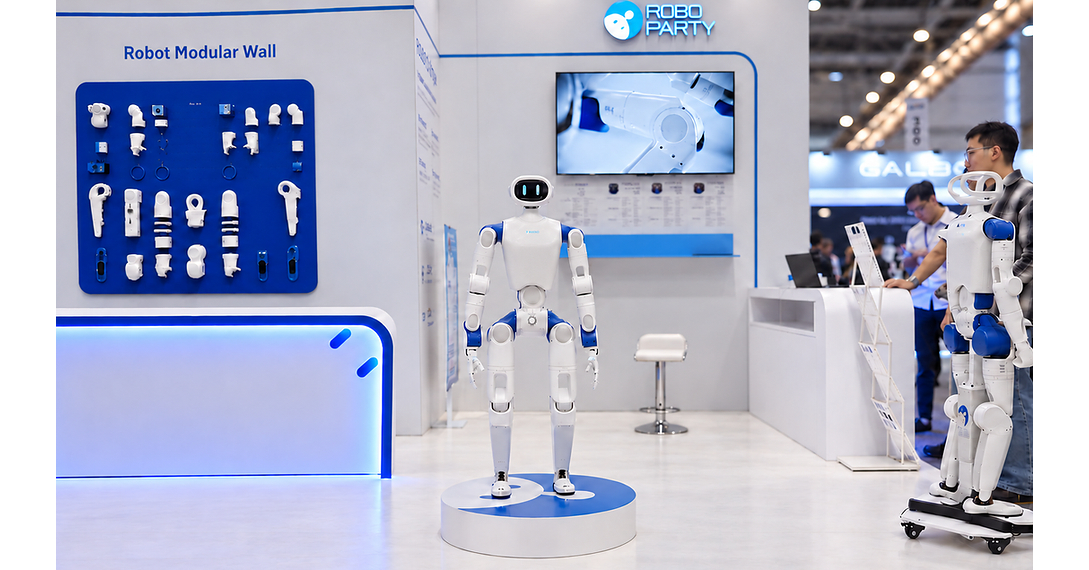
RoboParty presentó el RP1 en IROS 2026, un robot humanoide bípedo de código abierto full-stack con un par articular máximo de hasta 160 N·m y capacidades demostradas de recuperación del equilibrio ante empujones y patadas. La empresa prevé anunciar en octubre de 2026 más detalles de su hoja de ruta de código abierto y realizar lanzamientos más amplios de software y hardware y desplegar un programa de producción en masa durante el cuarto trimestre.
Analysis
The investable signal is the attempt to make the development stack—not just the robot body—open. If developers can reproduce results and contribute useful control or training tools, RoboParty could gain adoption without matching the capital intensity of a closed, vertically integrated rollout. The trade-off is weaker differentiation and uncertain monetization: open designs can accelerate hardware imitation, putting pressure on actuator and platform pricing before an ecosystem produces durable software revenue. This is a competitive mechanism to monitor against Figure AI, Unitree and Agility Robotics, not evidence that any has lost share.
The launch demonstration is weak evidence of commercial readiness. Robustness in a staged balance test does not establish safe operation, repeatability, useful manipulation, uptime or cost per task. The production program is therefore the critical bridge from technical attention to economics; no pricing, customer commitments, unit capacity or independently verified performance is supplied. A further risk is that opening tools attracts contributors but fragments the stack, increasing integration and support burdens.
Near term, the roadmap and Q4 releases may move robotics sentiment, but the announcement alone does not support a company-specific public-equity trade: the supplied data identifies no ticker, and no investable financial exposure is established. Over 1–3 months, validate whether the promised releases arrive and whether external developers can reproduce results. Over 6–18 months, the key question is whether an open ecosystem creates adoption and recurring software value, or mainly commoditizes hardware. The contrarian angle: attention and GitHub activity can be mistaken for demand; conversely, broad developer access could make an initially niche platform a useful talent and tooling funnel.
AllMind Terminal
AI-powered research, real-time alerts, and portfolio analytics for institutional investors.
Request TrialMarket Sentiment
Overall Sentiment
mildly positive
Sentiment Score
0.30
Key Decisions for Investors
- No direct position on this announcement: first establish RoboParty’s ownership/listing status and identify any public-company revenue exposure; neither is provided.
- Treat the October roadmap and Q4 hardware/software releases as watch catalysts, not proof of scale. Verify published pricing, production capacity, delivery timing, customer deployments and third-party reproducibility.
- For any broader robotics exposure, favor evidence of paid deployments and repeatable task economics over demo-led narratives; avoid inferring near-term component demand from one platform launch.
- Falsify the adoption thesis if releases slip, external developers cannot reproduce core capabilities, or production plans lack verifiable capacity/customer evidence; upgrade it only after repeatable deployments and credible unit economics emerge.
More News
- US stock market hits all-time high as investors bet big on AI
- Singapore's Temasek warns of the ‘biggest risk’ facing markets right now
- A 32% beat, a +6% jump: the IT solutions name our models picked in July
- Nvidia Is on the Verge of a $6 Trillion Market Value
- What Marvell's rosy long-term guidance means for our AI chip stocks
- U.S. stock futures steady after tech rally lifts S&P 500, Nasdaq to records
From AllMind Research
- Anthropic IPO Preview: Valuation, Timing, and What to Watch
- Shein After the IPO: Venue, Valuation, and What Must Be Proved
- What AI Research Tools Should a Small Hedge Fund Buy First?
- How to Search Earnings Call Transcripts With AI
- What a Concept From Nature Tells Us About How C-Suite Executives Actually Think About AI