
Quebec Decarbonization Plan - Expensive and Unlikely says new Friends of Science Society Reports; Canada must REcarbonize for National Security
Source: PR Newswire
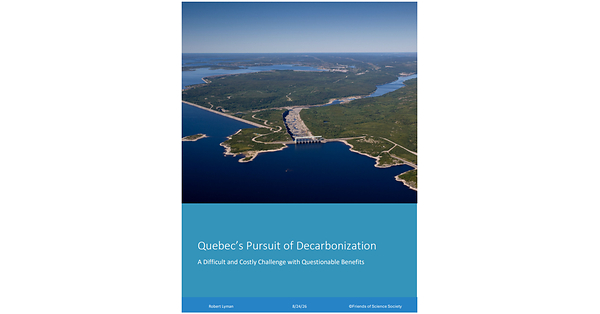
Friends of Science Society says Quebec’s net-zero push requires major power and grid build-out—Hydro-Quebec estimates +100+ TWh additional electricity, +8,000–9,000 MW generation capacity, +5,000 km of transmission, and roughly $110B of investment by 2035. The report also argues “electrify everything” is a geopolitical trap and links carbon-market policy (e.g., Quebec 2025 permit auction averaging CAD 39.39 / USD 28.14) to broader energy and trade risks, including through California’s carbon initiatives. Overall, the article is skeptical of net-zero economics and frames the policy as costly with questionable benefits, implying a risk to energy-sector investment and policy costs.
Analysis
This is not a tradable earnings catalyst so much as a reminder that policy narratives only matter once they change permitting, carbon prices, or utility capex. For the listed names provided, the direct read-through is effectively nil; the right interpretation is as a sentiment input for Canadian policy-sensitive assets, not as a standalone signal.
The real winners from a softer climate-policy regime would be upstream Canada oil sands, pipes, LNG, and any contractor set tied to transmission/grid buildout reprioritization. The losers are carbon-credit-linked utilities, renewable developers, and electrification beneficiaries whose valuations assume durable policy support; the second-order effect is slower demand growth for transformers, interconnectors, and low-carbon project financing, not an immediate swing in commodity demand.
The contrarian point is that rhetoric is cheap and implementation is slow. Even if OSFI or provincial governments soften guidance, capital allocation in energy still follows power prices, reliability, and permitting reality; that makes this more of a 6-18 month policy-tracking theme than a days-to-weeks trade. Falsifiers are concrete: Quebec carbon auction prices re-accelerating, Washington/Quebec linkage expanding smoothly, or any actual rollback of climate-risk guidance rather than advocacy noise.
AllMind Terminal
AI-powered research, real-time alerts, and portfolio analytics for institutional investors.
Request TrialMarket Sentiment
Overall Sentiment
mildly negative
Sentiment Score
-0.30
Key Decisions for Investors
- No direct trade in CWT, FISI, PYBX, SOPA, or YYYH; treat this as low-signal policy commentary until a budget, regulation, or court filing changes cash-flow expectations.
- Build a watchlist on Canadian energy policy beta: accumulate CNQ/SU on pullbacks only if provincial/federal permitting or OSFI guidance visibly weakens; stop the thesis if carbon compliance costs keep tightening instead of easing.
- Relative-value expression over 3-6 months: long XLE vs. long-duration clean-energy proxies such as ICLN only if carbon-policy fatigue shows up in falling permit prices and delayed transmission spend; otherwise stay flat.
- If you want a cleaner risk-managed setup, use a conditional long in ENB or TRP only on concrete pipeline/permitting headlines, not on advocacy releases; risk/reward is favorable only when the market starts pricing actual project approvals.
- Set alerts on Quebec carbon auction clearing prices and Washington/Quebec linkage milestones; if permit prices push materially above CAD 45 or linkage deepens without pushback, fade the anti-policy thesis.
More News
- US forces disable ship ‘attempting to run’ Iran blockade in Gulf of Oman
- Middle East war, high debt levels to dominate IMF-World Bank meetings in Bangkok
- Attack on Saudi airport kills 12 people and wounds more than 300—the deadliest strike in any Gulf Arab country since the start of the Iran war
- Why is US turning to Russia for diesel despite sanctions?
- Ship captains and crews transiting the Strait of Hormuz make so much danger pay that they’re ‘almost being viewed as mercenaries’
- Trump says Ukraine should get a new president as he blames Zelenskyy for U.S. diesel prices
From AllMind Research
- Anthropic IPO Preview: Valuation, Timing, and What to Watch
- Shein After the IPO: Venue, Valuation, and What Must Be Proved
- What AI Research Tools Should a Small Hedge Fund Buy First?
- How to Search Earnings Call Transcripts With AI
- What a Concept From Nature Tells Us About How C-Suite Executives Actually Think About AI