
Huawei presenta arquitectura de referencia de WAN inteligente para proveedores de servicios de Internet
Source: PR Newswire
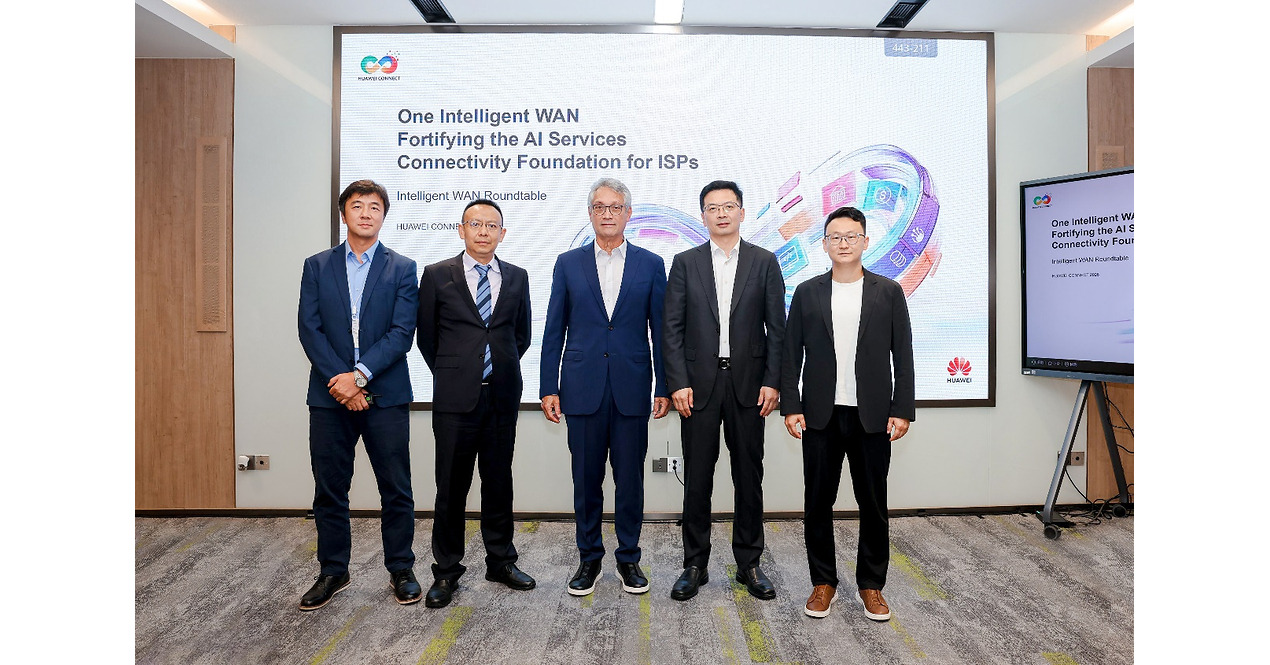
Huawei unveiled an intelligent WAN reference architecture for internet service providers at Huawei Connect 2026, aimed at supporting AI-service deployment and monetization. The proposed IP+optical network model combines connectivity, edge computing and APIs, while AI-enabled operations tools are intended to reduce ISP OPEX and improve maintenance efficiency. The announcement is a strategic technology roadmap rather than a financial update, with no revenue, contract-value or deployment figures disclosed.
Analysis
This is not yet a demand signal; it is a vendor-led architecture pitch. The investable read is that AI inference at the edge could shift carrier capex from incremental backbone bandwidth toward metro aggregation, optical transport, routing capacity and network automation. If ISP customers begin attaching paid latency/SLA guarantees to edge AI workloads, the highest operating leverage should accrue to optical-component and routing suppliers rather than telecom operators, whose competitive pricing and elevated capex needs may absorb much of the economic benefit.
The key competitive implication is a widening technology-access gap. Huawei’s ability to bundle IP, optical and operations software can pressure global incumbents where it remains deployable, while export controls keep the opportunity inaccessible in many developed markets; this segmentation favors Nokia (NOK) and Ciena (CIEN) in non-Huawei markets, but creates pricing risk for their emerging-market bids. Juniper (JNPR) is less directly exposed given the pending HPE transaction, while Arista (ANET) remains more leveraged to data-center fabrics than carrier WAN refresh.
Over the next 1-3 months, watch carrier capex commentary and orders for coherent optics rather than product-launch announcements. A credible catalyst would be tier-1 operators reporting AI/edge-driven metro traffic growth, rising optical attach rates, or explicit network-automation OPEX savings in 2027 budgets. The 6-18 month risk is that AI traffic remains concentrated in hyperscale data centers, leaving edge monetization unproven and turning WAN upgrades into a low-return capacity build; this would particularly challenge indebted telecom operators.
Contrarian view: consensus may overstate the need for broad WAN redesign. Compression, workload placement, and private interconnects can contain public-network traffic growth, while agentic-AI upstream traffic is still speculative at commercial scale. Treat claims of material OPEX reduction as unverified until operators disclose headcount, outage-rate, or maintenance-cost outcomes.
AllMind Terminal
AI-powered research, real-time alerts, and portfolio analytics for institutional investors.
Request TrialMarket Sentiment
Overall Sentiment
mildly positive
Sentiment Score
0.38
Key Decisions for Investors
- No directional Huawei-related trade from this release alone; set an alert for CIEN and NOK after the next two quarterly results for AI/edge-driven order commentary, book-to-bill above 1.0, or raised optical/transport guidance.
- Build a 6-12 month watchlist long CIEN versus short a broad European telecom proxy (EXV1/IXP where mandate permits) only if carrier transport orders accelerate while telecom capex-to-revenue remains elevated; target 15-20% relative upside, exit if CIEN backlog or gross-margin guidance declines.
- Prefer ANET over carrier-equipment exposure for AI-networking beta until independently verifiable metro-WAN demand emerges; ANET is the cleaner beneficiary if AI networking spend remains inside data centers rather than migrating to ISP edge networks.
- Avoid adding to highly levered telecom operators on an edge-AI monetization thesis until management quantifies incremental revenue per connection and capex requirements; falsify the caution if operators demonstrate sustained service-revenue growth exceeding capex growth for two reporting periods.
More News
- All Iranian airlines to be 'shut down' from Wednesday, Bessent tells CNBC
- Taiwan benchmark Taiex rises to record intraday high as tech stocks advance
- AMD joins the $1 trillion club as chip rally surges - our AI Strategy saw it early
- Jamie Dimon says hyperscaler AI spending could hit $1 trillion next year
- Factbox-Key issues for this week’s Trump-Xi summit in Washington
- Latest Oil Market News and Analysis for Sept. 22