
Sungrow Achieves World-First Wideband Oscillation Reproduction and Suppression at 500 MW Plant
Source: PR Newswire
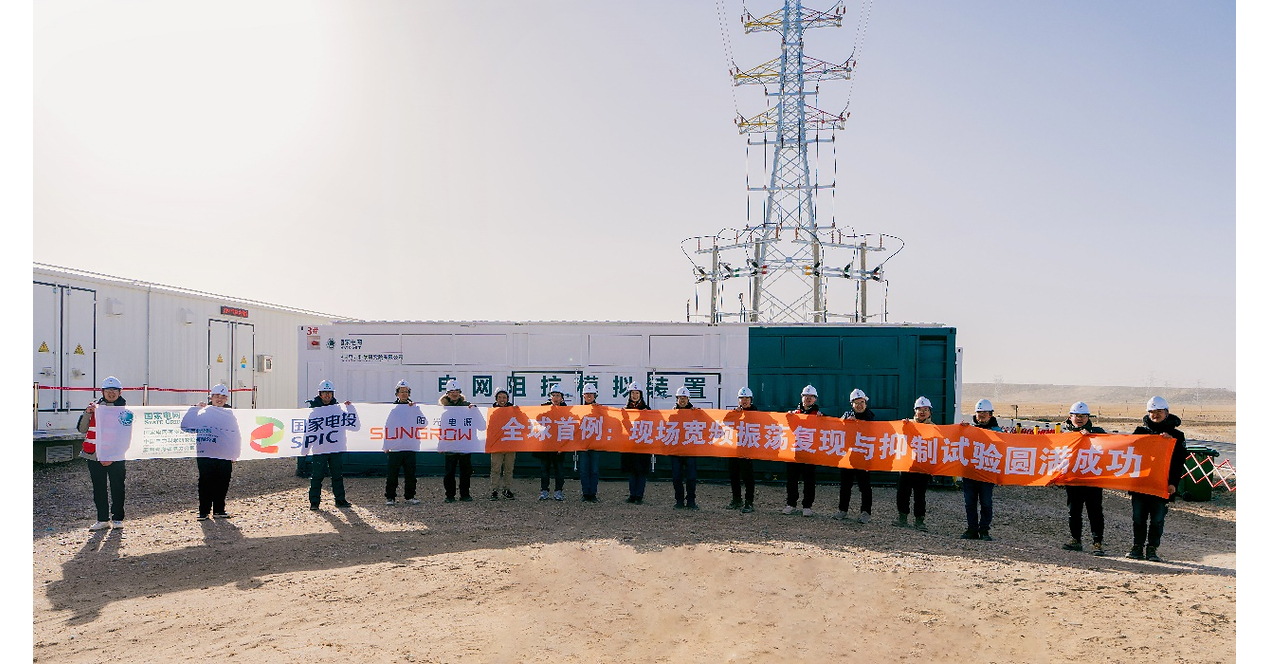
Sungrow said it became the first company to controllably reproduce and suppress wideband oscillation at an operating 500 MW solar-plus-storage plant in Qinghai, China. Its PV inverters identified grid strength within 40 milliseconds and used grid-forming controls designed to operate across a short-circuit-ratio range of 1-40. The field validation could improve renewable plant stability on weak grids, reduce oscillation-related disconnections and generation losses, and enable greater power exports, though the announcement does not quantify commercial revenue impact.
Analysis
The relevant monetization is not inverter unit demand but qualification for weak-grid, utility-scale projects where equipment choice can determine whether a project achieves contracted export capacity. If independently validated, Sungrow (300274.SZ) could gain share in China’s western provinces and emerging markets with low short-circuit ratios, supporting both mix and service revenue rather than simply volume growth. The second-order pressure falls on commodity inverter vendors lacking grid-forming references; SMA Solar (S92.DE) and Ginlong (300763.SZ) face a higher R&D and certification burden, while GE Vernova (GEV) and Fluence (FLNC) benefit indirectly as grid-stability requirements raise demand for controls, storage, and system-integration expertise.
The near-term market impact should be limited: this is a vendor-sponsored technical result, not evidence of a procurement win, regulator-approved standard, or realized pricing premium. Over the next 1-3 months, monitor whether Chinese grid operators or EPC tenders explicitly require grid-forming/wideband-oscillation capabilities; that would convert a technical claim into a barrier to entry. Over 6-18 months, rising curtailment and interconnection constraints can shift project economics toward larger DC-coupled storage and premium power-electronics architectures, creating a favorable setup for GEV and selected storage integrators but potentially compressing returns for developers whose existing fleets require retrofit capex.
Consensus may overvalue incremental inverter shipments while underpricing grid-code tightening as a replacement-cycle catalyst. The falsifier is straightforward: no tender-specification change, no disclosed weak-grid project wins, or no improvement in Sungrow’s gross-margin mix within two reporting periods would indicate this remains marketing rather than a durable moat. Conversely, a major grid-disturbance event could accelerate requirements abruptly, but it would also expose warranty and performance-liability risk across the supply chain.
AllMind Terminal
AI-powered research, real-time alerts, and portfolio analytics for institutional investors.
Request TrialMarket Sentiment
Overall Sentiment
strongly positive
Sentiment Score
0.58
Key Decisions for Investors
- No immediate directional trade on the release alone; place 300274.SZ on a 1-3 month catalyst watch for utility-scale awards that explicitly cite grid-forming or weak-grid compliance. Upgrade only if disclosed order flow or gross-margin guidance demonstrates a pricing premium.
- Build a 6-12 month relative-value watchlist: long GEV versus short a broad solar-equipment basket (TAN) if transmission/interconnection rules begin requiring grid-support functionality. GEV has broader grid-equipment and services exposure; invalidate if renewables capex slows materially or grid-code mandates fail to emerge.
- For higher-risk exposure, monitor FLNC for storage projects where grid-forming capability is contractually required; initiate only after backlog conversion and liquidity runway are confirmed, since execution and balance-sheet risk can dominate the technical tailwind.
- Avoid treating inverter peers as homogeneous: a tender-led shift toward performance guarantees would be negative for low-cost vendors without demonstrated weak-grid operating history. Watch SMA Solar and Ginlong quarterly commentary for rising R&D, warranty provisions, or pricing concessions as early signs of competitive pressure.
More News
- Bank of Japan raises interest rates to 31-year high, flags concerns over inflation
- Italy to deploy warships to protect shipping through Bab al-Mandeb
- Oil prices fall as Saudi supply hopes outweigh fresh Houthi strikes
- Oil prices fall for 3rd day as supply concerns ease, diplomacy in focus
- Oil Traders Stymied by Iran War Stalemate: Evening Briefing Americas
- Australia’s central bank chief warns inflation risks materialising
From AllMind Research
- Anthropic IPO Preview: Valuation, Timing, and What to Watch
- Shein After the IPO: Venue, Valuation, and What Must Be Proved
- What AI Research Tools Should a Small Hedge Fund Buy First?
- Automating Financial Model Updates: A Source-Controlled Workflow
- Weekly Update: Live Event Center, In-App Documents, and Faster Transcripts