
Lennar Enters Des Moines Market with the Start of Sales at Five New Communities
Source: PR Newswire
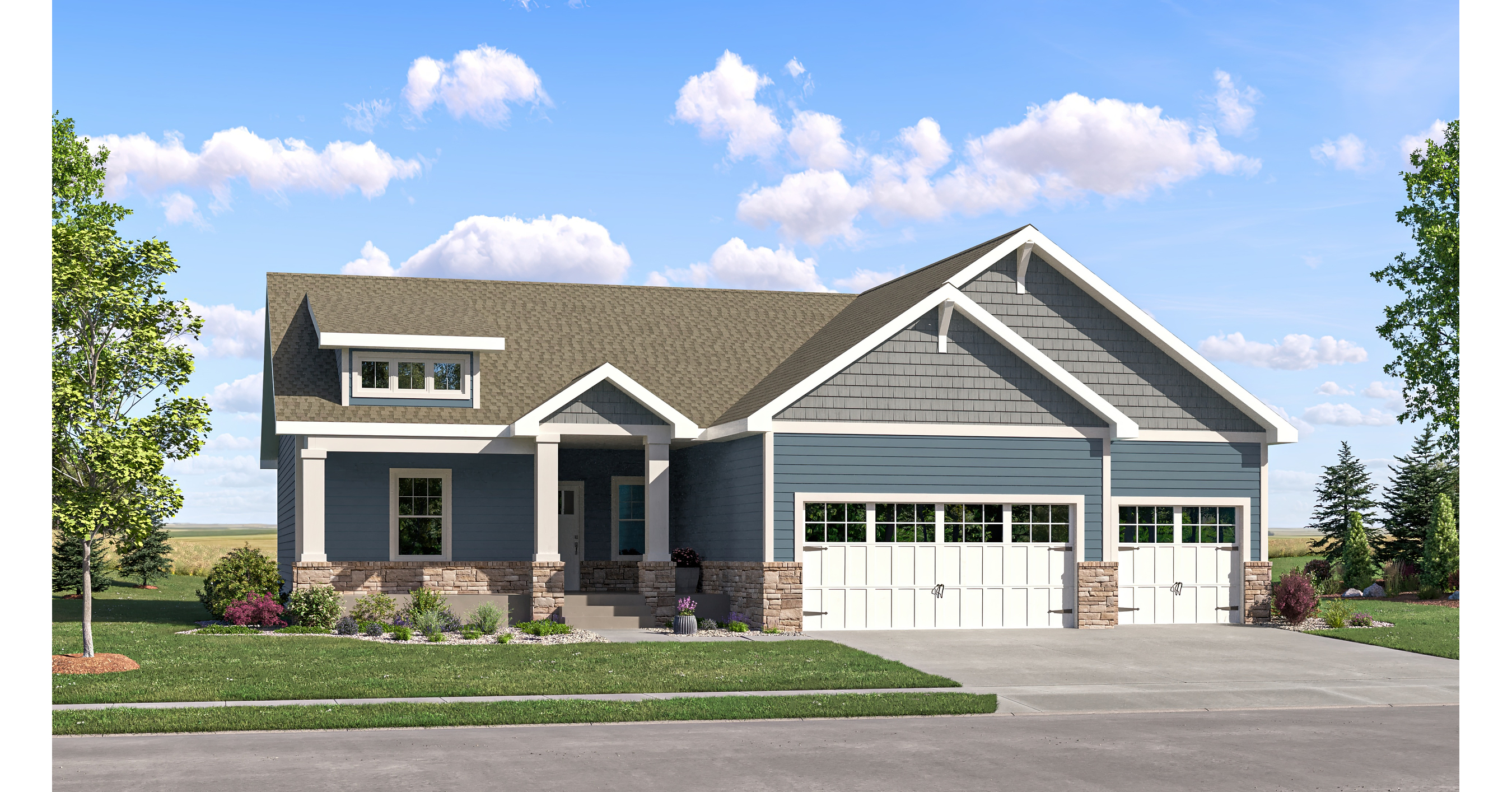
Lennar launched its first Iowa homebuilding division, opening sales at five communities across the Des Moines metro with homes priced from the $300,000s to low $400,000s. The communities offer three new designs spanning 1,592 to 2,262 square feet, while Lennar Mortgage has also entered the local market to provide financing. The expansion signals a targeted growth investment in the Des Moines housing market, though it is unlikely to materially affect Lennar's near-term financial results.
Analysis
This is strategically more relevant as a signal of LEN’s land-and-division deployment discipline than as a near-term earnings driver. A simultaneous multi-community launch creates local scale in construction purchasing, sales staffing and mortgage capture, but Iowa’s lower absolute home prices limit dollar revenue per closing; the division must sustain materially higher unit velocity than coastal markets to earn acceptable returns on overhead and land investment. The underwriting question is whether LEN has secured lots at a basis that preserves its national gross-margin profile after incentives, rather than whether initial model-home traffic is strong.
Competitive pressure should fall most directly on regional private builders and public builders with Midwest exposure, including D.R. Horton (DHI) and PulteGroup (PHM), if LEN uses its balance sheet and captive mortgage platform to offer rate buydowns. The second-order effect is potentially negative for local resale inventory and entry-level existing-home pricing: new construction with financing incentives competes on monthly payment, not sticker price. This can support LEN’s absorption pace but may require elevated sales incentives, leaving reported revenue growth less informative than gross-margin and mortgage-segment profitability.
The immediate market impact should be negligible because the disclosure provides no lot count, expected annual closings, land spend or return targets. Over the next 1-3 months, October traffic and disclosed community-level releases may offer a read-through on Midwest entry-level demand; over 6-18 months, the relevant catalyst is whether Iowa becomes a replicable low-cost expansion template or remains a subscale overhead drag. A weaker labor market, mortgage-rate rebound, or discounting by DHI/PHM would quickly undermine the absorption thesis.
Contrarian view: investors may reflexively reward geographic expansion while overlooking that a lower-price-point market can dilute consolidated average selling price and, if financed through incentives, gross margin. Conversely, if LEN’s land-light/community option model limits capital at risk and its mortgage attachment rate exceeds local peers, even modest scale could be value-accretive without material balance-sheet exposure. Await division-level starts, backlog, incentive and margin disclosure before treating this as an earnings catalyst.
AllMind Terminal
AI-powered research, real-time alerts, and portfolio analytics for institutional investors.
Request TrialMarket Sentiment
Overall Sentiment
mildly positive
Sentiment Score
0.38
Ticker Sentiment
Key Decisions for Investors
- No standalone LEN trade on this release; impact is too small and financial disclosures are absent. Create an alert for Iowa lot count, expected annual deliveries, land basis and incentive levels in the next earnings call or filings.
- For a 6-12 month housing allocation, maintain a watchlist pair of long LEN / short PHM only if LEN demonstrates stable gross margin and rising mortgage attachment while PHM’s Midwest/community incentives increase; target a 10-15% relative return, with thesis invalidated by LEN gross-margin guidance falling more than 150 bps or Iowa absorption materially below plan.
- Monitor DHI, PHM and XHB after the October model openings for evidence of rate-buydown escalation in entry-level housing. Broad incentive increases would be a sector-margin warning rather than a LEN-specific long signal.
- If LEN shares rally materially on the expansion narrative without incremental guidance, use strength to avoid adding exposure; the risk/reward improves only after verifiable early orders and evidence that mortgage economics offset sales incentives.
More News
- ‘The Housing Supply Just Isn't There': Buffett Bought 10% of Lennar the Day After It Cut Guidance
- History shows financial calamities occur when rates rise rapidly like this: 'Something always breaks'
- Oracle Japan shares surge 7% after record fiscal first quarter, bucking selloff of U.S. parent
- Akamai secures $11.6B cloud deal with Anthropic for AI workloads
- 30-year fixed mortgage rate jumps sharply Thursday to 7.45%
- Costco makes progress on a key membership metric. Here's our new price target on the stock
From AllMind Research
- Anthropic IPO Preview: Valuation, Timing, and What to Watch
- Shein After the IPO: Venue, Valuation, and What Must Be Proved
- What AI Research Tools Should a Small Hedge Fund Buy First?
- AI in Asset Management: 2026 Statistics That Hold Up
- What is Broker Research and RMS Systems (And How to Actually Use Them)