
Father-to-daughter bone marrow transplant gives daughter a second chance at life
Source: PR Newswire
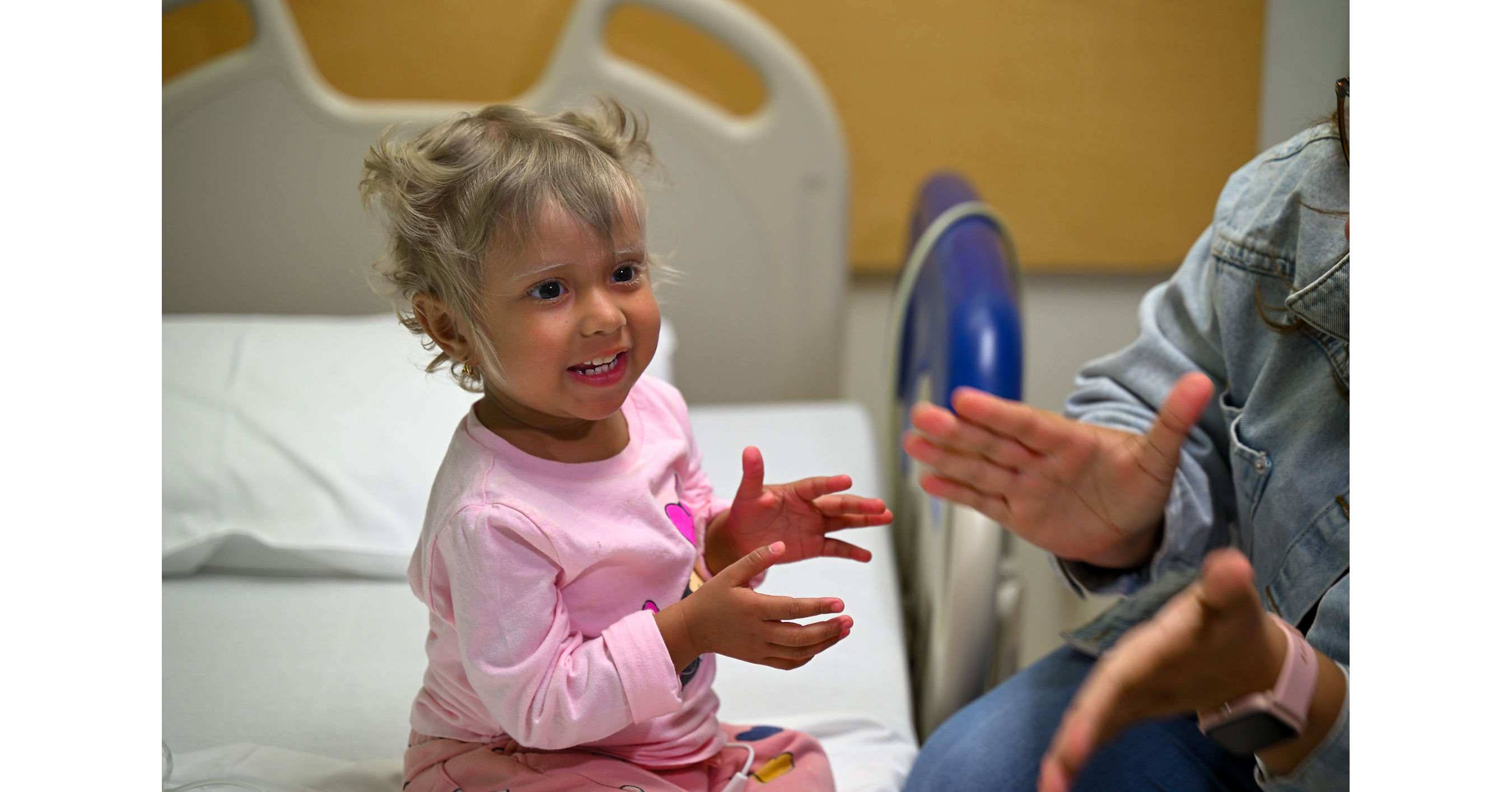
Nicklaus Children’s Hospital reported the first case of its kind: a 2-year-old girl with Griscelli Syndrome Type II successfully underwent a haploidentical (half-matched) bone marrow transplant using her father’s cells, with the hospital stating the procedure cured her HLH. The patient was diagnosed at 2 months old and received the transplant at 12 months, after which she returned home in July 2026 following a year of treatment. The news is life-saving clinically but is unlikely to move financial markets.
Analysis
This is a clinical proof-point, not a monetizable equity event. The economic value sits in reputation and referral gravity for a high-acuity pediatric transplant center, but that is owned by a private/nonlisted operator, so the immediate market impact is essentially zero. The only public-market read-through is incremental validation of haploidentical transplant protocols, which can slightly favor centers and vendors that support complex cellular therapy workflows, but the base rate is too low to matter for quarterly models.
Second-order, the real competitive pressure is on ultra-rare pediatric gene-therapy developers: every credible example that transplant remains curative and operationally feasible raises the bar for a higher-priced, one-time genetic intervention. That said, the effect is asymmetric by disease: for disorders with a readily available family donor and transplant-tolerant risk profile, transplant keeps its moat; for indications where graft-versus-host risk or donor scarcity is the binding constraint, gene therapy still wins. So this is more a long-dated product-segmentation issue than a tradable catalyst.
Time horizon matters: near-term, no price discovery; over 1-3 months, only relevant if the center publishes a case series or guideline update that broadens adoption; over 6-18 months, the signal would be a measurable shift in transplant volume or payer coding. Falsifier for any bullish healthcare-infrastructure read-through would be lack of follow-on cases or evidence that the procedure remains too bespoke to scale. The listed tickers (PLCE, TISI, VSCO, ZCBD) have no discernible fundamental linkage here.
AllMind Terminal
AI-powered research, real-time alerts, and portfolio analytics for institutional investors.
Request TrialMarket Sentiment
Overall Sentiment
strongly positive
Sentiment Score
0.70
Key Decisions for Investors
- No trade in PLCE, TISI, VSCO, or ZCBD — there is no identifiable earnings, margin, or multiple implication from this event.
- Do not initiate a new biotech position on this headline alone; wait for multi-center transplant data or a guideline change before expressing a view in XBI/IBB.
- Watch for comparative-data read-through against ultra-rare genetic disease programs (BEAM, NTLA, EDIT): only meaningful if transplant adoption is shown to be broadly scalable, otherwise keep the impact in the noise bucket.
- Set an alert for any follow-on publication or payer policy change within 3-6 months; that would be the first potentially tradable catalyst for hospital-service or rare-disease biotech exposure.
More News
- Order to limit Starshield for Ukraine came from inside White House: Reuters reports
- FDA approves Enspryng for thyroid eye disease treatment
- The Tesla Roadster 2 Is Here—and It Flies
- Ukraine to resume strikes on Russian refineries, shattering hopes of an 'energy ceasefire'
- What's behind the sell-off in AI neocloud stocks like CoreWeave and Nebius
- TSMC chip capacity is ‘fierce’ battleground for AI customers, amid record quarter