
La solution de réseau étendu de nouvelle génération de Huawei entre dans une phase de commercialisation à grande échelle pour stimuler la croissance des opérateurs
Source: PR Newswire
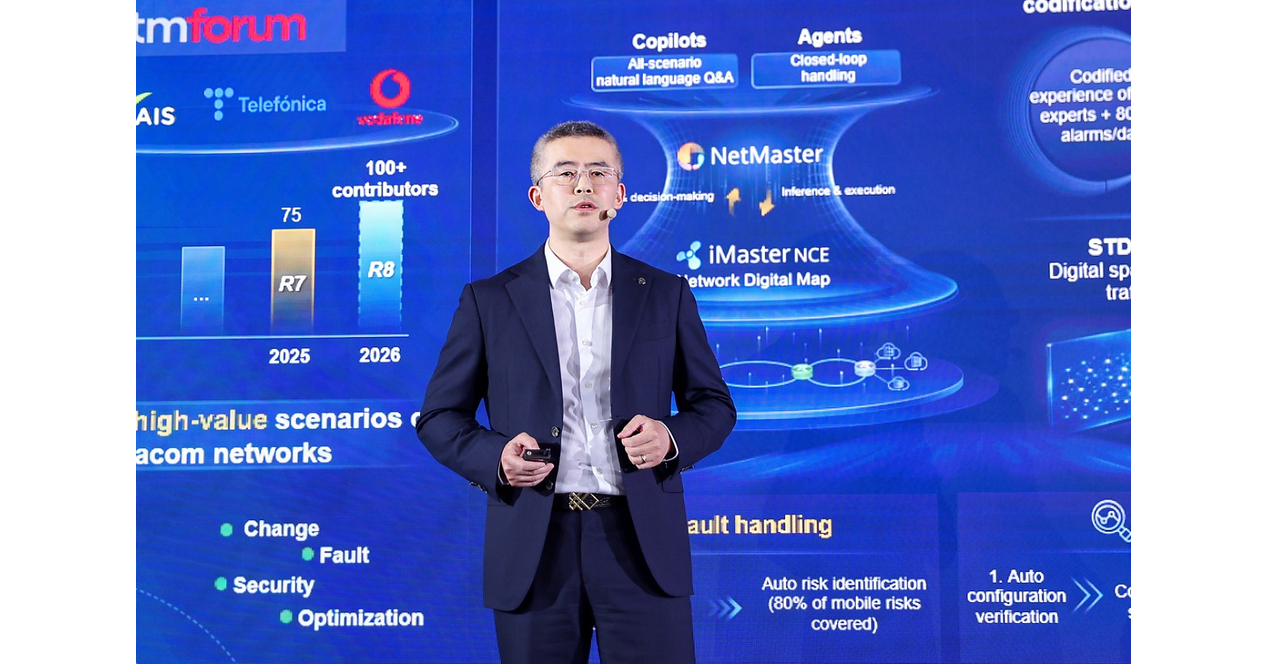
Huawei says its next-generation wide-area network solution has entered large-scale commercialization and has been deployed by more than 60 operators globally. The company cites security detection above 95%, a 90% reduction in DDoS attack risk, fourfold network capacity, and over 7% improvement in AI training and inference performance. In specific operator deployments, Huawei reports 50% higher private-line revenue in Macau and fivefold average private-line revenue per user for a Chinese hospital-network project.
Analysis
Huawei is not publicly traded, so the direct signal is competitive rather than an investable earnings catalyst. The strategic implication is that WAN vendors are trying to sell operators a combined security, automation and AI-compute-enablement layer—not just more bandwidth. If independently validated, better utilization and lower operating effort could let carriers defer some network capex while charging more for managed private connectivity; the key question is whether those savings and premium revenues accrue to operators or are competed away in pricing.
The reported customer outcomes are vendor-supplied and appear to be isolated deployments. They do not establish repeatable economics: verify contract scope, recurring revenue, deployment cost, renewal rates and whether the claimed uplift is incremental or a shift in customer mix. Also distinguish post-quantum cryptography from quantum key distribution; they are different technologies, and the latter’s economics and deployment constraints should not be inferred from the former’s performance claims.
Over 1–3 months, watch for named customer wins, operator capex guidance and evidence of production-scale rollouts. Over 6–18 months, successful adoption could pressure Cisco, Nokia, Ericsson and other network suppliers to bundle security and automation or risk price competition. Western security restrictions and procurement rules limit Huawei’s addressable market, however, so global deployment counts may overstate the competitive threat in markets accessible to listed peers. The AI-networking thesis is falsified if deployments remain pilots, operators fail to monetize premium services, or capex does not translate into improved network economics.
AllMind Terminal
AI-powered research, real-time alerts, and portfolio analytics for institutional investors.
Request TrialMarket Sentiment
Overall Sentiment
moderately positive
Sentiment Score
0.40
Key Decisions for Investors
- No immediate directional trade: the announcement is promotional, Huawei is not publicly traded, and the stated customer economics are not independently established.
- Treat Cisco, Nokia and Ericsson as competitive watch items, not automatic shorts. Reassess only if audited disclosures or named, repeatable contract wins show Huawei taking share in markets those vendors can serve.
- Monitor operator capex commentary and revenue from managed/private connectivity over the next 1–3 months. Improving service monetization alongside stable or lower capex would support the network-efficiency thesis; rising capex without service growth would weaken it.
- Request evidence before underwriting the security and quantum claims: customer deployment scope, renewal and pricing data, independent validation, and the separate cost/performance case for post-quantum cryptography versus quantum key distribution.
More News
- Anthropic's third-quarter revenue is said to hit $16.8 billion ahead of IPO
- SK Hynix plunges 8% amid Asia tech rout as Fed rate hike fears, AI funding worries mount
- Why is Samsung Electronics stock plunging today?
- Why is Advantest stock plummeting today?
- Japan, U.S. reach first chip deal under $550 bln investment plan
- Elon Musk says Trump is 'ultimately' responsible for any curbs on Ukraine's Starshield systems
From AllMind Research
- Anthropic IPO Preview: Valuation, Timing, and What to Watch
- Shein After the IPO: Venue, Valuation, and What Must Be Proved
- What AI Research Tools Should a Small Hedge Fund Buy First?
- State of M&A and Private Markets, June 2026: A $4.9 Trillion Rebound, Underwritten on Money That Never Got Cheaper
- Run Cost-Controlled Financial Research in AllMind Agent Studio