
The White House Is Trying to Keep the Podcast Election Going
Source: Bloomberg
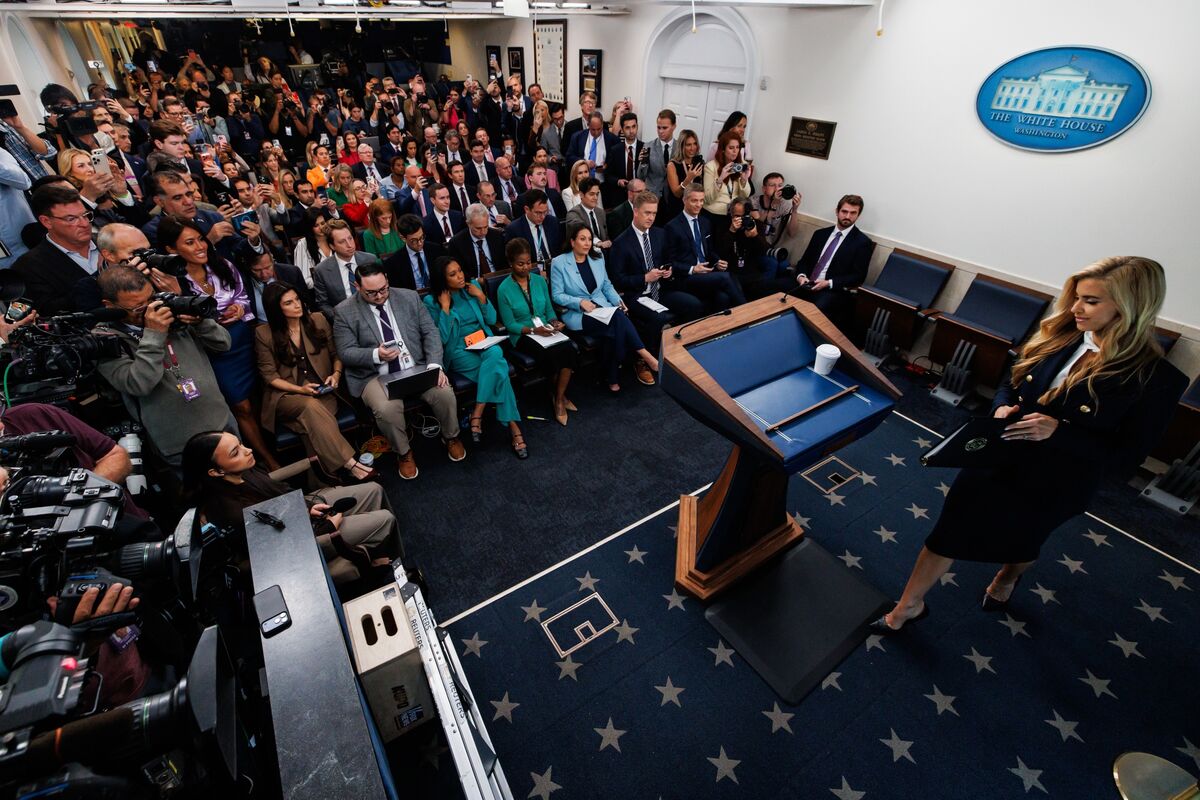
The Trump administration continues to host podcasters at the White House, while the article points to signs of broader malaise among the most popular hosts. It revisits the contentious role of “new media” in the White House briefing room ahead of the U.S. midterm elections; the excerpt provides no figures or direct market implications.
Analysis
This is a weak, mainly narrative signal—not evidence of a durable shift in media economics or voter behavior. White House access may give selected podcasters a short-term attention advantage, but access is not the same as audience growth, retention, or advertising yield. If prominent hosts are losing momentum, the second-order risk is that political institutions keep supplying content while listener attention and sponsor demand fragment across platforms; that would benefit distribution platforms more than any individual show, but the article provides no audience, ad-rate, or platform data to establish a measurable earnings effect.
Near term (days to weeks), expect episodic headlines and engagement spikes around high-profile interviews, with little basis for repricing media companies. Over 1–3 months, track downloads, YouTube views, ad inventory pricing, and whether White House access expands or contracts ahead of the midterms. Over 6–18 months, the relevant question is whether podcasts retain incremental political audiences after the election cycle; a fade would weaken the case for sustained political-content monetization. The contrarian read is that visible access can mask audience fatigue: political prominence may be rising even as the underlying creator franchise weakens. No directional equity trade is justified on this excerpt alone.
AllMind Terminal
AI-powered research, real-time alerts, and portfolio analytics for institutional investors.
Request TrialMarket Sentiment
Overall Sentiment
neutral
Sentiment Score
-0.05
Key Decisions for Investors
- No trade on the article alone. Treat it as a low-confidence attention signal, not an earnings catalyst for podcast or platform exposures.
- Set a 1–3 month watch on audience and monetization data for major podcast distributors, including Spotify and YouTube: sustained view/download growth and improving ad rates would validate a platform-level benefit; flat engagement or weaker ad pricing would falsify it.
- Avoid extrapolating White House access into durable audience share. Reassess after the midterms using post-election retention, sponsor demand, and the breadth of creator participation; a sharp post-cycle drop would support the audience-fatigue thesis.
More News
- ‘Whenever I want it to end’: U.S. tells Middle East allies to prepare for possible new strikes on Iran after the midterms
- Spanish PM, facing reelection, says it’s ‘unacceptable’ to suffer two high-speed rail accidents in one year as at least 68 die in collision
- Volkswagen posts $6.8 billion quarterly loss as slumping China demand, Trump tariffs, and Porsche write-down weigh on earnings
- What we know of Vance’s letter to Rezaei, as Trump warns Gulf to ‘prepare’
- Roblox shares fall as user growth and guidance miss expectations
- Trump administration renews bid to block Alaska election results