
PTI Helps Bring Scope 3 Ambitions into Daily Freight Operations
Source: PR Newswire
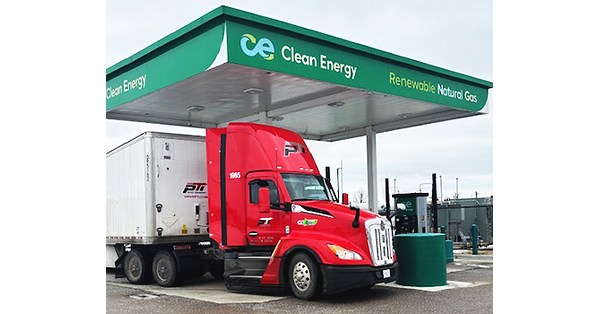
An eight-truck RNG-powered fleet is serving Graphic Packaging International routes between Chicago and Kalamazoo, using Cummins X15N natural gas engines. Clean Energy says the fleet can operate 40% cleaner than diesel, while RNG can provide up to 90% lower lifecycle GHG emissions than diesel; the project also gives the partners a year of operating experience with alternative fuels in freight operations. The announcement describes a sustainability and supply-chain collaboration, without reporting financial results or market reactions.
Analysis
This is evidence of customer acceptance, not yet evidence of material earnings contribution. The key second-order opportunity is repeatability: if shippers convert pilots into multi-year dedicated-fleet contracts, RNG demand can support fueling-station utilization and Cummins’ natural-gas engine adoption. But an eight-truck deployment is too small to establish either trend or move consolidated results absent a broader pipeline.
For Clean Energy Fuels (CLNE), the exposure is not simply truck count: economics depend on contracted gallons, station access, RNG supply costs, and the value of environmental credits. Credit-price or policy changes could erase claimed fuel-cost advantages. Treat lifecycle-emissions and “less than diesel” statements as provider claims until independently validated on delivered cost and accounting boundaries. Cummins (CMI) gets a product-validation signal, but the order alone does not show engine share gains versus diesel, battery-electric, or other alternatives. Graphic Packaging (GPK) may gain Scope 3 progress without owning the fleet assets, yet any freight premium or fuel savings ultimately matters more than the emissions narrative to margins.
Near term, likely limited stock impact. Over 1–3 months, watch for disclosed follow-on deployments and CLNE volume/margin evidence. Over 6–18 months, adoption hinges on reliable operations, infrastructure density, and policy-supported RNG economics. The contrarian point: this is strategically useful proof of execution, but investors may overread a sustainability pilot as a scalable revenue catalyst.
AllMind Terminal
AI-powered research, real-time alerts, and portfolio analytics for institutional investors.
Request TrialMarket Sentiment
Overall Sentiment
mildly positive
Sentiment Score
0.30
Ticker Sentiment
Key Decisions for Investors
- No immediate event-driven trade: the deployment scale and financial terms are undisclosed. Do not extrapolate it into material CLNE or CMI earnings.
- Put CLNE on a catalyst watchlist rather than adding on this announcement. Reassess if the company demonstrates sustained incremental contracted gallons and station utilization; invalidate the thesis if RNG/credit economics weaken or volumes fail to scale.
- For CMI, monitor X15N order growth and customer adoption across fleets before treating this as a durable share-gain signal; compare operating economics and uptime with diesel and competing powertrains.
- For GPK, verify whether the carrier arrangement changes freight cost or service performance, and whether emissions reductions are independently measured. A cost premium without customer or procurement benefits would weaken the strategic case.
More News
- Can JetBlue still avoid bankruptcy? Analysis says yes, but it won’t be easy
- Trump says he'll soon decide whether to ‘make a deal’ with Iran or ‘finish it off'
- India’s Biofuel Mandate Spurs Rush for Waste Cooking Oil to Fuel Trucks to Jets
- DoorDash in talks to buy delivery rival Instacart in $17B deal: report
- Spain Eases Data Center Energy Rules in Win for Big Tech
- Israeli election draws tens of thousands of citizens flying back to vote