
Tracking Isaias’s Latest Path
Source: Bloomberg
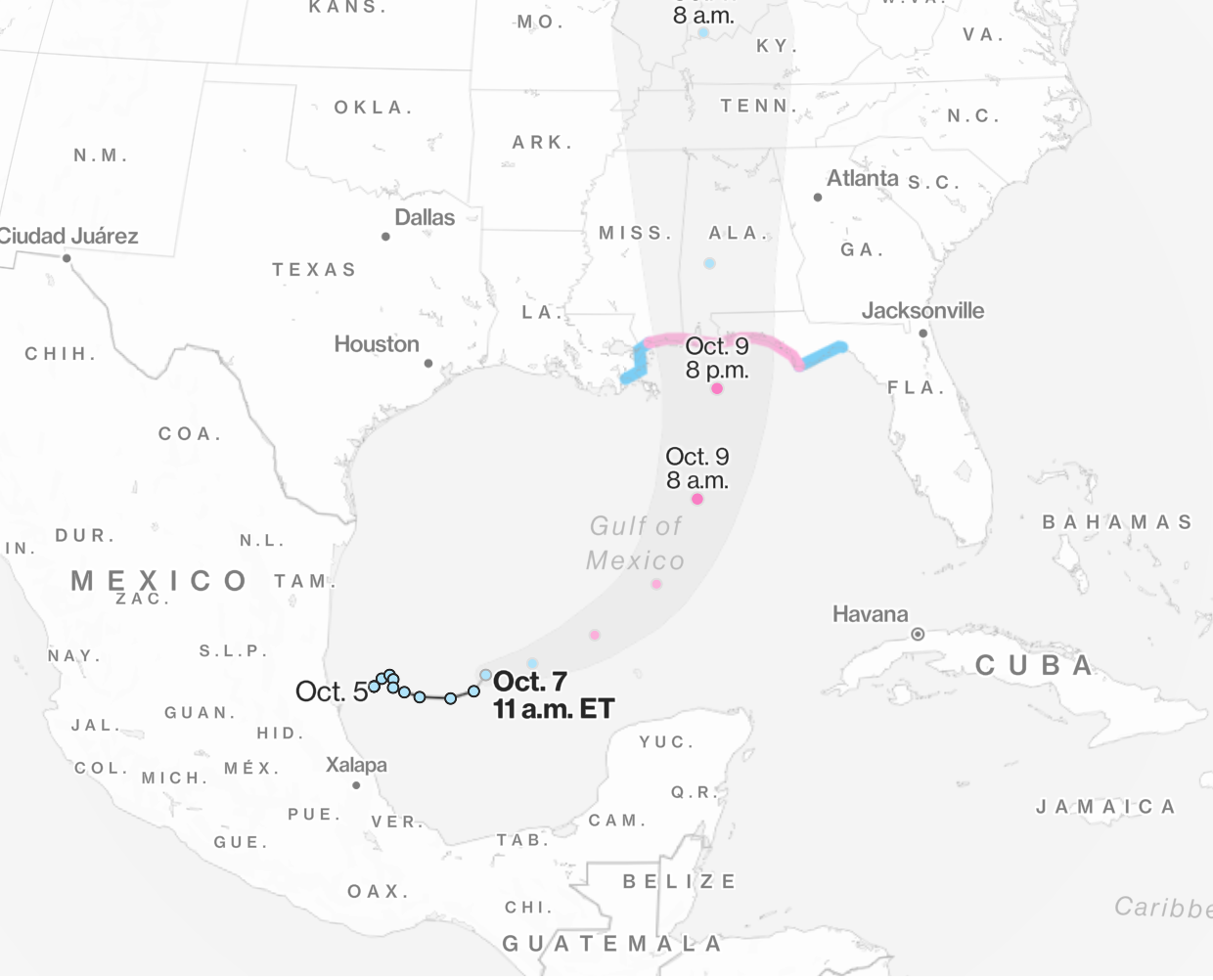
Isaias is forecast to strengthen to a Category 2 hurricane with 110 mph winds, though its current track passes well east of major Gulf oil platforms and gas pipelines. Chevron is evacuating non-essential Gulf platform personnel, but expects no production or operational changes; as of Tuesday, 9.24% of Gulf oil output and 3.36% of natural gas output had been shut in. A westward shift could expose more Gulf energy infrastructure, adding uncertainty for oil markets already strained by the war in Iran.
Analysis
The near-term setup is more about a changing risk premium than a confirmed supply shock. With the current track avoiding major offshore assets and no Chevron operational change reported, the direct earnings case for CVX is weak; precautionary evacuations alone do not justify a position. The more consequential second-order channel is downstream: a westward track or coastal infrastructure damage could disrupt refinery operations, ports, or power, tightening regional diesel availability even if offshore production losses remain limited. Conversely, offshore shut-ins can support crude while refinery interruptions reduce crude demand, so WTI’s direction is ambiguous and product cracks are the cleaner expression if disruptions are confirmed.
Over days, model-track dispersion and rapid intensity changes create event risk; over 1–3 months, the key evidence is actual platform shut-ins, refinery/port status, and changes in ULSD inventories and crack spreads. A quieter seasonal backdrop may reduce the expected frequency of storms, but it does not eliminate the tail risk from one intensifying system. The Iran-related supply strain cited in the article could magnify a real outage, but should not be treated as proof of an imminent diesel shortage. Thesis is falsified by a persistent eastward track, no material infrastructure disruption, and stable regional product balances.
AllMind Terminal
AI-powered research, real-time alerts, and portfolio analytics for institutional investors.
Request TrialMarket Sentiment
Overall Sentiment
mixed
Sentiment Score
-0.10
Key Decisions for Investors
- No immediate CVX trade: the stated operational impact is precautionary, and a storm-risk premium is not yet an earnings revision. Reassess only if Chevron reports production changes or the track materially shifts toward its assets.
- Set an event alert, not a standing position: monitor National Hurricane Center track updates, federal Gulf shut-in data, refinery and port notices, and regional ULSD inventory data over the next several days.
- If Gulf Coast refinery or port disruption is confirmed, consider a small, defined-risk NYMEX ULSD call spread or a ULSD-versus-WTI crack exposure; enter on verified outages rather than forecast intensity alone. Exit or avoid if regional product supply remains intact and cracks fail to respond.
- Do not assume crude is a one-way beneficiary: offshore outages may lift crude prices, while refinery downtime can weaken feedstock demand. Treat a directional WTI position as lower-conviction than a confirmed product-supply trade.
More News
- Chevron CEO warns against 'unwise' diesel export ban, saying it could make things worse
- The world has nearly burned through its oil stockpile buffer, executives say
- US forecasts hurricane later this week in Gulf of Mexico
- CNBC Daily Open: AI rally defies bond market rout
- Hess Midstream shares fall 16% after Chevron agrees to transfer stake and assets
- This unique energy stock is a dual threat, offering both income and growth