
Disrupting Data Centers: Turning Compute Demand Into Clean Energy Momentum
Source: PR Newswire
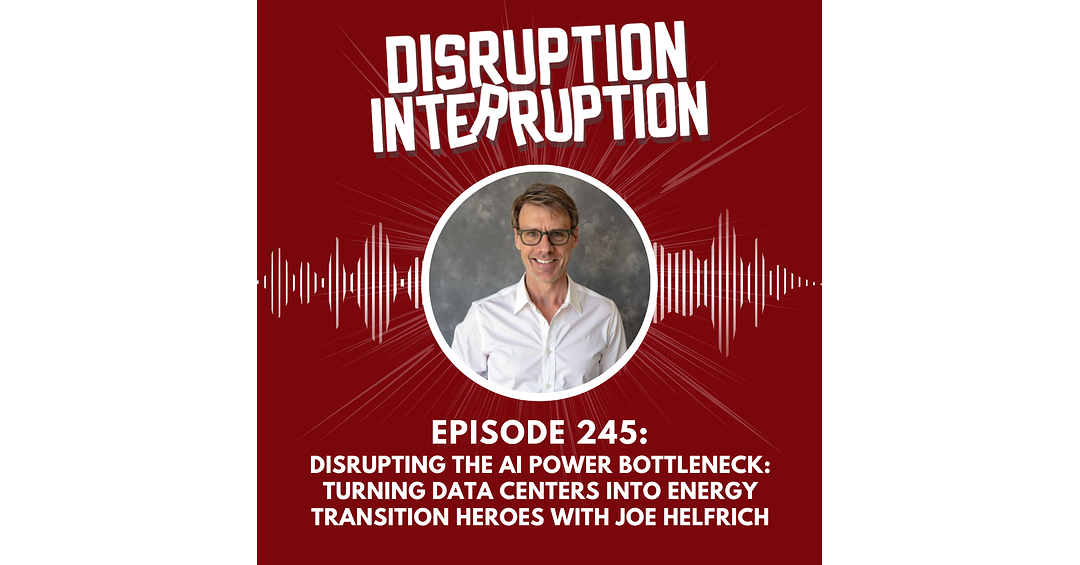
The article flags that U.S. data center electricity use is expected to double or triple by 2028, potentially consuming up to 12% of total U.S. electricity, intensifying grid capacity constraints as AI adoption accelerates. It argues that this “power bottleneck” could spur investment in physical-layer energy solutions across generation, transmission, storage, and cooling, with NosTerra Venture Capital backing venture opportunities positioned to improve capacity and economics. Overall impact is more thematic than company-specific, but it signals a growing capital flow toward AI–energy infrastructure rather than incremental AI software gains.
Analysis
This reads less like a clean-energy catalyst than a bottleneck re-pricing event. The immediate equity winners are the picks-and-shovels businesses that monetize megawatt scarcity: electrical equipment, grid services, cooling, and EPC capacity. That argues for industrials with backlog and pricing power rather than broad utilities, which may see higher capex and political scrutiny before they see meaningful allowed-return expansion.
The second-order effect is that AI infrastructure demand should increasingly migrate from centralized campuses to edge and regional nodes, which shifts spend away from long-haul transmission and toward local generation, microgrids, batteries, liquid cooling, and power-management hardware. In the next 1-3 months, watch order commentary, utility capex revisions, and interconnection delays; over 6-18 months, the real catalyst is whether rate-base growth and customer prepayments can outrun financing costs. The main risk is a funding squeeze: many "AI energy" concepts will need external capital before they need revenue, and that opens the door to dilution or project cancellations.
The consensus is probably too eager to equate power demand with investable public-market upside across the whole theme. If watts-per-token falls faster than expected, or inference shifts to more efficient chips and on-device/edge architectures, the demand curve can elongate without breaking, which would punish speculative small caps more than quality infrastructure names. In that scenario, the market still needs the same capacity, just later and with better economics for the suppliers that survive to delivery.
AllMind Terminal
AI-powered research, real-time alerts, and portfolio analytics for institutional investors.
Request TrialMarket Sentiment
Overall Sentiment
neutral
Sentiment Score
0.05
Key Decisions for Investors
- Long ETN / PWR vs short XLU for a 3-6 month horizon: bet on grid bottleneck monetization and backlog conversion over regulated utilities with capex drag; stop if utility capex guidance inflects meaningfully higher without margin pressure.
- Add VRT on pullbacks for a 1-3 month catalyst window tied to data-center cooling and power-density upgrades; target a 2:1 upside/downside profile, but exit if hyperscaler capex commentary softens.
- Avoid initiating longs in speculative AI-energy microcaps such as CETY, TSTS, and WWRL until there is evidence of non-dilutive funding and contracted backlog; if borrow/liquidity is workable, these are better viewed as short candidates on hype spikes than as core longs.
- Watch SMR/CEG as longer-dated optionality rather than immediate trades: the thesis only works if hyperscalers sign bankable power contracts, and it can be falsified by delayed permitting or weaker load forecasts over the next 6-12 months.
More News
- Iran says two tankers catch fire after hitting mines in Strait of Hormuz
- Why Marco Rubio’s visit to Mumbai has ruffled feathers in India
- US and Iran both claim control of Strait of Hormuz amid attacks on vessels
- AI stocks plunge. Inflation heats up. Where we're still finding opportunities
- Bending Spoons wants to revive software castoffs. Berkshire is backing the plan
- AI rapidly improving, could vastly boost U.S. GDP, Anthropic's Clark tells policymakers