
Společnost Huawei uvádí řešení Fintelligent AI Solution, které pomůže finančním institucím po celém světě naplnit heslo „Own Your AI, Own Your Intelligence"
Source: PR Newswire
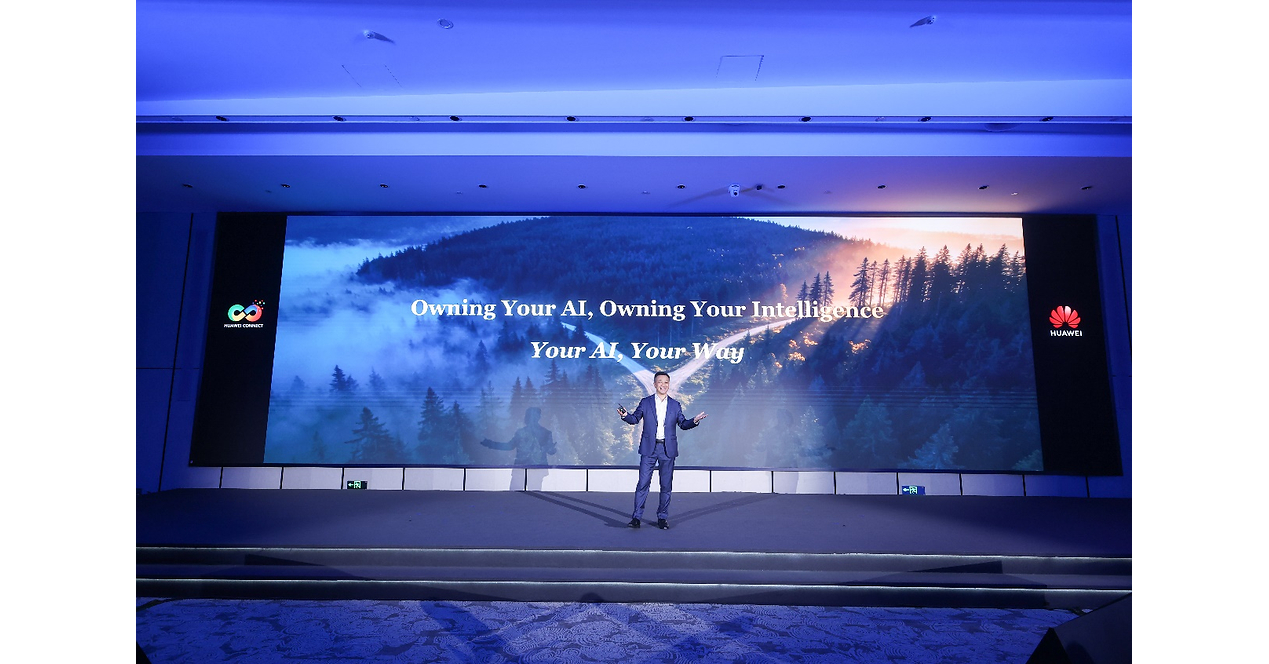
Huawei launched its Fintelligent AI Solution for financial institutions at HUAWEI CONNECT 2026, centered on open-source agent platform openJiuwen and three operational layers: Agent Factory, Token Factory and Data-Knowledge Factory. The offering targets secure, scalable deployment of production-grade AI agents in banking, including token lifecycle management through TokeNexus and data-to-knowledge pipelines for financial agents. Huawei also introduced a 2026 Global Financial Lighthouse initiative featuring nine best-practice cases; the company says it serves more than 7,100 financial customers in over 80 countries, including 54 of the world’s 100 largest banks.
Analysis
The investable implication is less a near-term Huawei revenue event than a signal that regulated institutions are favoring sovereign, auditable AI stacks over frontier-model dependence. This preference can shift AI spending from public-cloud inference toward on-premise servers, data-governance tooling, integration services and legacy-system modernization; incumbents with installed core-banking relationships should retain pricing power even if model layers commoditize.
Huawei is not directly investable for most global portfolios, so the relevant competitive read-through is negative at the margin for IBM, ORCL and MSFT in markets where Chinese banks, state-owned enterprises and emerging-market financial institutions prioritize local control or lower geopolitical exposure. Conversely, the announcement does not yet impair US hyperscaler economics in North America or Western Europe, where regulatory validation, cyber assurance and existing cloud commitments create high switching costs. The principal gating factor is whether deployments convert from demonstrations into disclosed multi-year infrastructure orders.
Over 1-3 months, this is unlikely to move listed equities absent named customer wins, hardware procurement disclosures or evidence that institutions are reallocating AI budgets away from cloud vendors. Over 6-18 months, a successful sovereign-AI model could compress the valuation premium attached to proprietary model access while increasing the value of data lineage, workflow integration and inference-cost management. The contrarian view is that banks may adopt open agent frameworks for experimentation but keep high-value customer-facing and risk decisions behind tightly controlled, incumbent platforms; implementation liability and model-governance costs can overwhelm claimed token-cost savings.
The thesis is falsified if major financial institutions disclose that their production AI workloads remain concentrated with hyperscalers and established enterprise software providers, or if geopolitical restrictions limit hardware availability and serviceability in key export markets. Monitor bank IT-budget commentary, AI inference-capex guidance from ORCL/MSFT, and evidence of production-grade usage rather than partnership announcements.
AllMind Terminal
AI-powered research, real-time alerts, and portfolio analytics for institutional investors.
Request TrialMarket Sentiment
Overall Sentiment
mildly positive
Sentiment Score
0.32
Key Decisions for Investors
- No immediate directional position: treat this as a watch item rather than a catalyst, given the low direct listed-equity linkage and absence of disclosed contract value, deployment dates or customer economics.
- Establish a 6-12 month relative-value watch: long MSFT versus short IBM only if IBM reports material displacement in financial-services software or consulting bookings while Azure AI consumption remains resilient. The trade fails if sovereign/on-premise banking deployments accelerate outside China and IBM captures the integration layer.
- Monitor ORCL and MSFT quarterly commentary for regulated-industry cloud bookings and inference consumption. A downward revision tied to emerging-market financial institutions would justify reducing exposure; without such evidence, do not extrapolate a press-release launch into revenue risk.
- For China technology exposure, track listed domestic AI-compute and server proxies such as Cambricon (688256) and Inspur Electronic Information (000977) for confirmed order, margin and receivables data before initiating longs. Hardware revenue without improving cash conversion would indicate policy-led demand rather than durable economics.
More News
- Taiwan benchmark Taiex rises to record intraday high as tech stocks advance
- AMD joins the $1 trillion club as chip rally surges - our AI Strategy saw it early
- Jamie Dimon says hyperscaler AI spending could hit $1 trillion next year
- Factbox-Key issues for this week’s Trump-Xi summit in Washington
- 20 countries propose global oversight body to manage AI dangers
- Australia Bets on AI to Spur Economic Growth For Decades