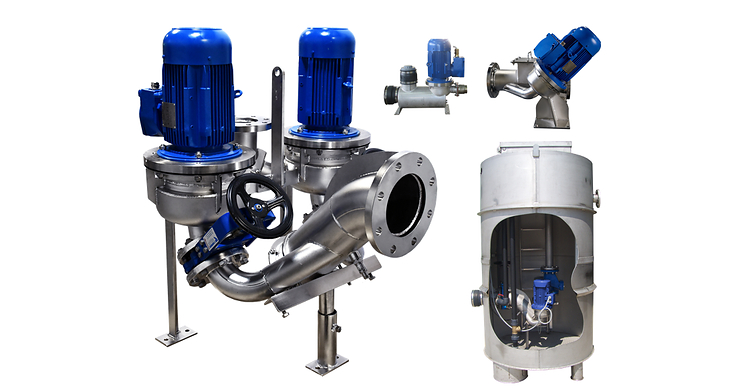
Industrial Flow Solutions (IFS) said it has assumed full manufacturing operations of its OverWatch® Direct In-Line Pump product line, operating as the sole manufacturer since H2 2025. The move culminates investment following IFS’s acquisition of the product’s IP and worldwide commercial rights (2019–2021) and leverages its New Haven, Connecticut and Monselice, Italy facilities to support the installed base and growing demand.
This is more a control-and-margin story than a demand story. Bringing production in-house should improve gross-margin visibility, reduce lead-time variability, and make the installed base more defensible, but the first 2-4 quarters often look worse before they look better because yield, scrap, and working-capital absorption rise during the ramp. For a private sponsor-backed industrial, that usually signals a path to cleaner exit multiple expansion later, not an immediate earnings pop.
The competitive implication is that the moat shifts from product design to service reliability and fulfillment speed. Smaller regional pump assemblers and contract manufacturers are the likely losers if IFS uses its own factories to prioritize faster turnaround and higher aftermarket attach rates; public water/flow names such as XYL, PNR, FELE, and ITT should care less about direct share loss than about whether this reflects a still-healthy end market. If it does, it is mildly supportive of the broader municipal/industrial wastewater cycle.
The main risk is execution, not demand. A quality issue, certification delay, or inventory build could convert a strategic win into a cash drain, especially if the company is trying to support both new projects and the installed base at the same time. Over 6-18 months, the falsifier is simple: if service levels improve but EBITDA margin and free cash flow do not, the vertical-integration thesis is overstated and the market will treat this as capex without payback.
Contrarian view: the consensus may be too quick to read 'single-source control' as immediate upside. In this category, the first-order effect is often lower operational risk, while the second-order effect is margin expansion only after the organization proves it can run a two-site manufacturing footprint efficiently. That makes this a good watch item for sponsor portfolio quality, but not a high-conviction public-market catalyst by itself.
AI-powered research, real-time alerts, and portfolio analytics for institutional investors.
Request TrialOverall Sentiment
mildly positive
Sentiment Score
0.12
