
Zacks Industry Outlook O'Reilly and Advance Auto Parts
Source: zacks.com
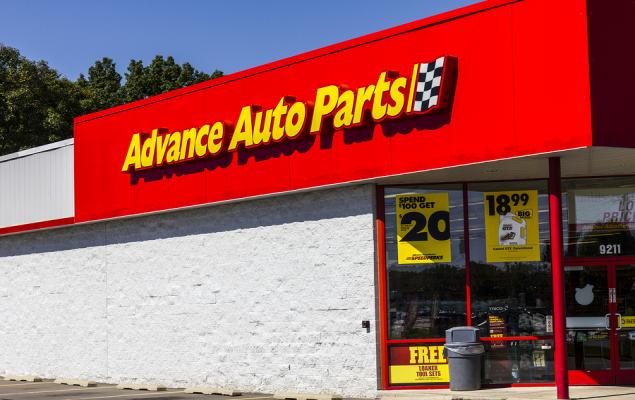
Zacks rates the auto retail and wholesale parts industry favorably, citing August U.S. vehicle sales of a 16.8 million annualized rate versus a 16.3 million forecast and an aging 12.8-year vehicle fleet that supports aftermarket demand. O'Reilly plans 225-235 store openings in 2026, $1.3-$1.4 billion of capex, and has repurchased $3.06 billion of shares through July; consensus EPS growth is 10% in 2026 and 11% in 2027. Advance Auto targets 30-35 new stores and 15-20 new hubs in fiscal 2026, with consensus EPS projected to rise 32% and 28% in fiscal 2026 and 2027, respectively. Near-term margin and cash-flow pressure from technology, distribution and digital investments remains a key offset.
Analysis
The investable distinction is commercial execution, not the broad aftermarket cycle. ORLY’s dense distribution and professional-customer fulfillment model should convert incremental DIFM demand with less gross-margin sacrifice than smaller rivals; its scale also lets it absorb required systems and logistics spending while widening service levels. AAP has greater operating leverage if its network reset works, but that cuts both ways: its earnings recovery requires sustained availability, pricing discipline and labor/productivity gains, whereas ORLY can compound through a softer consumer environment.
Near term, this is unlikely to create a fresh catalyst: the cited estimate revisions are de minimis and the source is promotional rather than independent fundamental research. Over 1-3 months, quarterly professional-sales growth, same-store sales, inventory turns and gross-margin progression matter more than fleet-age narratives. The key 6-18 month risk is that elevated capex and hub investment become structurally necessary merely to defend share, suppressing free-cash-flow conversion and preventing a premium multiple from expanding.
The contrarian setup favors a selective AAP recovery rather than chasing ORLY. If AAP’s consolidated distribution system produces fewer stock-outs and its hub rollout lifts Pro mix, modest margin normalization can drive EPS materially faster than sales; however, consensus recovery estimates leave little room for another execution miss. ORLY is the quality hedge, but its capital-return figures in the article warrant verification against filings before treating buybacks as an incremental catalyst.
AllMind Terminal
AI-powered research, real-time alerts, and portfolio analytics for institutional investors.
Request TrialMarket Sentiment
Overall Sentiment
moderately positive
Sentiment Score
0.42
Ticker Sentiment
Key Decisions for Investors
- Initiate a 3-6 month pair trade: long AAP / short ORLY in equal dollar amounts only after AAP reports a quarter with positive comparable sales, improving gross margin and stable inventory availability. Target 15-20% relative upside from recovery rerating; exit if AAP cuts FY2026 margin or earnings guidance, or if Pro sales lag ORLY by more than 300 bps.
- Maintain ORLY as the preferred outright sector exposure on a 6-18 month horizon, but add only on post-earnings weakness rather than on this research note. Require confirmation that capex remains funded from operating cash flow and that share repurchases do not push leverage above management’s historical comfort range; a deceleration in Pro growth or FCF conversion below guidance falsifies the thesis.
- Avoid treating the industry as a broad long through CARZ or consumer-discretionary ETFs: vehicle-production and dealership exposure dilute the repair-cycle thesis. Use ORLY/AAP-specific exposure or a long ORLY versus short AZO watch basket, pending valuation and commercial-sales-growth comparison.
- Set an earnings alert for AAP’s hub economics: disclose sales productivity, fill-rate improvement and distribution-cost savings as hubs scale. Without these metrics by the next two reporting periods, do not underwrite the projected earnings acceleration; the appropriate position is no trade rather than long calls.
More News
- D.A. Davidson reiterates Buy on O’Reilly Automotive stock, $106 target
- Japan’s corporate leaders sound alarm over weak yen — even dollar-earners are voicing concerns
- Fed hikes again - an AI-Picked insurer is still cashing in
- Berkshire May Boost Japan Trading House Holdings, Itochu Says
- 'Science fiction': Transport companies — the backbone of economy — are sounding alarm on fuel prices
- What to know about US Federal Reserve’s first interest rate hike in 3 years